-
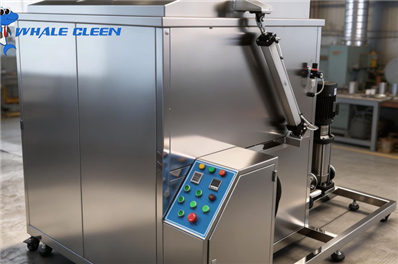 High-Volume Auto Parts Cleaning: Choosing the Right Ultrasonic Machine Saves Significant Costs
In the competitive world of automotive parts manufacturing, every minute and every cent counts. High-volume production of engine blocks, transmission housings, gears, shafts, and valve bodies demands not only precision machining but also equally precise a
-
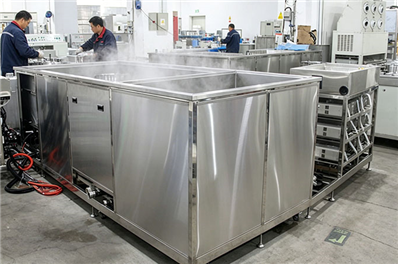 Hidden Contaminants in Hydraulic & Pneumatic Micro-Pores? Manual Scrubbing Wasting Time — Ultrasonic Cleaning Delivers Efficient Scaling Removal
In any hydraulic or pneumatic manufacturing facility, there is a recurring scenario that no production manager wants to face:A valve body passes every dimensional inspection. It looks flawless on the outside. It assembles smoothly. It ships to the custome
-
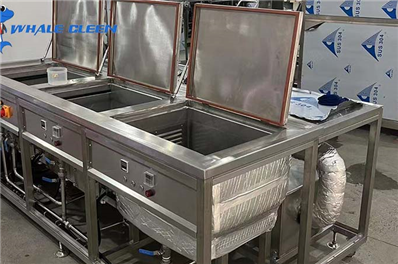 Plating Pretreatment: Degreasing & Oxide Removal Failures That Cause Rework
Conclusion: the rework cost lands after the plating tank, so stop it at the lineThe cost of failed pretreatment is not paid at the pretreatment station but at stripping and re-plating: oil or oxide residue survives all the way into the deposit and only th
-
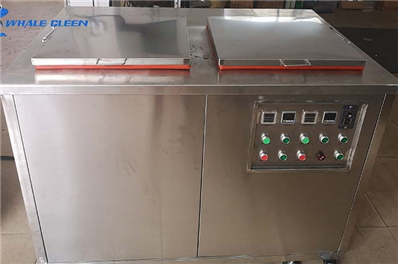 Stubborn Oil in Blind Holes & Microholes? Try Ultrasonic Cleaners for Degreasing and Descaling Before Electroplating
Conclusion: Blind-hole oil is hard to remove mostly because liquid cannot enter and residue cannot drain out, not because the oil itself is difficult to stripFor blind hole cleaning, degreasing and oxide removal should be separated into two sequential sta
-
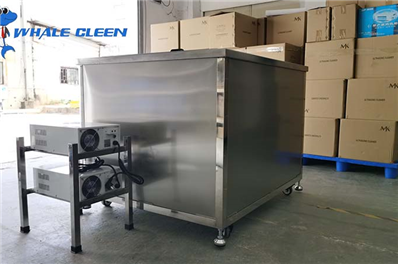 Precision Parts Cleaning: Why Ultrasonic Cleaning Is Increasingly Preferred for Cutting Fluid Residue Removal
Conclusion: Cutting fluid residue is trapped in locations that cannot be reached by flowing liquid Cutting fluid residue essentially stays in cavities where free-flowing liquid cannot refresh. Ultrasonic cleaning delivers cavitation into blind holes an
-
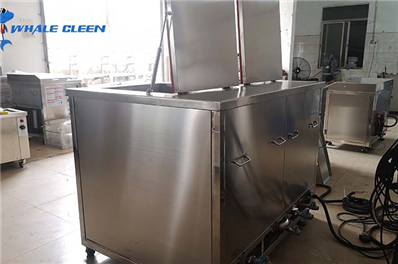 How Does an Ultrasonic Cleaning Machine Remove Aviation Lubricant, Carbon Black and Coolant Residue in One Pass?
Conclusion: One loading is achievable, but one tank is notThe three contaminants have opposing chemical properties, and no single chemistry removes all of them. To finish in one loading, the line must be staged: solvent or emulsifying stage for oil, water
-
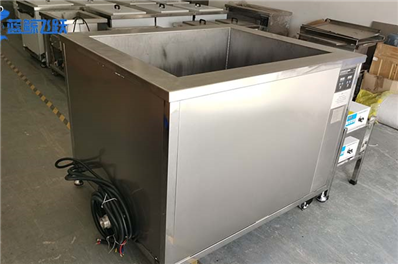 Industrial Ultrasonic Cleaning Machine: Reliable Precision Cleaning Solution from Whale Cleen
Facing stubborn machining coolant residue and precision part damage from traditional washing? Many manufacturers still rely on manual scrubbing or high-pressure spray to remove cutting oil, coolant residue and fine metal chips. These old methods struggle
-
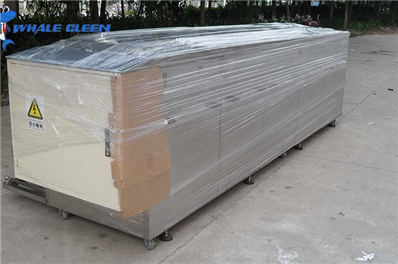 Sensor Metal Housing Cleaning: Ultrasonic vs. Spray—Where the Difference Actually Lives
A sensor housing comes off the machining line with cutting oil, metal fines, and oxidized particles packed into thread roots, blind-hole bottoms, and mating seams. It goes through a spray washer, comes out looking clean, and passes a visual check. Weeks l
-
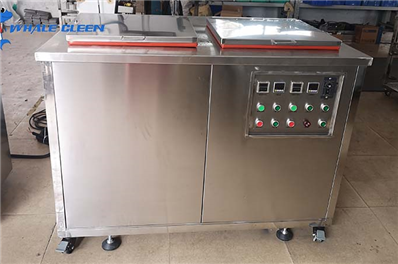 Ultrasonic Cleaning Machine for Batch Sensor Housings: How Whale cleen Prevents Scratches
Batch cleaning sensor housings is one of the most demanding tasks in precision manufacturing. These components often feature machined surfaces, threaded ports, blind holes, and tight tolerances. Contaminants such as cutting oil, metal fines, polishing res
-
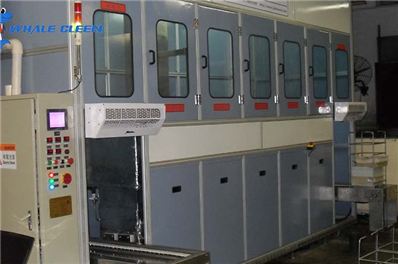 Ultrasonic Cleaning Machine: Solving the Micro-Hole Contamination Challenge in Sensor Housings
In automotive, aerospace, industrial automation, and electronics manufacturing, sensor housings are everywhere. These components often feature micro-holes, blind holes, internal channels, and threaded ports. During machining, stamping, molding, or assembl
-
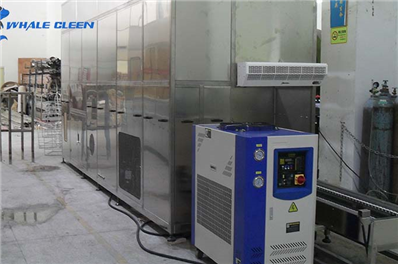 How to Remove Grinding Dust from Blind Holes and Gaps: Industrial Ultrasonic Cleaning Practical Guide
Grinding, deburring, and polishing operations leave fine dust that is easy to see on open surfaces and almost impossible to remove from blind holes and narrow gaps. Compressed air blows some dust out but pushes the rest deeper. Brushes cannot reach the bo
-
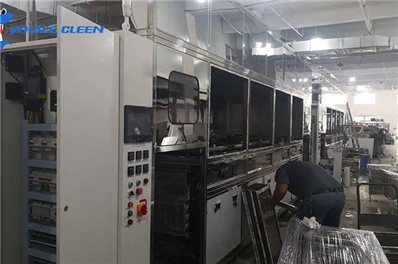 Ultrasonic Cleaning Machine: How to Remove Thick Oxide Scale Without Acid Pickling
Thick oxide scale is one of the most stubborn contaminants in industrial parts cleaning. It forms on steel, castings, forgings, and welded components after heat treatment, hot rolling, or high-temperature processing. In many plants, the default solution i