Thick oxide scale is one of the most stubborn contaminants in industrial parts cleaning. It forms on steel, castings, forgings, and welded components after heat treatment, hot rolling, or high-temperature processing. In many plants, the default solution is acid pickling. Acid dissolves the scale, but it also creates acid fumes, dangerous handling requirements, spent acid disposal, and the risk of hydrogen embrittlement or base metal attack. For manufacturers looking for a safer, more controllable alternative, the question is simple: can an ultrasonic cleaning machine remove thick oxide scale without acid pickling?
The answer is yes—when the ultrasonic process is designed correctly.
Oxide scale is not a loose powder. It is a dense, adherent layer that bonds tightly to the base metal. Its thickness and composition vary depending on the metal, the temperature, and the cooling conditions. In some areas, the scale is brittle and cracked. In others, it is tightly fused and resistant to mechanical brushing or rinsing.
Traditional methods each have limitations. Acid pickling dissolves the scale but introduces chemical hazards and waste treatment costs. Blasting or grinding can remove scale but may damage surface finish, alter dimensions, or leave embedded media. Manual scraping is slow, inconsistent, and unsuitable for complex geometries, internal channels, or high-volume production.
The most difficult scale is the kind that hides in threads, blind holes, recesses, and welded joints. These are exactly the areas where mechanical methods cannot reach and where acid pickling is often used—not because it is ideal, but because nothing else seems to work.
Ultrasonic cleaning uses cavitation. In a liquid, high-frequency sound waves create millions of microscopic bubbles. These bubbles grow and then collapse violently. The collapse produces microjets, shock waves, and acoustic streaming that reach into crevices and internal passages.
Against oxide scale, cavitation does not simply “shake” the scale off. It works in several ways:
It penetrates microcracks. Oxide scale is often cracked and porous at the microscopic level. Cavitation bubbles enter these cracks and collapse inside them, creating pressure that helps break the scale’s bond to the base metal.
It undercuts the scale layer. With the right chemistry, the cleaning liquid penetrates beneath the scale and reacts at the interface between scale and metal. Cavitation accelerates this undercutting action and helps lift the scale away.
It removes particles before they redeposit. Once scale fragments are detached, acoustic streaming carries them away from the part surface. Filtration then removes them from the cleaning liquid so they do not settle back onto the parts.
It reaches complex geometry. Unlike brushes or blasting nozzles, cavitation can reach internal channels, threads, and blind holes—provided the part is properly fixtured and the cleaning liquid can circulate.
However, ultrasonic cleaning alone is rarely enough for thick oxide scale. The process must combine cavitation with the right aqueous chemistry and a well-designed multi-stage workflow.
A successful acid-free descaling process typically includes several stages:
Pre-soak or pre-clean to soften and partially loosen the outer scale layer.
Ultrasonic descaling with a mild alkaline or neutral chemistry that penetrates beneath the scale and helps release it from the base metal.
Multi-stage rinsing to remove dissolved scale, chemistry residue, and suspended particles.
Optional secondary ultrasonic rinse for parts with complex geometry.
Filtration and liquid maintenance to keep detached scale particles out of the cleaning zone.
Controlled drying to prevent water spots and flash rust.
The chemistry matters as much as the machine. Modern aqueous descaling chemistries use chelating agents, dispersants, and surfactants to soften scale and hold dissolved metals in suspension. Cavitation provides the mechanical energy to accelerate the process and reach areas that immersion alone cannot clean.
This approach avoids acid pickling while still delivering consistent, repeatable results. It also reduces hazardous waste, improves worker safety, and eliminates the risk of acid attack on sensitive base metals.
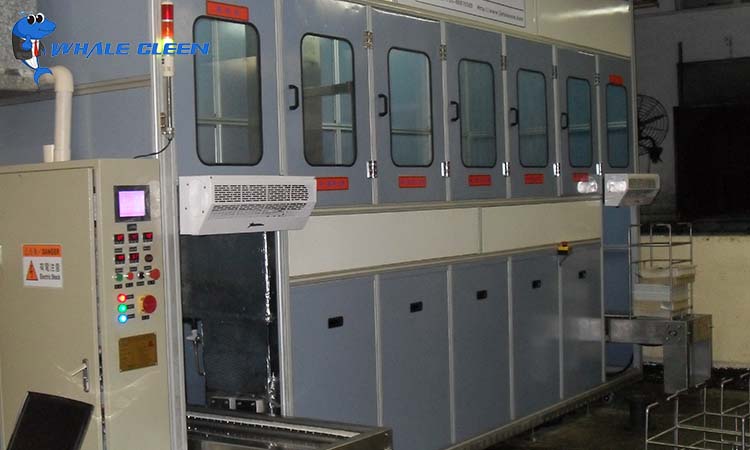
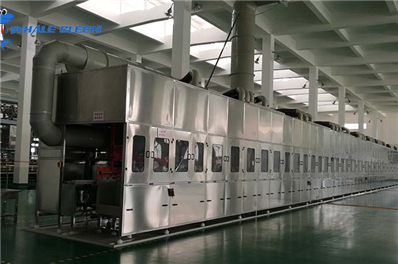
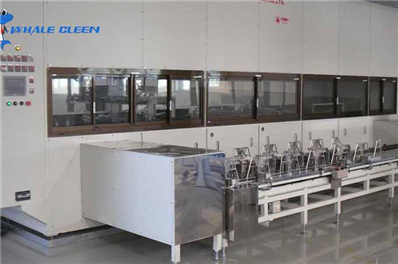
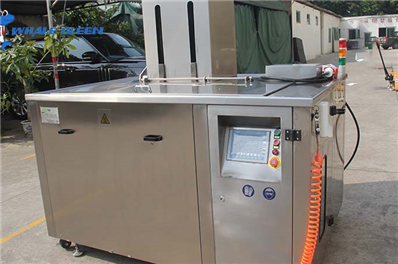
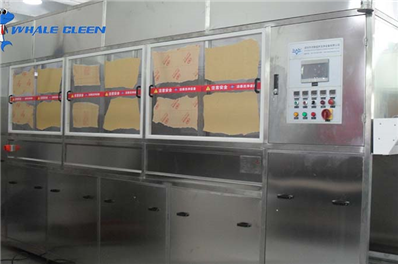
Whale cleen builds industrial ultrasonic cleaning machines designed for demanding descaling and parts cleaning applications. The brand’s focus is not just equipment supply—it is process reliability. Whale cleen systems are engineered to handle thick oxide scale, heavy contamination, and high-volume production without relying on acid pickling.
Key advantages of Whale cleen ultrasonic cleaning machines include:
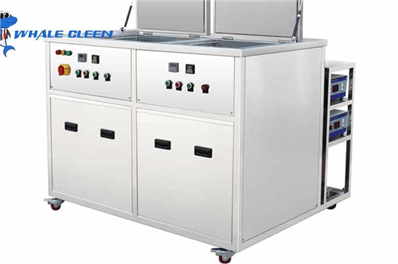
High-power transducer arrays for strong, consistent cavitation across the entire cleaning tank.
Multi-frequency and sweep capability to handle both heavy scale and delicate surfaces in one process.
Custom tank and fixture design so large, heavy, or geometrically complex parts are cleaned thoroughly without damage.
Integrated filtration and separation to remove detached scale, oil, and particles from the cleaning liquid.
Multi-stage rinse and drying configurations to prevent residue and recontamination.
PLC automation and line integration for repeatable, low-labor operation.
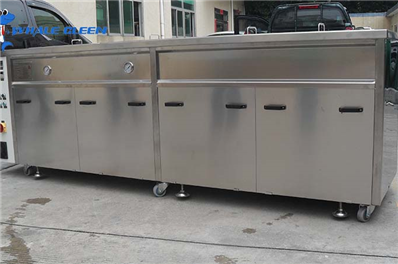
Corrosion-resistant construction for industrial environments and long service life.
Compatibility with mild aqueous chemistries to replace acid pickling and reduce environmental burden.
Engineering support for process development, testing, and optimization before full production.
In a representative project, a manufacturer of forged industrial components was using acid pickling to remove thick heat-treatment scale. The process was slow, generated hazardous waste, and occasionally damaged part surfaces. After switching to a Whale cleen ultrasonic descaling line with matched aqueous chemistry, multi-stage rinsing, and filtration, the company eliminated acid pickling from the process. Scale removal became consistent, rework dropped, and waste treatment costs fell.
Thick oxide scale does not have to mean acid pickling. With the right ultrasonic cleaning machine, the right chemistry, and a properly designed multi-stage process, manufacturers can remove scale safely, consistently, and without acid. Whale cleen helps make that transition practical—turning a hazardous, costly step into a controlled, repeatable cleaning process.