If you have ever walked through a hardware electroplating line, you have seen the frustration firsthand. Parts come out of the bath with patches of peeling plating. Edges look dull. Blind holes show signs of uneven coverage. The plating bath chemistry is correct, the current density is dialed in, and the operator followed every step—but the results still fall short.
The culprit is almost always the same: inadequate cleaning before plating.
Electroplating is a process of molecular bonding. The plated layer does not just sit on the surface—it bonds to the metal beneath. If that surface is contaminated with even a microscopic film of oil, grease, or metal dust, the bond fails. And those contaminants love to hide in the places that traditional cleaning methods cannot reach.
Hardware parts—stamped brackets, machined housings, threaded fasteners, components with blind holes and internal passages—are notorious for trapping contaminants. Cutting fluids, stamping oils, and polishing compounds get pressed into microscopic crevices during manufacturing. High-pressure spraying pushes fluid over the surface but cannot force it into tight corners. Manual brushing reaches only what the brush can touch. Solvent soaking relies on diffusion, which is slow and incomplete for deep recesses.
The result? Parts enter the electroplating tank with hidden contamination. The plating adheres beautifully on flat, accessible surfaces—but fails in the blind holes, the threaded roots, and the sharp internal corners. Those are the rejection points. And in high-volume production, those rejections add up to serious losses in yield and profitability.
This is where ultrasonic cleaning changes the game entirely.
Ultrasonic cleaning operates on a physical principle called cavitation. High-frequency sound waves—typically in the 20 kHz to 40 kHz range—are transmitted through a liquid cleaning solution. These sound waves create millions of microscopic bubbles that rapidly expand and collapse. When each bubble implodes, it releases an intense localized shockwave—powerful enough to dislodge contaminants, yet precise enough to leave the metal surface undamaged.
Here is the key: cavitation does not just happen on the surface. It happens everywhere in the liquid volume—inside blind holes, between tight threads, within the smallest crevices of a workpiece. The cleaning action is truly no-dead-angle. Contaminants that have been pressed into microscopic surface irregularities are systematically lifted away. Metal chips embedded in thread roots are flushed out.
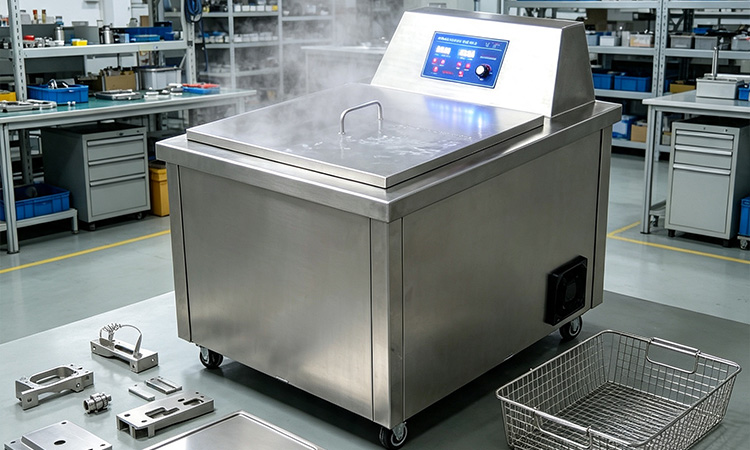
Consider a real-world test. A batch of stamped hardware parts—each with multiple blind holes and internal thread features—is prepared for electroplating. Half the batch is cleaned using conventional methods: high-pressure spray with alkaline detergent, followed by a rinse. The other half is cleaned using an ultrasonic cleaning machine from Whale Cleen.
Both batches go through the same electroplating line with identical parameters.
When the parts come out, the difference is startling. The conventionally cleaned batch shows visible plating voids in the blind holes and around thread roots. The ultrasonic-cleaned batch? Every surface—every blind hole, every thread root, every internal corner—is uniformly plated. The adhesion tests confirm it: the ultrasonic-cleaned parts pass with flying colors.
This is not theory. This is the daily reality in facilities that have made the switch. Manufacturers who adopt ultrasonic cleaning for electroplating pretreatment consistently report yield improvements from the low 90s to 98% or higher. The cleaning step that was once a bottleneck becomes a reliable, repeatable process.
Whale Cleen—the industrial ultrasonic cleaning brand from Guangdong Blue Whale Clean—has been at the forefront of this technology for over 20 years. With a 10,000-square-meter production base and a focus on R&D, manufacturing, and after-sales service, Whale Cleen delivers the performance that modern metalworking demands.
1. No-Dead-Angle Cleaning for Complex Parts
Whale Cleen ultrasonic cleaning machines are engineered to deliver uniform cavitation across the entire cleaning tank. Blind holes, deep threads, cross-drilled passages—contaminants are systematically removed from every surface, ensuring that electroplated parts achieve flawless adhesion.
2. Strong Acid-Free Metal Degreasing
Traditional degreasing often relies on strong acid soaking—a process that carries risks of hydrogen embrittlement, surface damage, and hazardous waste disposal. Whale Cleen's ultrasonic technology replaces chemical aggression with mechanical precision, eliminating these risks entirely while delivering superior cleaning results.
3. Fully Automated and Customizable Solutions
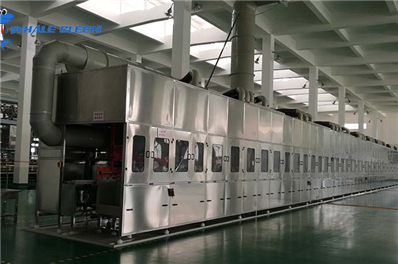
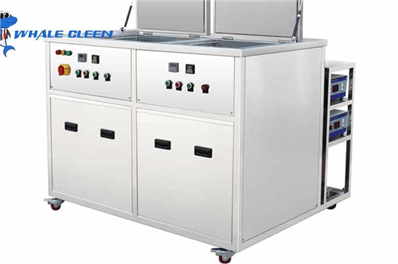
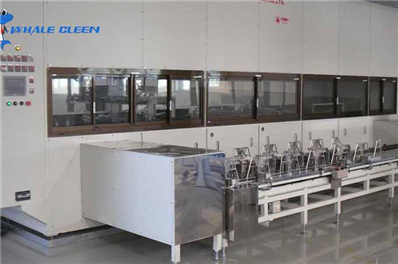
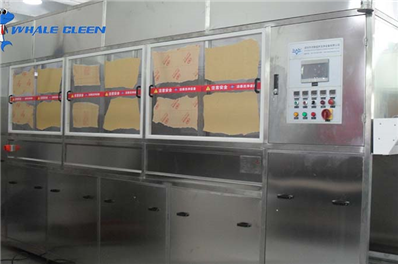
For high-volume electroplating lines, Whale Cleen offers fully automated ultrasonic cleaning systems that integrate seamlessly into production workflows. Multi-tank configurations with filtration, rinsing, and drying capabilities enable continuous, one-stop processing. The result: higher throughput, consistent quality, and lower labor costs.
4. Robust Construction for Factory Environments
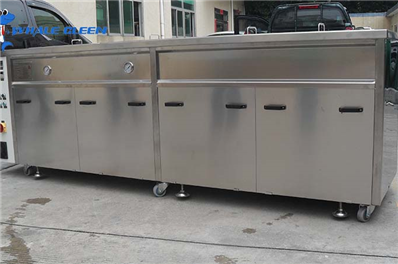
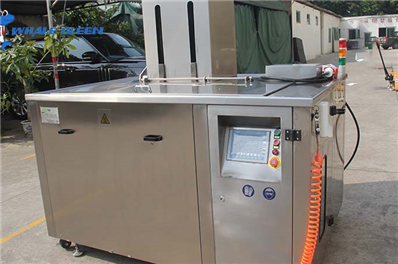
Whale Cleen machines feature 304 stainless steel tanks, thickened to 2mm with manual argon welding for durability. Imported high-efficiency ultrasonic transducers deliver concentrated cleaning power. These are machines built to run shift after shift, year after year.
5. Global Reach, Local Support
With products exported to over 200 countries and regions, Whale Cleen has earned the trust of thousands of clients worldwide. The company's commitment to quality is backed by CE and RoHS certifications.
In electroplating, the difference between a 92% yield and a 98% yield often comes down to one factor: whether every surface of every part is truly clean before it enters the bath.
Ultrasonic cleaning machines from Whale Cleen eliminate the guesswork. They deliver deep, uniform, no-dead-angle cleaning that ensures electroplated parts come out with flawless finish and adhesion—batch after batch, shift after shift.
If your electroplating line is struggling with hidden contaminants and inconsistent results, it is time to see the ultrasonic difference for yourself.
Visit http://www.bwhalesonic.com/ to learn more about Whale Cleen's industrial ultrasonic cleaning solutions—and discover how clean parts can transform your yield.