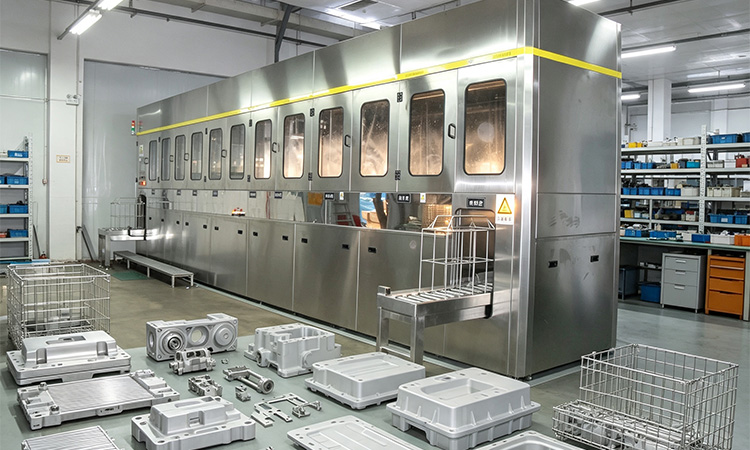
Walk into any hardware electroplating facility, and you will see a staggering variety of workpieces moving through the production line. Stamped brackets, machined housings, threaded fasteners, die-cast components, precision turned parts—each with its own geometry, its own material composition, and its own cleaning challenges.
The question that every production manager eventually asks is this: Can one ultrasonic cleaning machine truly handle all of them?
The short answer is yes—but only if the machine is engineered for versatility.
Hardware blanks come in countless shapes and sizes. Some have deep blind holes that trap cutting fluid. Others feature intricate threads where contaminants cling tenaciously. Still others have complex internal passages or sharp internal corners that traditional cleaning methods simply cannot reach.
The contaminants are equally diverse. Stamping oils, machining coolants, rust-preventive coatings, polishing compounds, metal fines from grinding operations—each requires a different cleaning approach. A solution that works beautifully for removing heavy stamping oil from a thick-walled bracket may be entirely inadequate for flushing fine metal dust from a precision threaded component.
Traditional cleaning methods struggle with this diversity. High-pressure spraying is a line-of-sight tool—it cannot turn corners inside blind holes. Manual brushing reaches only what the brush can touch. Acid pickling, while chemically aggressive, does not provide mechanical action to dislodge contaminants from crevices. And each method often requires dedicated equipment, separate setups, and lengthy changeover times when switching between different part types.
The result is a production floor cluttered with multiple cleaning stations, each serving a narrow range of parts—and each consuming floor space, labor, and capital.
Ultrasonic cleaning solves the diversity problem through a fundamentally different mechanism: cavitation.
When an ultrasonic cleaning machine generates high-frequency sound waves—typically in the range of 20 kHz to 120 kHz—it creates millions of microscopic bubbles in the cleaning solution. These bubbles rapidly expand and collapse, generating intense localized shockwaves that dislodge contaminants from every surface they contact.
Here is the critical insight: cavitation does not care about part geometry. It occurs throughout the entire liquid volume—inside blind holes, between threads, within internal passages, and around complex contours. Whether the workpiece is a simple flat bracket or a intricately machined housing with multiple internal galleries, the cleaning action is equally thorough.
This means that one ultrasonic cleaning machine can handle an extraordinary range of hardware blanks—provided it is designed with the right features.
Different metals respond differently to ultrasonic cleaning. Aluminum alloys, for example, require gentler cavitation to avoid surface pitting, while steel and stainless steel components can tolerate more aggressive cleaning.
A truly versatile ultrasonic cleaning machine offers multi-frequency capability. Lower frequencies (around 28 kHz) produce larger, more energetic bubbles for heavy-duty removal of stubborn oils and carbon deposits. Higher frequencies (above 80 kHz) generate smaller, gentler bubbles for delicate surfaces and fine-feature parts.
Whale Cleen's industrial ultrasonic cleaning machines are engineered with this flexibility in mind. By offering adjustable frequency options, they allow a single machine to clean brass fittings, steel brackets, aluminum housings, and copper components—all on the same shift.
Versatility is not just about handling different part types—it is about delivering consistent results across every batch, every time.
Manual cleaning processes introduce operator variability. One worker may spend more time on a particular part; another may use a different technique. The result is batch-to-batch inconsistency that undermines plating quality.
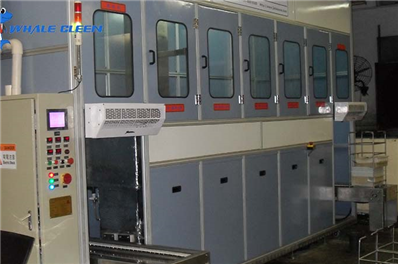
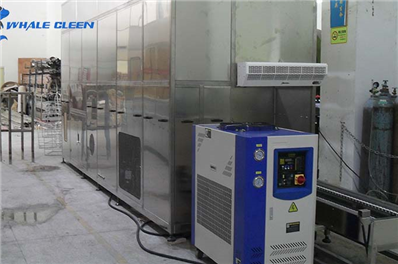
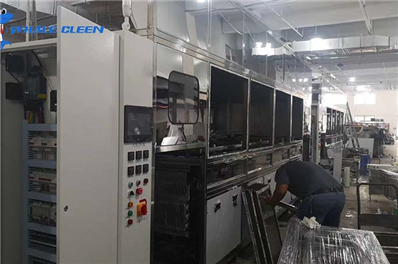
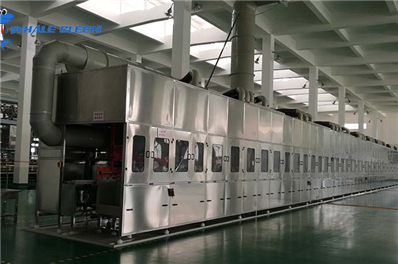
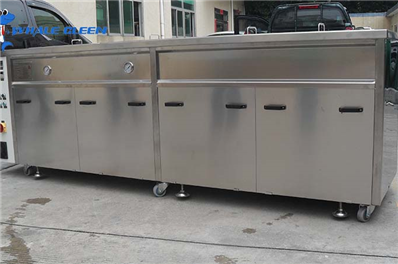
Whale Cleen addresses this through fully automated cleaning systems. The company designs and produces automatic ultrasonic cleaning machines, custom ultrasonic cleaning machines, and large industrial ultrasonic cleaning machines. These systems typically incorporate mechanical transmission, ultrasonic systems, heating systems, drying systems, water supply and drainage, and electrical control systems, all governed by PLC (programmable logic controller) controls.
With programmable settings, the machine applies the exact same cleaning parameters—frequency, power, temperature, duration—to every part in every batch. The result is repeatable, predictable quality that manual methods cannot match.
While ultrasonic cleaning is inherently versatile, not all machines are created equal. The most effective solution for a given facility depends on the specific mix of parts being processed.
Whale Cleen, with over 20 years of experience in ultrasonic cleaning equipment R&D, manufacturing, and after-sales service, takes a custom-engineered approach. The company designs machines based on the specific requirements of each client's workpieces. Whether the need is for a through-type continuous cleaning system for high-volume production, a mechanical arm-type automatic system for complex castings, or a multi-tank configuration with integrated drying, Whale Cleen builds solutions that match the application.
This commitment to customization means that a single Whale Cleen ultrasonic cleaning machine can be configured to handle a broad portfolio of electroplating hardware blanks—from small precision fasteners to large stamped components.
For hardware electroplating, one of the most significant advantages of ultrasonic cleaning is its ability to replace strong acid pickling.
Traditional acid degreasing carries multiple risks: hydrogen embrittlement of high-strength steel components, surface over-etching that alters critical dimensions, hazardous waste disposal costs, and worker safety concerns. Ultrasonic cleaning, by contrast, removes oils, greases, and oxides using mild, water-based detergents combined with mechanical cavitation.
For electroplating hardware blanks, this means cleaner parts without the metallurgical damage that acid pickling can cause. Plating adhesion improves, scrap rates decline, and the cleaning process becomes safer for both workers and the environment.
So, how many types of electroplating hardware blanks can one ultrasonic cleaning machine handle?
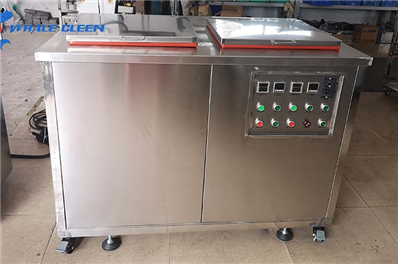
The answer depends on the machine. A basic benchtop unit may be limited to small, simple parts. But an industrial-grade ultrasonic cleaning system from Whale Cleen—with multi-frequency capability, automated controls, and custom-engineered configurations—can handle an extraordinary range: stamped brackets, machined housings, threaded fasteners, die-cast components, turned parts, and virtually any other metal blank that requires electroplating.
The versatility is not theoretical. It is proven daily in facilities around the world where one Whale Cleen ultrasonic cleaning machine replaces multiple traditional cleaning stations—reducing floor space, lowering labor costs, improving consistency, and delivering cleaner parts for better plating results.
If your electroplating operation is struggling with cleaning multiple part types using multiple methods, it is time to discover what one versatile ultrasonic cleaning machine can do.
Visit http://www.bwhalesonic.com/ to explore Whale Cleen's range of industrial ultrasonic cleaning solutions—and find the machine that fits your entire workpiece portfolio.