Manual wiping consumes labor hours, and when facing large batches of workpieces with mold release oil and oxidation scale, it quickly becomes overwhelming. In die-casting, forging, stamping, and machining operations, parts often leave production with a combination of oily films, heat-treatment scale, dust, and handling residue. Operators with cloths, brushes, and solvents can only work one part at a time. The work is slow, inconsistent, and difficult to verify. Threads, blind holes, recesses, and mating surfaces are especially easy to miss. As production volume rises, cleaning becomes a bottleneck that delays downstream assembly and inspection.
Mold release oil is designed to stay on surfaces during forming. It can smear rather than dissolve when wiped. Oxidation scale is bonded to the metal and often requires mechanical or chemical action to break down. When dust and particles are mixed in, the soil becomes even more stubborn. A brush may reach an open surface, but it cannot reliably clean the bottom of a blind hole or the root of a thread. Soaking may soften oil, yet it may not remove scale. High-pressure spraying can drive loose particles into cavities instead of flushing them out. The result is repeated rework, uneven cleanliness, and unpredictable quality.
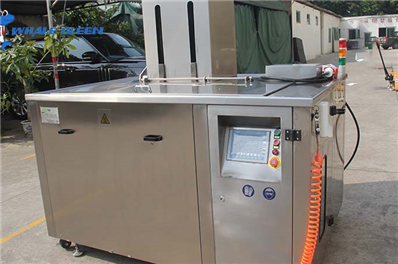
An ultrasonic cleaning machine uses cavitation to clean parts in a liquid bath. Ultrasonic energy creates microscopic bubbles that expand and collapse rapidly. When they collapse near a surface, they release localized microjets and pressure waves. This physical action reaches into narrow gaps, threads, and recesses where manual tools cannot go. It helps lift mold release oil, disrupt oxidation scale, and dislodge particles. However, mixed contaminants require more than a single tank. Effective cleaning usually involves a sequence: pre-cleaning, ultrasonic cleaning, rinsing, and drying. Filtration and oil separation are also important so that removed soils do not settle back onto clean parts.
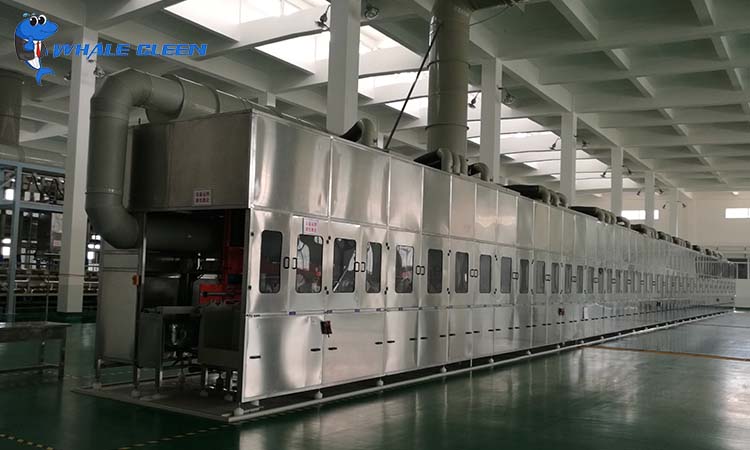
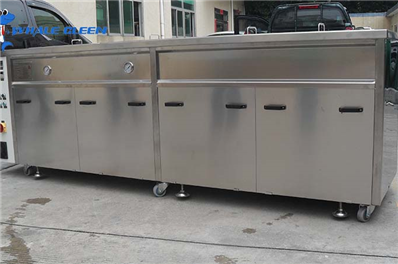
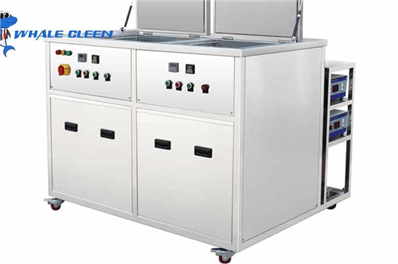
Whale cleen focuses on industrial ultrasonic cleaning machines and customized cleaning systems. Instead of offering a standard tank as a universal answer, Whale cleen approaches cleaning as a production process. The brand’s product advantages include:
Batch processing capability: multiple workpieces can be cleaned in one cycle, reducing reliance on manual wiping.
Custom fixtures and baskets: parts are positioned so that critical areas—threads, blind holes, and recesses—are exposed to cavitation.
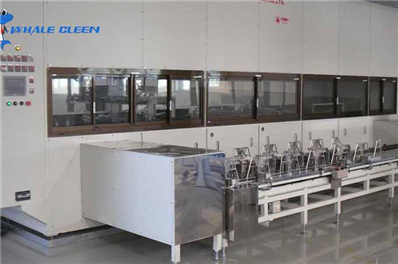
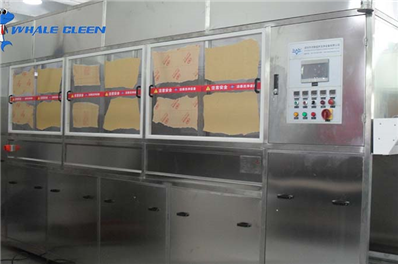
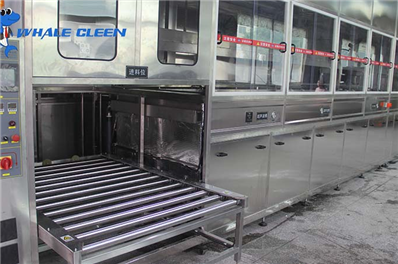
Multi-stage system design: ultrasonic cleaning, rinsing, and drying can be integrated into one controlled flow.
Filtration and bath management: suspended particles and oil are removed from the cleaning liquid, helping maintain consistent cleaning performance across a batch.
Automation options: conveyor or robot handling can reduce manual variation and make cycle times more predictable.
Process support: Whale cleen helps customers establish repeatable cleaning procedures rather than simply supplying equipment.
Non-standard customization: machines can be configured around part geometry, production volume, and available floor space.
Mold release oil and oxidation scale are different types of soil, and they often appear together. Whale cleen systems combine ultrasonic cavitation with appropriate chemistry and mechanical action to address both. The ultrasonic stage helps emulsify and lift oily films while also attacking scale and particles. Rinsing carries loosened contaminants away. Drying helps prevent water spots and residue. Because the cleaning bath is managed through filtration and separation, removed soils are less likely to redeposit on parts later in the batch. This is especially important for high-volume production, where the first part and the last part must meet the same cleanliness standard.
Manual cleaning depends on operator skill, time, and attention. It is difficult to standardize and even harder to scale. Whale cleen helps turn cleaning into a controlled stage in the production line. Parts move through the system in batches, cycle times become predictable, and cleaning results become more uniform. Downstream inspection sees fewer failures caused by residual oil, scale, or particles. Labor that was once spent on repetitive wiping can be redirected to higher-value tasks. For manufacturers facing large batches of workpieces with mold release oil and oxidation scale, an ultrasonic cleaning machine is not just a tool—it is a way to remove a persistent production bottleneck.
If manual wiping is slowing output and creating inconsistent cleanliness, Whale cleen can help evaluate the parts, soils, and production flow to configure a suitable ultrasonic cleaning solution. The goal is simple: clean batches thoroughly, reduce manual effort, and make cleanliness repeatable.