In precision machining, few operations are as demanding as thread tapping. The cutting paste—a thick blend of lubricants, extreme-pressure additives, and fine abrasive particles—is essential for protecting taps and achieving clean thread profiles. But after the tapping operation, that same paste becomes a stubborn adversary.
Thread roots trap the paste. Thread flanks hold it in microscopic crevices. And the harder you try to remove it, the more you risk damaging the very precision you worked so hard to achieve.
Most shops tackle cutting paste residue the old-fashioned way: manual brushing. Operators take stiff-bristled brushes, dip them in solvent, and scrub each thread tap by hand. It's time-consuming, labor-intensive, and—worst of all—damaging.
Every brush stroke applies mechanical force to the thread surface. Over time, this repeated contact wears down the thread flanks, alters the thread profile, and compromises dimensional accuracy. For precision threads measured in microns, even minor wear can push a part out of specification. The result? Scrapped parts, rework, and dissatisfied customers.
And the problem doesn't stop there. Brushing can't reach the bottom of deep thread roots where cutting paste is most concentrated. No matter how hard an operator scrubs, residue remains trapped in those inaccessible areas. When the threaded component is assembled and subjected to load, that trapped paste breaks loose, contaminating the assembly and potentially causing premature wear or failure.
Ultrasonic cleaning offers a fundamentally different approach. Instead of mechanical scrubbing, it uses high-frequency sound waves to generate millions of microscopic cavitation bubbles in a cleaning solution. These bubbles form and collapse rapidly, releasing intense localized energy that dislodges contaminants from every surface the liquid can reach.
For thread tapping residue, this is transformative:
Thread roots are reached—cavitation bubbles penetrate deep into thread valleys where brushes cannot go.
Cutting paste is lifted, not scrubbed—the implosion energy breaks the bond between paste and metal surface without mechanical contact.
Thread accuracy is preserved—no brushing means no wear on thread flanks or profiles.
The process is gentle enough to protect thread geometry yet powerful enough to remove even the most stubborn cutting paste compounds.
Whale Cleen (http://www.bwhalesonic.com/) has been solving industrial cleaning challenges since 2003. As a high-tech enterprise integrating R&D, manufacturing, marketing, and after-sales service, Whale Cleen operates from a 10,000-square-meter production base, designing and producing everything from single-tank cleaners to fully automated multi-tank systems.
For manufacturers struggling with cutting paste residue on threaded components, Whale Cleen offers several critical advantages:
Imported Transducers for Powerful Cleaning – Whale Cleen ultrasonic cleaners use imported high-efficiency transducers that deliver concentrated, powerful cleaning action. This ensures that even the most stubborn cutting paste is effectively removed from thread roots and flanks.
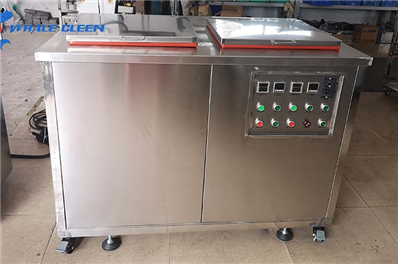
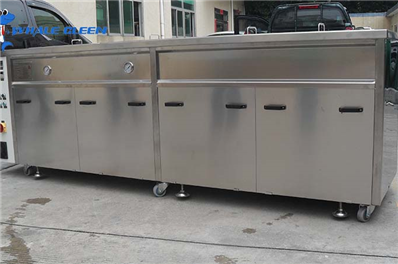
304 Stainless Steel Construction – The tanks are crafted from 304 stainless steel, thickened to 2mm with manual argon welding for durability and corrosion resistance. This robust construction ensures long-term reliability even in demanding production environments.
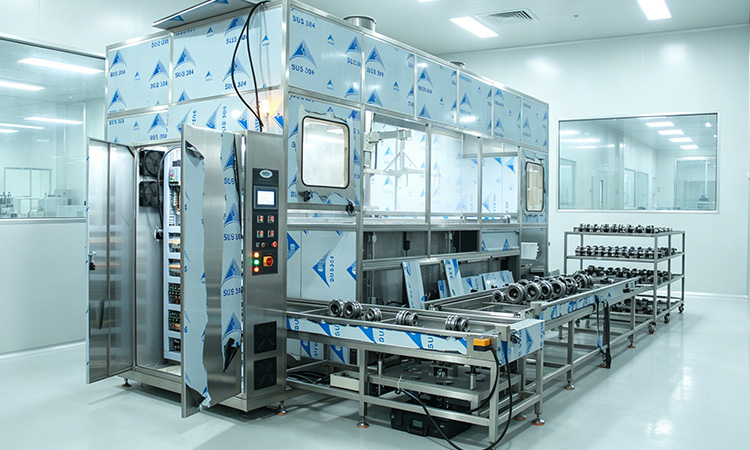
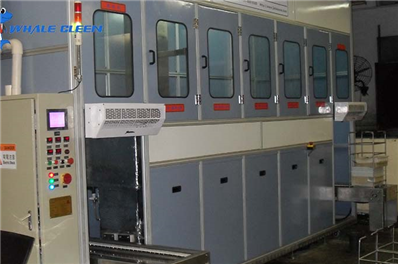
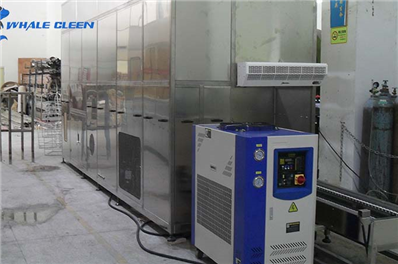
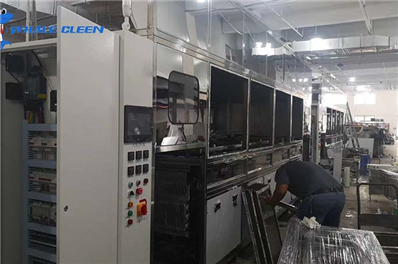
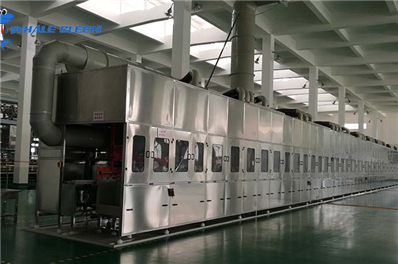
Customizable Configurations – Whale Cleen offers single-tank, dual-tank, and triple-tank systems with filtration, rinsing, and drying capabilities. For high-volume production, mechanical-arm fully automatic cleaning lines are available, supporting single-arm, double-arm, or multi-arm configurations. The entire cleaning process—feeding, ultrasonic cleaning, rinsing, and drying—is completed in one continuous operation.
Non-Standard Customization – Every machining operation is different. Whale Cleen supports non-standard customization, providing design drawings and cleaning programs tailored to specific parts, contaminants, and production requirements.
For manufacturers threading critical components, the transition to ultrasonic cleaning delivers measurable results. Cutting paste that once remained trapped in thread roots is thoroughly removed. Thread accuracy that was previously compromised by brushing is preserved. The result is threaded components that perform as designed—every time.
As one production manager noted, "We were spending more time inspecting threads for wear than actually cleaning them." Ultrasonic cleaning changes that equation entirely.
If your threaded components are plagued by cutting paste residue, and manual brushing is wearing down your hard-won thread accuracy, it's time to rethink your approach. Ultrasonic cleaning doesn't just clean better—it cleans without contact, preserving the precision you machined into every thread.
Whale Cleen doesn't sell off-the-shelf boxes. They deliver tailored cleaning solutions—matching frequency, tank configuration, automation level, and process flow to each customer's parts and production volume. Whether you are cleaning small batches of threaded components or high-volume production runs, Whale Cleen provides a system that works.
Discover how Whale Cleen can eliminate cutting paste residue and protect your thread accuracy. Visit: http://www.bwhalesonic.com/