In industrial manufacturing, few maintenance tasks are as time-consuming and costly as mold cleaning. Production managers know the drill all too well: shutdown the line, wait for the mold to cool, disassemble every component, scrub stubborn carbon deposits with chemical solvents or manual scraping, reassemble, and finally restart production. Days of downtime. Thousands of dollars in lost output. And despite all that effort, residual carbon often remains trapped in cooling channels and narrow crevices—setting the stage for the next premature failure.
But what if you could clean carbon deposits without taking the mold apart at all?
That is precisely the promise of advanced ultrasonic cleaning technology—and it is transforming how industries approach equipment maintenance and parts cleanliness.
Carbon buildup is an inevitable byproduct of high-temperature molding processes. Over time, these hardened deposits accumulate on mold surfaces, in cooling channels, and around ejector pins. The consequences are severe: uneven heating, longer cycle times, surface defects on finished parts, and ultimately, scrapped molds that cost tens of thousands of dollars to replace.
Traditional cleaning methods all come with heavy penalties. Chemical soaking requires hazardous solvents and generates toxic waste. Sandblasting risks damaging精密 surfaces. Manual scraping is labor-intensive and inconsistent. And all of them demand full mold disassembly—which means extended production stoppages and the risk of assembly errors when putting everything back together.
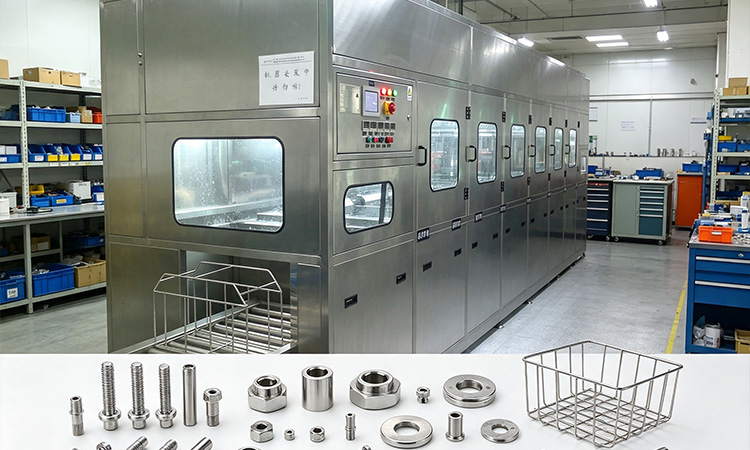
Ultrasonic cleaning operates on a brilliantly simple physical principle: cavitation. High-frequency sound waves (typically 20-40 kHz) are transmitted through a liquid cleaning solution, generating millions of microscopic bubbles. These bubbles expand and implode with tremendous energy, creating localized shockwaves that blast contaminants away from every surface the liquid can reach.
Because the cleaning action occurs at the microscopic level and propagates through the liquid medium, ultrasonic waves penetrate deep into cooling channels, blind holes, and threaded interiors—areas that no brush, spray, or chemical dip can ever touch. The mold remains fully assembled. The cleaning solution circulates through every internal passage. Carbon deposits are lifted and suspended in the fluid, carried away by filtration systems.
The result? Complete carbon removal in hours instead of days, with zero disassembly required.
For the most stubborn carbon and oxide layers, leading manufacturers combine ultrasonic cavitation with electrolytic action—a process known as ultrasonic electrolytic cleaning. Here is how the operation unfolds:
Step 1 – Preparation: The assembled mold or workpiece is placed in the cleaning tank, connected as an electrode. A specialized alkaline or neutral cleaning solution is introduced—formulated to enhance both cavitation and electrolytic reactions.
Step 2 – Ultrasonic + Electrolytic Action: Ultrasonic transducers generate high-frequency vibrations throughout the tank. Simultaneously, a low-voltage direct current is applied. Electrolysis produces microscopic hydrogen and oxygen bubbles directly at the metal surface, which physically lift carbon and oxide films away. The ultrasonic cavitation then shears these loosened contaminants off completely.
Step 3 – Rinsing: The workpiece is transferred to a rinsing station where clean water or deionized water flushes away any remaining solution and suspended particles.
Step 4 – Drying: Hot air drying completes the process—leaving the mold spotless, dry, and ready for immediate reinstallation.
The entire cycle typically takes 30 to 90 minutes, depending on the size and contamination level. Compare that to the 8 to 24 hours required for traditional disassembly-and-scrub methods.
Behind this cleaning revolution stands Whale Cleen—a brand backed by over two decades of ultrasonic equipment manufacturing experience. Since 2003, Whale Cleen has been dedicated to providing professional cleaning solutions across major industries.
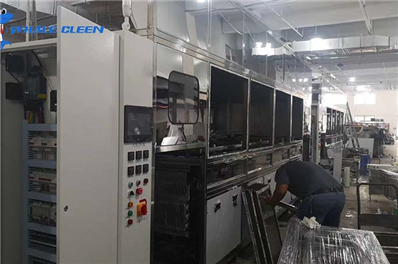
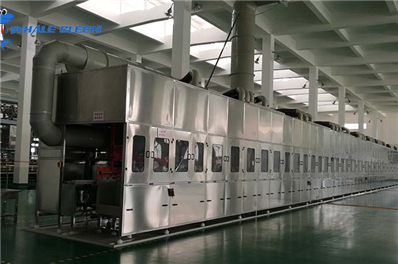
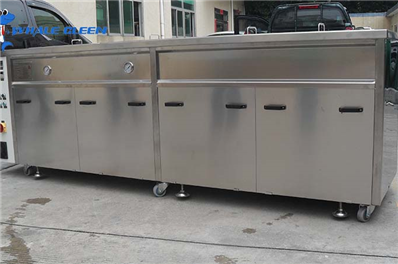
Operating from a 10,000-square-meter production base, the company designs and manufactures a comprehensive range of equipment: automatic ultrasonic cleaning machines, custom-built industrial systems, ultrasonic transducer packs, vibrating rods, and industrial wastewater treatment equipment. This integrated capability means Whale Cleen does not just sell machines—it delivers complete cleaning ecosystems tailored to specific production environments.
What sets Whale Cleen apart is its commitment to customization. No two cleaning challenges are identical. A mold used for automotive components has different geometry, different carbon composition, and different throughput requirements than a mold for electronics housing. Whale Cleen's engineering team works directly with clients to design systems that match their exact workpiece dimensions, soil types, and production rhythms.
The company's philosophy is built on more than technology. Its core values—integrity, gratitude, altruism, and win-win—are paired with a mission to "make the Earth more environmentally friendly". This is reflected in its integrated wastewater treatment solutions, which ensure that cleaning operations meet increasingly stringent environmental regulations without compromising performance.
While mold cleaning is a showcase application, ultrasonic technology delivers similar breakthroughs across industrial sectors:
Aerospace fasteners – Removing cutting oil and metal chips from blind holes and internal threads.
Automotive components – Eliminating machining debris from complex aluminum castings.
Precision mechanical parts – Achieving consistent cleanliness without surface damage.
In every case, the benefits are the same: faster throughput, lower labor costs, consistent quality, and elimination of hazardous manual cleaning.
If your maintenance team is still disassembling molds for carbon removal, you are losing money every single day—in downtime, labor, and compromised part quality. Ultrasonic cleaning, particularly when combined with electrolytic action, offers a proven path to same-day turnaround, zero-disassembly cleaning that restores molds to like-new condition.
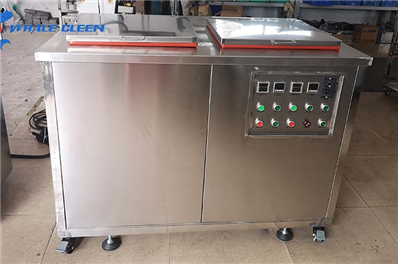
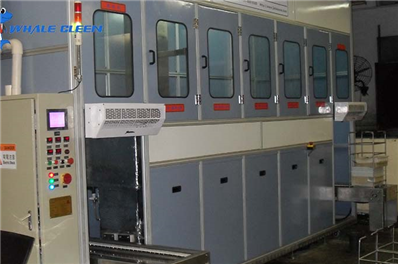
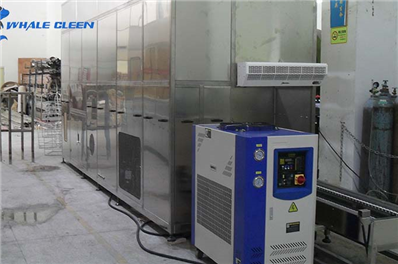
Whale Cleen brings two decades of expertise, a 10,000 m² manufacturing footprint, and a custom-engineering mindset to every client partnership. Whether you need a standalone ultrasonic tank or a fully automated multi-station cleaning line, Whale Cleen delivers solutions that work—backed by a commitment to environmental responsibility and long-term client success.
Explore how ultrasonic cleaning can transform your maintenance operations at http://www.bwhalesonic.com/ .