You've dialed in the nickel plating bath chemistry. The temperature is right, the current density is optimized, and the dwell time is precisely controlled. Yet the plating still blisters. The cross-hatch test fails. The adhesion just isn't there.
The lab points to "surface contamination at the interface." The chemical supplier swears their bath is performing perfectly. And somewhere in the pretreatment line, a cleaning step that looks adequate is quietly sabotaging everything that follows.
Here's the reality that too many plating operations discover the hard way: for nickel plating, micron-level cleanliness isn't a luxury—it's a prerequisite. And achieving it doesn't have to mean bathing parts in aggressive, corrosive chemicals.
For decades, the default answer to stubborn oils, polishing compounds, and microscopic particulates has been strong acids and caustic soak baths. Hydrochloric acid, sulfuric acid, nitric acid—they strip away contamination, sure. But they also strip away something else: the integrity of the substrate itself.
Acid attack leaves surfaces roughened and etched. It can cause hydrogen to diffuse into the metal lattice, creating the risk of hydrogen embrittlement in high-strength steels—a hidden defect that may only reveal itself days or weeks later as sudden, catastrophic part failure. And for parts with complex geometries—threaded bores, blind holes, cross-drilled passages—acid residues are notoriously difficult to rinse completely. What looks clean on the outside can still harbor corrosive remnants in the crevices, waiting to compromise the plating from within.
Beyond the metallurgical risks, there's the environmental and safety burden. Acid fumes corrode facility infrastructure. Waste acid disposal carries escalating costs and regulatory scrutiny. And the workers on the line bear the daily exposure risk.
The question isn't whether strong acids can clean. The question is: at what cost?
Ultrasonic cleaning offers a fundamentally different approach—one that replaces chemical aggression with mechanical precision.
The principle is elegant in its simplicity. High-frequency sound waves transmitted through a liquid cleaning solution generate millions of microscopic cavitation bubbles. These bubbles form, expand, and collapse violently against part surfaces. Each collapse releases a localized shockwave and high-speed micro-jet that physically dislodges contaminants—oils, polishing residues, metallic fines, and particulates down to the micron level.
Because this action is purely physical, it reaches every surface the cleaning fluid contacts. Blind holes, internal passages, thread roots, and complex geometries—areas that no spray nozzle or brush can access—receive the same thorough cleaning as exposed surfaces.
For nickel plating pretreatment, this capability is transformative:
No substrate damage. Ultrasonic cavitation removes contamination without etching, roughening, or altering the base metal's surface finish. Dimensional tolerances remain intact.
No hydrogen embrittlement risk. Without aggressive acids, there's no hydrogen generation to diffuse into the metal lattice.
Consistent, repeatable results. Every part in the basket receives the same cavitation energy. Batch-to-batch consistency replaces the variability of manual or spray-dependent methods.
Superior particle removal. Ultrasonic cleaning excels at removing the sub-micron particulates that can nucleate plating defects—the very contaminants that invisible oil films trap against the surface.
For manufacturers who have recognized that cleaning is the hidden variable in their plating quality, Whale Cleen has built a reputation over more than 20 years of delivering industrial ultrasonic cleaning solutions that work.
Whale Cleen's core philosophy is straightforward: clean the part, not the environment. The company's ultrasonic technology is engineered specifically to remove tenacious soils—drawing oils, polishing compounds, carbon deposits, and microscopic particulates—without resorting to strong acids or harsh solvents.
What makes Whale Cleen stand out in the industrial cleaning space?
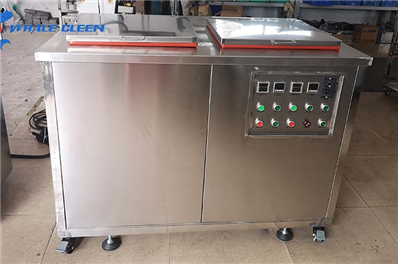
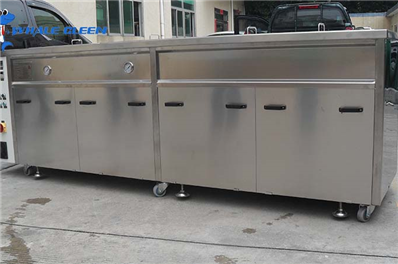
Application-specific engineering. Whale Cleen doesn't offer one-size-fits-all equipment. The company designs and manufactures ultrasonic cleaning systems according to specific customer requirements—workpiece sizes, contamination profiles, production volumes, and facility layouts. Whether you're cleaning small precision components or large machined parts, the system is built for your exact application.
Non-standard customization as standard. Real-world factories rarely have "standard" cleaning conditions. Whale Cleen's specialization in non-standard customization means the equipment adapts to your parts, not the other way around.
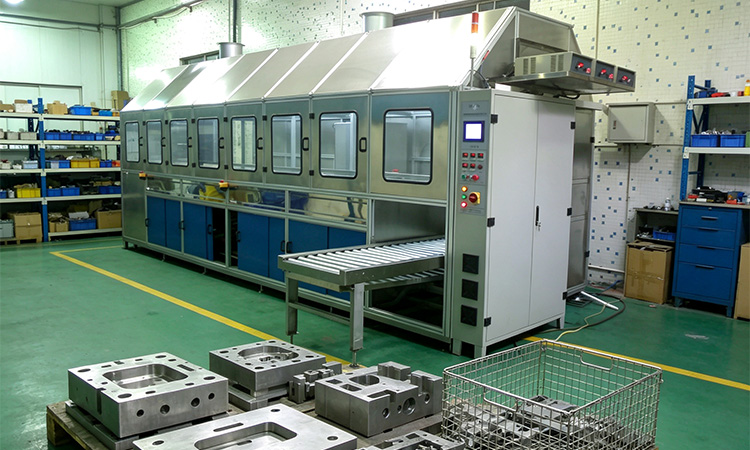
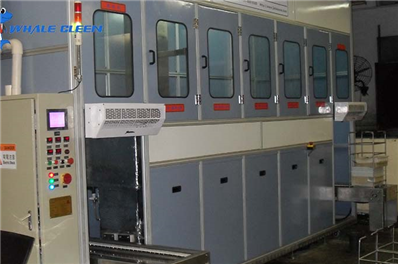
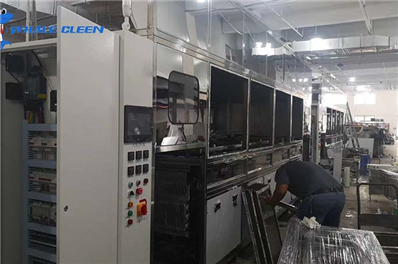
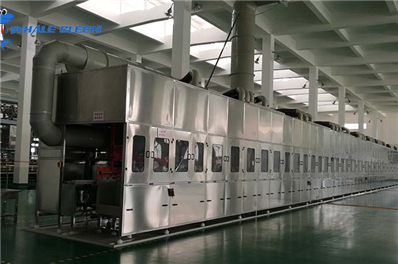
Automation for production consistency. Whale Cleen's fully automatic ultrasonic cleaning machines feature PLC control systems that enable continuous, unattended operation. Cleaning parameters—time, temperature, frequency—are precisely controlled and repeatable, eliminating the variability that plagues manual methods.
Strong acid-free philosophy. This is perhaps Whale Cleen's most distinctive commitment. While many suppliers still default to acid-based degreasing, Whale Cleen's ultrasonic approach delivers the cleanliness levels that plating demands—without the chemical costs, waste disposal headaches, safety risks, or metallurgical damage that acids bring.
Nickel plating adhesion isn't a mystery. It's a function of surface cleanliness at the micron scale. If the substrate isn't truly clean—if microscopic oil films, particulates, or residues remain—the plating will fail. It's that simple.
The good news is that achieving micron-level cleanliness doesn't require aggressive chemistry. Whale Cleen's ultrasonic cleaning technology delivers the precision, consistency, and thoroughness that nickel plating pretreatment demands—using physical cavitation instead of chemical corrosion.
Because in plating, what you can't see on the surface matters just as much as what you can. And with Whale Cleen, what you can't see is simply not there.