In metal finishing and electroplating operations, cleanliness is not just a quality metric—it is the foundation upon which adhesion, corrosion resistance, and final product performance are built. A single speck of oil residue on a stamped metal part can cause plating to peel. A microscopic film of oxide on a machined component can lead to premature failure in the field.
For years, standard ultrasonic cleaning has been the industry benchmark for removing contaminants from complex metal parts. But as cleanliness standards tighten and production volumes rise, a more powerful hybrid technology has emerged: electrolytic ultrasonic cleaning. The question is: how much of a difference does that "electrolytic" addition really make?
Conventional ultrasonic cleaning relies on a single physical principle—cavitation. High-frequency sound waves (typically 28–40 kHz) are transmitted through a liquid cleaning solution, generating millions of microscopic bubbles that implode with tremendous energy. These implosions create localized shockwaves that blast oil, grease, and particulate matter away from metal surfaces.
For many applications, this works well. Parts with accessible surfaces and moderate contamination levels come out clean. But standard ultrasonic cleaning has a limitation: it relies entirely on mechanical energy. It can dislodge contaminants, but it cannot chemically break down stubborn oxides, scale, or carbonized deposits that have bonded to the metal surface. In electroplating operations, where the goal is a pristine, chemically active surface ready for metal deposition, this limitation becomes critical.
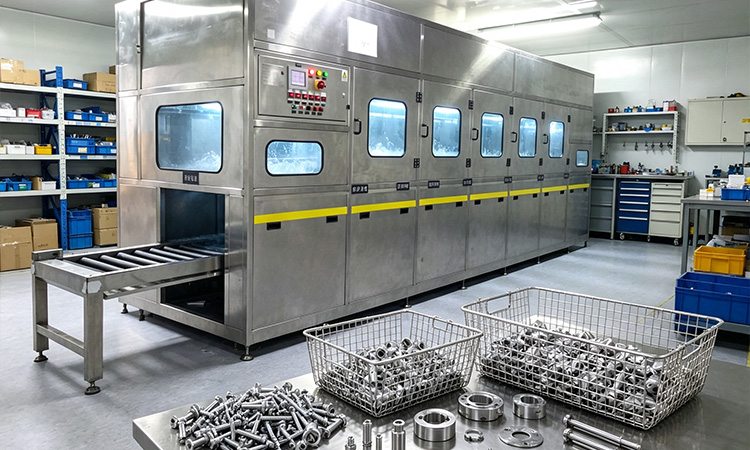
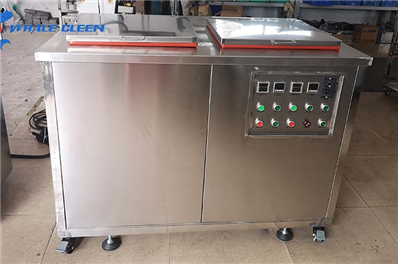
Electrolytic ultrasonic cleaning combines the mechanical force of cavitation with the chemical action of electrolysis. The process works like this: the metal workpiece is submerged in a specialized cleaning solution and connected as an electrode. A low-voltage direct current is applied, generating microscopic hydrogen and oxygen bubbles directly at the metal surface. These bubbles physically lift contaminants away, while the electrolytic reaction chemically breaks down oils, oxides, and carbon residues.
Meanwhile, the ultrasonic transducers continue generating cavitation throughout the tank. The combination is synergistic: electrolysis loosens what cavitation then shears away. Contaminants that would resist standard ultrasonic cleaning—stubborn carbon deposits, baked-on oxides, tenacious machining oils—are stripped away completely. Even contaminants trapped in blind holes and complex geometries are drawn out by the electrolytic action.
Side-by-side comparisons reveal a striking difference. In controlled tests on stamped metal parts prepared for electroplating:
Standard ultrasonic cleaning typically achieves a surface cleanliness level sufficient for basic industrial applications. However, microscopic oil films often remain in micro-crevices and on surfaces with high surface energy. These residues can interfere with plating adhesion, leading to blistering or peeling after electroplating.
Electrolytic ultrasonic cleaning achieves a fundamentally higher level of cleanliness. The electrolytic action not only removes surface oils but also chemically reduces thin oxide layers, leaving a chemically active metal surface that promotes superior plating adhesion. Parts emerge with a clean, bare-metal appearance—often described as "restored to their original steel color".
In electroplating operations, this difference translates directly into reject rates. Facilities using standard ultrasonic cleaning alone often report 5–15% plating defects related to inadequate pre-cleaning. Those that have integrated electrolytic ultrasonic cleaning into their process lines consistently report defect rates below 1%.
The electroplating process demands a surface that is not just visually clean, but chemically clean. Oils and oxides that are invisible to the naked eye can prevent the deposited metal from bonding properly to the substrate. The result is costly rework, scrapped parts, and compromised product performance.
Electrolytic ultrasonic cleaning addresses this challenge at its source. By combining mechanical removal with electrochemical surface activation, it prepares metal surfaces that are truly ready for plating—not just "clean enough" to pass a visual inspection, but clean enough to pass the most stringent adhesion tests.
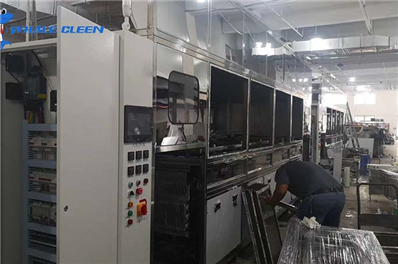
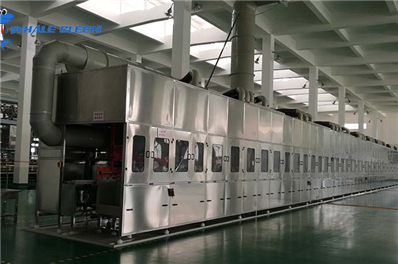
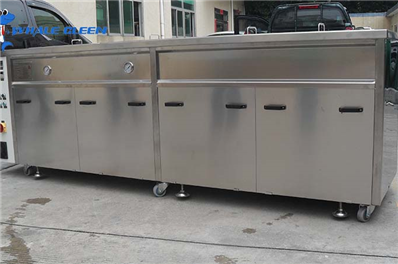
Behind this cleaning technology stands Whale Cleen—a brand with over two decades of ultrasonic equipment manufacturing experience. Since 2003, Whale Cleen has focused on providing professional cleaning solutions across major industries. The company operates from a 10,000-square-meter production base and designs and manufactures a comprehensive range of equipment: automatic ultrasonic cleaning machines, custom-built industrial systems, large industrial ultrasonic cleaners, ultrasonic transducer packs, vibrating rods, and industrial wastewater treatment equipment.
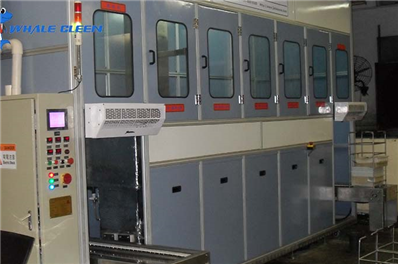
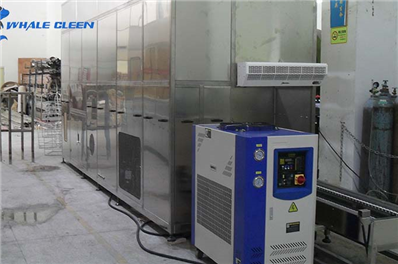
What sets Whale Cleen apart in the metal finishing industry is its commitment to custom-engineering. No two cleaning challenges are identical—different metals, different contaminants, different production rhythms demand different solutions. Whale Cleen's engineering team works directly with clients to design systems that match their exact workpiece dimensions, soil types, and throughput requirements, delivering complete cleaning ecosystems rather than off-the-shelf machines.
The company's integrated approach extends beyond the cleaning tank itself. Whale Cleen provides industrial wastewater treatment equipment and vacuum evaporators, ensuring that cleaning operations meet environmental regulations without compromising performance—a critical consideration for electroplating facilities facing increasingly strict discharge standards.
For metal finishing and electroplating operations, the choice between standard ultrasonic and electrolytic ultrasonic cleaning is not about marginal improvement—it is about fundamentally different outcomes. Standard ultrasonic cleaning removes loose contaminants. Electrolytic ultrasonic cleaning removes bonded contaminants and activates the metal surface for superior plating results.
If your reject rates are higher than they should be, if plating adhesion is inconsistent, or if you are spending too much time on rework, the gap between "clean" and "electrolytically clean" may be exactly where your solution lies.
Whale Cleen brings two decades of expertise, a 10,000 m² manufacturing footprint, and a custom-engineering mindset to every client partnership. Whether you need a standalone ultrasonic tank or a fully integrated electrolytic ultrasonic cleaning line, Whale Cleen delivers solutions that work.