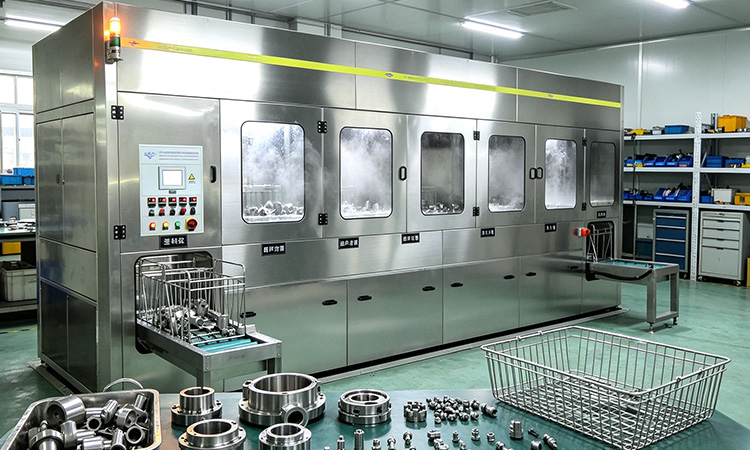
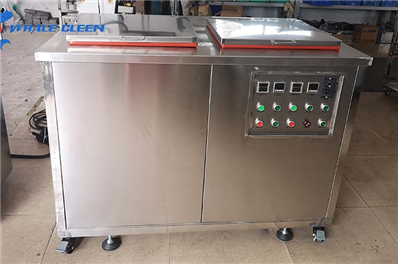
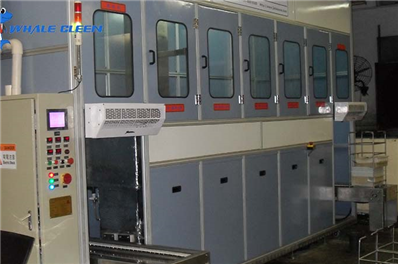
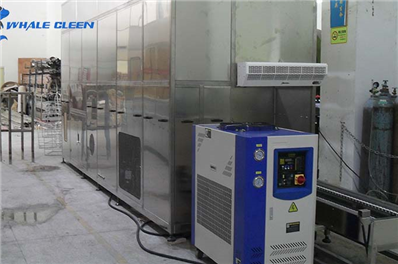
In modern manufacturing, surface cleanliness is not merely an aesthetic consideration—it is a critical factor that directly impacts product performance, coating adhesion, and overall production yield. From automotive engine components and transmission parts to precision hardware and mold cleaning, manufacturers across industries rely on ultrasonic cleaning technology to achieve the levels of cleanliness that traditional methods simply cannot deliver.
Ultrasonic cleaning operates on the principle of cavitation—millions of microscopic vacuum bubbles are generated in a cleaning solution and implode upon contact with part surfaces. This phenomenon generates powerful microscopic shockwaves that penetrate blind holes, threaded cavities, grooves, and complex internal geometries, dislodging contaminants that brushes and sprays cannot reach. The result is a level of cleaning precision that has made ultrasonic technology indispensable in automotive, aerospace, electronics, and general industrial manufacturing.
Among the most persistent challenges in industrial parts cleaning is the issue of white residue and watermark formation on aluminum die castings. Quality control inspectors and production managers frequently encounter a frustrating scenario: aluminum die-cast parts emerge from the cleaning line appearing perfectly clean, only to reveal white spots, cloudy patches, or water stains after drying. These surface defects may seem minor, but they can cause coating delamination, anodizing color inconsistencies, and in severe cases, complete batch rejection.
The root causes of this problem are well-documented and fall into four main categories:
Cleaning Solution Residue. Aluminum die castings feature complex structures with deep cavities, blind holes, threaded bores, and narrow slots that trap cleaning solutions. When rinsing is insufficient, residual surfactants, alkaline compounds, or cleaning agents crystallize during drying, leaving white deposits on the surface.
Water Quality. Aluminum is highly reactive to water quality. Tap water or hard water contains calcium and magnesium ions that precipitate during drying, forming white scale spots embedded in the microscopic pores of the aluminum surface.
Inadequate or Uneven Drying. If aluminum die castings are not dried thoroughly and promptly after cleaning, residual moisture reacts with carbon dioxide in the air to form white aluminum hydroxide—commonly referred to as "white rust". This phenomenon is particularly severe in high-humidity environments.
Cavitation Erosion. While ultrasonic cleaning is highly effective, improper power density or frequency selection can cause cavitation bubbles to implode aggressively against thin-walled aluminum structures, creating microscopic pitting that appears as surface whitening or dulling.
Traditional cleaning methods struggle with a fundamental contradiction: aggressive cleaning agents and high temperatures are needed to remove stubborn contaminants, yet stronger chemicals increase residue and corrosion risks. High-pressure spraying cannot flush solution from blind holes and deep cavities; immersion rinsing consumes large volumes of water with low efficiency; and manual drying is inconsistent, with water marks virtually guaranteed.
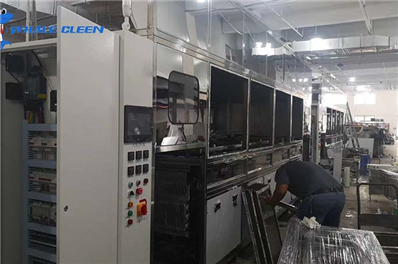
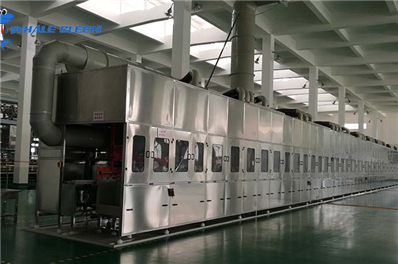
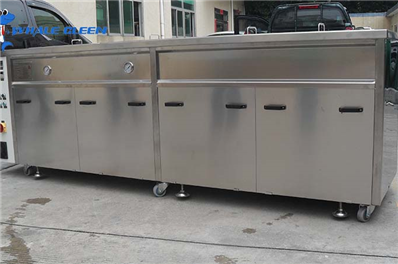
This is where Whale Cleen enters the picture. With over 20 years of experience in ultrasonic equipment research, development, manufacturing, and after-sales service, Whale Cleen has established itself as a trusted partner for manufacturers worldwide. Operating from a 10,000-square-meter production base and holding more than 30 national patents, the company designs and produces automatic ultrasonic cleaning machines, custom ultrasonic systems, and large industrial ultrasonic cleaners.
What sets Whale Cleen apart is its commitment to solving real-world cleaning challenges through non-standard customization. Manufacturing facilities rarely have "standard" cleaning conditions—workpiece sizes vary, contamination profiles differ, and production line layouts are unique. Whale Cleen engineers ultrasonic cleaning systems according to specific customer requirements rather than offering only off-the-shelf units. This means that whether you are cleaning heavy die-cast housings covered in drawing compounds or precision-machined aluminum components with intricate geometries, the equipment is tailored to match your exact application.
Whale Cleen's ultrasonic cleaning systems address the white residue problem through an integrated cleaning-rinsing-drying workflow. The core technology—ultrasonic cavitation—generates billions of microscopic bubbles that implode with tremendous force, penetrating deep cavities, blind holes, and threaded passages to remove oils, greases, mold-release agents, and machining residues without relying on line-of-sight access or abrasive contact.
However, what truly determines whether white stains will appear is what happens after the cleaning stage. Whale Cleen systems incorporate:
Multi-Stage Rinsing. After ultrasonic cleaning, aluminum die castings undergo multiple rinsing stages—typically with pure or deionized water—to thoroughly displace residual cleaning solution. Each rinsing stage is assisted by ultrasonic energy to ensure that trapped fluids in deep cavities and blind holes are effectively "squeezed out" and replaced. The process continues until conductivity readings confirm that no ionic residues remain.
Integrated High-Efficiency Drying. Traditional air drying or hot-air blowers produce inconsistent results and leave water marks. Whale Cleen's fully automatic systems integrate cleaning, rinsing, and drying into a seamless, continuous workflow. Parts move from the final rinse directly into drying chambers without intermediate exposure to ambient air, preventing moisture from reacting with the aluminum surface. The result is a dry, stain-free surface ready for subsequent coating, anodizing, or assembly.
Acid-Free Degreasing. Whale Cleen's ultrasonic technology replaces aggressive chemical attack with mechanical precision. The cavitation process removes grease, oil, and carbon deposits without exposing aluminum parts to harsh acids that can etch surfaces or promote discoloration. This approach delivers superior cleanliness while reducing scrap rates, lowering chemical costs, and creating safer working conditions.
For manufacturers of aluminum die castings, the transition to Whale Cleen ultrasonic cleaning technology means more than just cleaner parts—it means eliminating the hidden quality killer of white residue and water stains. It means achieving consistent, repeatable cleaning results that protect downstream processes and safeguard product quality. And it means partnering with an experienced manufacturer that understands that no two cleaning challenges are exactly alike.
Whale Cleen does not just sell equipment—it delivers engineered solutions for the most demanding industrial cleaning applications. For manufacturing engineers and facility managers seeking a reliable industrial ultrasonic cleaning partner, Whale Cleen has earned its reputation through two decades of proven performance.