In the manufacturing industry, the cleaning of mold components—such as core pins, ejector pins, and intricate mold inserts—has long been a silent drain on production budgets. The costs are not limited to cleaning agents and labor; they extend to rejected parts, equipment downtime, and the gradual wear caused by aggressive manual cleaning methods.
High Cleaning Costs for Mold Parts? Ultrasonic Equipment Helps Workshops Reduce Costs and Boost Efficiency
This is the question that production managers and workshop supervisors ask themselves every day. Traditional cleaning approaches—manual scrubbing, chemical soaking, high-pressure spraying—all come with hidden expenses that accumulate over time. Chemical baths require constant replenishment and disposal. Manual cleaning demands skilled labor that could be deployed elsewhere. And when parts come out of cleaning still contaminated with oil, rust, or oxide residues, the cost of rework or scrap eats directly into profitability.
How Ultrasonic Cleaning Transforms Mold Maintenance
Ultrasonic cleaning technology offers a fundamentally different approach. The process harnesses high-frequency sound waves—typically ranging from 28 kHz to 120 kHz—to generate microscopic cavitation bubbles in a cleaning solution. These bubbles expand and collapse rapidly, creating intense localized energy that dislodges contaminants from every surface without abrasive contact. For mold parts with complex geometries—grooves, slits, blind holes, and deep holes—ultrasonic waves penetrate where brushes and sprays cannot reach.
The advantages are clear and measurable:
Thorough contamination removal. Ultrasonic cleaning effectively removes oil, rust, and oxides from part surfaces, reaching sub-micron particles that traditional methods miss. Whether it is cutting fluid residues, mold release agents, or oxidation films, ultrasonic cavitation breaks the bond between contaminants and the workpiece.
Non-abrasive and part-safe. Unlike mechanical scrubbing that can scratch or deform surfaces, ultrasonic cleaning preserves dimensional accuracy and surface finish. This is particularly critical for high-precision mold components where even micron-level damage can affect product quality.
Significant labor savings. Automated ultrasonic systems complete in minutes what takes hours manually. One operator can manage multiple machines, freeing skilled workers for higher-value tasks.
Reduced chemical consumption. Water-based cleaning solutions with mild additives achieve results that previously required aggressive solvents, lowering both material costs and disposal expenses.
Whale Cleen: Fully Automated Cleaning for Maximum Efficiency
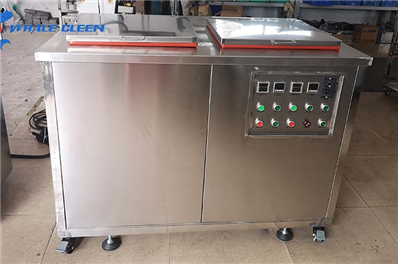
For manufacturers seeking to reduce cleaning costs while improving results, Whale Cleen (Shenzhen Blue Whale Ultrasonic Cleaning Equipment Co., Ltd.) stands as a trusted partner with over two decades of experience. Since 2003, the company has focused on providing professional cleaning solutions and various types of ultrasonic cleaners, establishing itself as a high-tech enterprise integrating R&D, manufacturing, marketing, and after-sales service. Today, Whale Cleen operates a 10,000-square-meter production base, designing and producing automatic ultrasonic cleaning machines, custom ultrasonic cleaning machines, and large industrial ultrasonic cleaning systems.
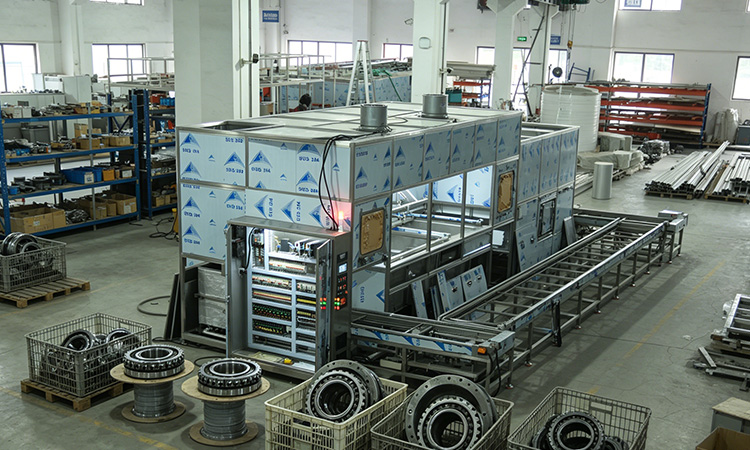
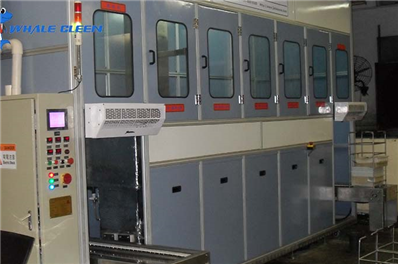
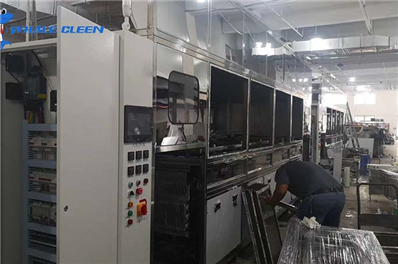
What sets Whale Cleen apart is its commitment to fully automated, one-stop cleaning solutions. The company's mechanical arm-type automatic ultrasonic cleaners integrate six core systems: mechanical transmission, ultrasonic system, heating system, drying system, water supply and drainage, and electrical control. The entire process—from loading the basket into the cleaning tank to moving between tanks and final unloading—is completed automatically by the manipulator system.
The automation extends across the full cleaning cycle: rough washing, spraying, hot soaking, rinsing, bubbling, and drying are all completed within a single integrated system. This means parts exit the machine not only clean but completely dry—eliminating the water spots that plague traditional methods and the manual handling that reintroduces contamination.
Real-World Impact: Doubling Throughput, Cutting Costs
For workshops struggling with cleaning bottlenecks, the impact is transformative. One customer in the automotive parts industry shared how Whale Cleen's fully automated cleaning line enabled them to clean double the number of parts compared to their previous manual process—without adding labor or floor space.
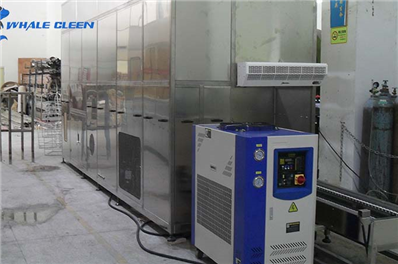
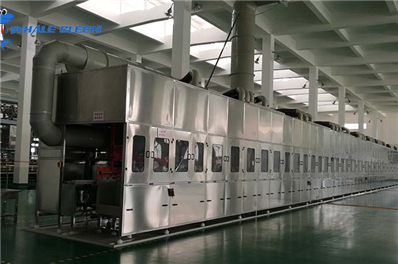
The company's through-type ultrasonic cleaning machines offer continuous operation with variable-frequency adjustable transmission speed, delivering high cleaning efficiency with easy operation and maintenance. The equipment can be equipped with a real-time circulating filtration system that maximizes liquid utilization efficiency and reduces labor intensity.
Non-Standard Customization: Tailored to Your Production Line
Every workshop has unique requirements—different part geometries, different contamination profiles, different throughput targets. Whale Cleen addresses this through comprehensive non-standard customization. The company can provide design drawings and cleaning programs tailored to specific customer needs. Whether it is adjusting the number of cleaning stations, configuring specific drying methods, or integrating with existing production lines, Whale Cleen's engineering team works closely with customers to deliver solutions that fit.
Comprehensive After-Sales Support
Beyond the equipment itself, Whale Cleen is committed to seamless integration and long-term reliability. The company provides door-to-door installation and commissioning, with technical personnel offering free guidance and training. After-sales response is rapid: feedback receives a response within 12 hours, with solutions provided within 36 hours. The company offers an 18-month warranty and lifelong maintenance, ensuring that customers never have to worry about downtime or unexpected repair costs.
From Mold Parts to Complex Components: One-Stop Cleaning and Drying
Whether you are cleaning mold components, ejector pins, aluminum alloy castings, battery shell molds, or electronic parts, Whale Cleen's ultrasonic cleaning solutions deliver the thoroughness, consistency, and efficiency that modern manufacturing demands. The company's equipment is widely applied in machinery, electronics, optics, automotive maintenance, and vacuum coating pre-treatment.
For complex surface shapes—grooves, slits, blind holes, and deep holes—ultrasonic cleaning provides an efficient and rapid cleaning effect that traditional methods cannot match. At the same time, it cleans oil, rust, and oxides from part surfaces while realizing one-stop processing of cleaning, rinsing, and drying.
If high cleaning costs for mold parts are eating into your workshop's profitability, it is time to explore how ultrasonic cleaning technology—and Whale Cleen's expertise—can help you reduce costs and boost efficiency.
For more information on how Whale Cleen can transform your industrial cleaning process, visit the official website: