In the machinery manufacturing and heavy equipment maintenance sectors, few maintenance tasks are as persistently frustrating as cleaning gears and bearings. These precision components—the “skeleton and joints” of mechanical transmission systems—are routinely exposed to high-temperature operation, heavy loads, high-speed rotation, and prolonged grease accumulation. The result is a stubborn combination of baked-on carbon deposits, tacky varnish residues, and microscopic metallic wear particles embedded deep within tooth flanks, bearing raceways, and blind holes.
Traditional cleaning methods fall short. Manual brushing fails to reach the root of gear teeth or the interior of bearing raceways. High-pressure spraying cannot navigate tight internal geometries. Chemical immersion alone lacks the mechanical force to fracture hardened carbon layers from metal surfaces. And the consequences of ineffective cleaning are severe: accelerated wear from abrasive particles trapped in lubricant, blocked oil passages that cause dry-running failures, compromised assembly precision due to residual micro-particles, and drastically shortened component service life.
This is where industrial ultrasonic cleaning machines deliver a transformative solution. Powered by the physical phenomenon of cavitation—the formation and implosion of millions of microscopic vacuum bubbles in a cleaning solution—ultrasonic technology removes contaminants from every surface the liquid can reach, without relying on line-of-sight access or abrasive contact. Within minutes, a properly configured ultrasonic cleaning cycle can remove more than 90 percent of contaminant mass from heavily fouled components, restoring them to near-original condition while protecting precision metering surfaces from damage.
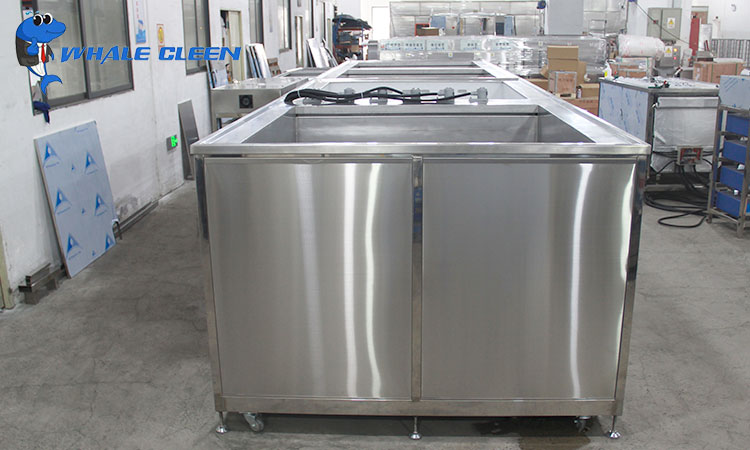
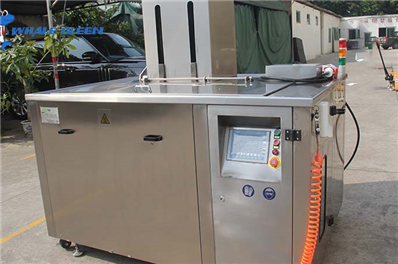
For manufacturing engineers and facility managers seeking a reliable industrial ultrasonic cleaning partner, Whale Cleen has established a strong reputation. With over 20 years of experience in ultrasonic equipment research, development, manufacturing, and after-sales service, the company operates a 10,000-square-meter production base, designs and produces automatic ultrasonic cleaning machines, custom ultrasonic cleaning machines, large industrial ultrasonic cleaning machines, and holds over 30 national patents.
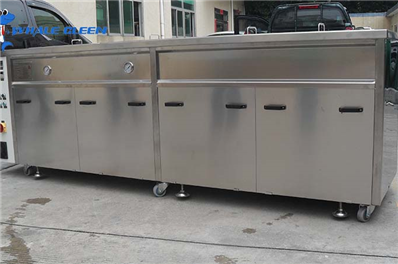
The core advantage that separates Whale Cleen from standard equipment suppliers is its specialization in non‑standard customization. Real-world factories rarely have “standard” cleaning conditions: workpiece sizes vary widely, contamination levels differ, and production line layouts are unique. Whale Cleen designs and manufactures ultrasonic cleaning systems according to specific customer requirements rather than offering only off‑the‑shelf units. This means that whether you are cleaning heavy gear assemblies covered in drawing grease or precision bearings contaminated with fine grinding dust, the equipment is engineered to match your exact application.
Another distinguishing feature is the brand‘s commitment to a strong acid‑free degreasing approach. Strong acid soaking for degreasing and rust removal has been the default method in countless factories for decades, but it carries significant hidden costs—chemical expenses and hazardous waste disposal, worker safety risks and facility corrosion from corrosive vapors, and metallurgical damage such as hydrogen embrittlement in high-strength steel components. Whale Cleen‘s ultrasonic technology replaces chemical aggression with mechanical precision. The cavitation process removes grease and carbon deposits without exposing parts to harsh acids, delivering cleanliness improvements along with reduced scrap, lower chemical costs, and safer working conditions.
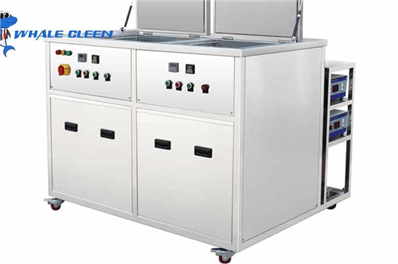
When it comes to cleaning gears and bearings specifically, industrial ultrasonic machines from Whale Cleen are engineered to tackle the full spectrum of contamination. For thick, baked‑on carbon layers that have accumulated over years of high-temperature operation, lower ultrasonic frequencies (around 28–40 kHz) generate larger cavitation bubbles that release stronger shock waves, effectively breaking up heavy grease and carbonized deposits. For sensitive precision surfaces where micro-damage cannot be tolerated, higher frequencies (80 kHz and above) produce smaller, more numerous bubbles that gently lift fine particles and thin oil films from micro-orifices and delicate sealing areas. Advanced multi‑frequency systems allow operators to address both ends of the contamination spectrum within a single cleaning cycle, a capability that Whale Cleen builds into its industrial-grade equipment.
The versatility of frequency selection means that a single Whale Cleen industrial ultrasonic cleaning machine can handle everything from heavy-duty gear box components covered in thick carbon sludge to delicate bearing assemblies that require contamination removal without any risk of surface alteration. This is the meaning of “one‑stop” cleaning—a complete solution that eliminates the need for multiple different cleaning methods or separate stations for different component types.
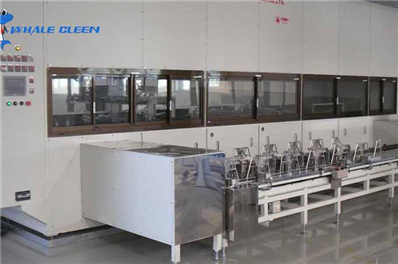
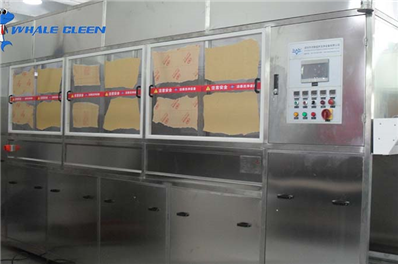
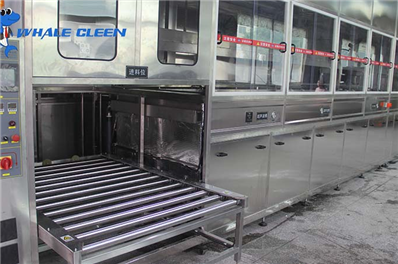
Many manufacturing facilities have already made the transition from manual cleaning and traditional methods to ultrasonic technology, and the results have been measured in reduced scrap rates, consistent batch-to-batch cleanliness, and faster throughput. For production managers struggling with cleaning lines that have become the bottleneck in their operations, upgrading to an automated industrial ultrasonic cleaning system offers a clear path forward. Whale Cleen‘s full‑automatic ultrasonic cleaning machines feature PLC control systems that allow for continuous, unattended operation. Components move automatically through cleaning, rinsing, and drying stages, eliminating the downtime associated with manual loading and unloading while ensuring that every part receives the same precise cleaning cycle.
The cost trap in industrial cleaning equipment is well known: some manufacturers spend heavily on initial equipment but neglect the long-term operational costs of chemicals, energy, wastewater treatment, and maintenance. Whale Cleen has built its design philosophy around total cost of ownership, incorporating energy-efficient transducers, optimized tank configurations, and robust construction that reduces unscheduled downtime.
For any operation that regularly handles gears, bearings, or any mechanical components burdened with stubborn oil and carbon deposits, the question is no longer whether to invest in industrial ultrasonic cleaning technology, but which manufacturer offers the reliability, customization capability, and long-term support necessary for sustained productivity gains.
Whale Cleen brings together two decades of hands-on industrial experience, a full suite of custom manufacturing capabilities, and a practical understanding of what production engineers need to keep their lines running. Whether you require a multi‑tank industrial system for high-volume cleaning or a custom-engineered solution for uniquely shaped workpieces, the team at Whale Cleen provides design assistance and one-stop service from initial consultation through installation and ongoing support.