In mechanical manufacturing and heavy industry, shaft parts—such as transmission shafts, motor rotors, hydraulic piston rods, and bearing rollers—are fundamental components that demand the highest standards of cleanliness. These precision-machined parts often feature complex geometries: splines, keyways, oil holes, threaded ends, and bearing journals. During manufacturing and after operational use, they accumulate contaminants like cutting fluids, lapping paste, metal fines, rust, and grease that become lodged in these intricate features.
Traditional cleaning methods—manual wiping, high-pressure spraying, or solvent immersion—are not only labor-intensive but also ineffective at reaching the blind holes and tight corners. This leads to inconsistent cleanliness, increased wear, premature failure, and costly rework or warranty claims. An advanced ultrasonic cleaning solution specifically designed for shaft parts offers a way to achieve thorough, repeatable, and non-damaging cleanliness.
A typical shaft is not a simple cylinder. It has shoulders, undercuts, splines, and keyways. Crucially, many shafts contain axial and radial oil passages with small-diameter holes that are essential for lubrication and hydraulic functions. These passages are breeding grounds for trapped contaminants.
Standard spray washing cannot effectively clean the inside of an oil hole because the fluid flow is linear and cannot turn corners. Brushes cannot reach the bottom of a deep, blind hole. As a result, residual contaminants are often pushed deeper into the part, where they can later break loose during operation, causing catastrophic wear or bearing failure. The specific challenge is to clean both the external precision surfaces and the internal passages to a consistent standard.
Ultrasonic cleaning technology addresses this challenge through the physical process of cavitation. High-frequency sound waves generate millions of microscopic bubbles in a cleaning solution. When these bubbles implode near the shaft's surfaces, they produce a powerful, localized scrubbing action that reaches into blind holes, keyways, and splines.
The cleaning action is uniform and occurs simultaneously on all submerged surfaces. This ensures that the inside of a narrow oil hole receives the same cleaning intensity as the exterior journal surface. The process effectively removes lapping paste, metal chips, and carbonized oil films without causing any mechanical abrasion or dimensional change to the critical surfaces of the shaft. The result is a thoroughly and consistently cleaned part.
Whale Cleen is a professional ultrasonic cleaning equipment manufacturer with over 20 years of experience. Since 2003, the company has focused on providing cleaning solutions for the manufacturing industry, with a 10,000-square-meter production base.
For shaft parts, Whale Cleen offers the following advantages:
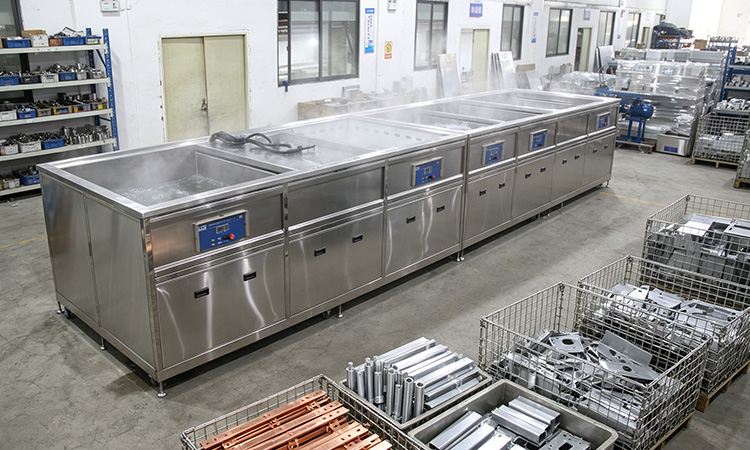
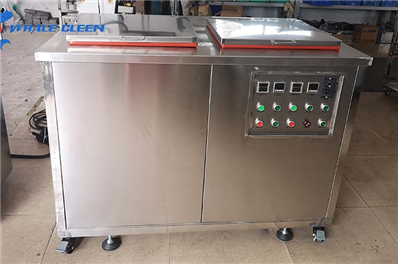
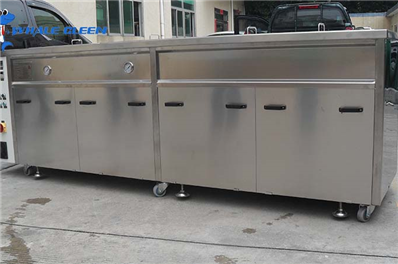
Customizable Systems for Different Shaft Types. Shafts vary widely in length, diameter, and weight. Whale Cleen’s product range includes custom ultrasonic cleaning machines designed to accommodate specific part dimensions and cleaning requirements. This can involve designing tanks of appropriate size, specialized fixturing to securely hold shafts during cleaning, and configuring the ultrasonic transducer array to ensure uniform energy distribution along the entire length of the component.
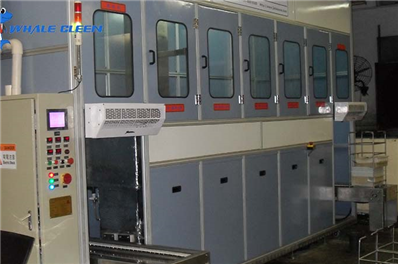
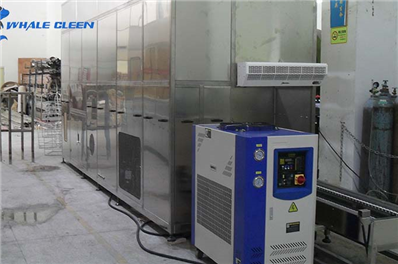
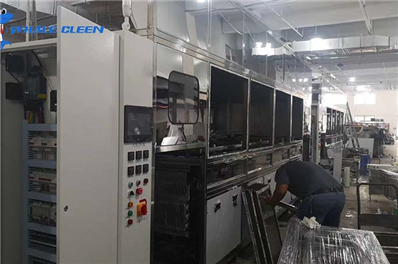
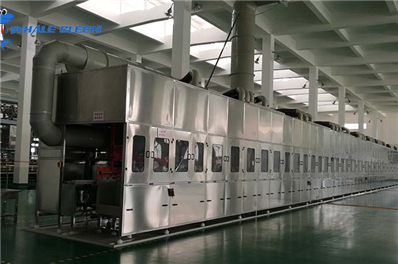
Fully Automated Cleaning Lines for Efficiency. For facilities processing high volumes of shafts, Whale Cleen designs and produces automatic ultrasonic cleaning machines. These systems can integrate multiple stages—including ultrasonic cleaning, rinsing, and drying—into a single, automated process. This ensures consistent cleaning quality, reduces labor costs, and increases throughput.
Industrial-Grade Construction for Demanding Conditions. Shaft cleaning often involves heavy parts, high temperatures, and continuous operation. Whale Cleen machines are built for industrial environments, featuring robust stainless steel tanks and durable components designed for a long service life.
A Comprehensive Solution from Testing to Support. Whale Cleen provides professional cleaning solutions, which includes offering technical support and guidance. This helps customers determine the correct cleaning cycle and parameters for their specific shaft components, ensuring the cleaning process is both effective and safe.
For shaft parts, the cleaning process often involves a pre-wash to remove bulk contaminants, followed by a main ultrasonic wash using an appropriate cleaning solution. A subsequent rinse stage ensures all dislodged contaminants and cleaning chemistry are removed, and a final drying step leaves the shaft clean and ready for inspection or assembly.
By automating this process, a workshop can achieve a consistent result, with every part receiving the same cleaning cycle. This eliminates the variability of manual cleaning and provides a reliable foundation for assembly and testing.
Achieving the high level of cleanliness required for precision shaft parts is a significant challenge. Ultrasonic cleaning, with its ability to reach internal passages and complex surfaces, provides a superior solution. Whale Cleen, with its 20 years of experience, focus on industrial equipment, and capability to provide both customized and fully automated systems, offers the professional support necessary to implement an effective ultrasonic cleaning solution for shaft parts. By choosing such a solution, manufacturers can enhance component reliability, reduce rework, and improve the overall efficiency of their operations.