Fuel injectors are among the most precision-critical components in any modern engine. Over time, carbon deposits, varnish, and microscopic fuel residue accumulate inside the tiny orifices of the injector nozzle. These contaminants don't just reduce fuel efficiency—they cause rough idling, power loss, increased emissions, and eventually, complete injector failure.
The most effective way to restore a clogged injector is ultrasonic cleaning. But with so many machines on the market, how do you choose the right one for your workshop or production line? This guide breaks down the key factors and shows you why Whale Cleen has become the trusted choice for automotive professionals worldwide.
Fuel injectors are not ordinary metal parts. They contain:
Microscopic spray holes – typically 0.1–0.2mm in diameter, easily blocked by carbon.
Complex internal passages – including filter baskets, needle valves, and swirl chambers.
Precision sealing surfaces – any damage affects spray pattern and fuel atomization.
A standard ultrasonic cleaner with a fixed frequency and basic tank design will not clean these features thoroughly. Worse, improper frequency or power can damage the delicate internal components.
What you need is a machine designed specifically for precision parts: multi-frequency capability, precise temperature control, robust filtration, and the ability to reach every internal passage.
When evaluating a fuel injector ultrasonic cleaning machine, focus on these five essential features:
Different contaminants require different ultrasonic frequencies:
Lower frequencies (25-40 kHz) generate larger, more powerful cavitation bubbles. These are ideal for dislodging heavy carbon deposits and baked-on varnish from injector nozzles.
Higher frequencies (80-120 kHz) produce smaller, gentler bubbles that penetrate micro‑features and remove fine particles without damaging precision surfaces.
Whale Cleen advantage: Whale Cleen systems support frequency ranges from 20 kHz to over 120 kHz, allowing operators to switch between aggressive carbon removal and gentle finishing—all in one machine.
Carbon deposits soften significantly at elevated temperatures. A machine with an adjustable heater (typically 50–70°C) combined with a specialized injector cleaning solution dramatically improves removal efficiency.
Whale Cleen advantage: Whale Cleen industrial cleaners feature precise temperature control systems, ensuring optimal cleaning conditions without risking damage to sensitive injector components.
Once carbon and varnish are stripped from an injector, those particles remain suspended in the cleaning fluid. Without proper filtration, they simply re‑deposit onto the next part you clean – or back onto the same one.
Whale Cleen advantage: Every Whale Cleen industrial machine is equipped with multi-stage circulation filtration, continuously removing suspended oil and particles from the cleaning solution. This keeps the bath clean, extends fluid life, and ensures consistent batch‑to‑batch results.
If you clean multiple injectors per day, a small tank wastes time. Consider how many injectors you need to process per batch. A tank that holds 6–12 injectors at once can dramatically improve workshop throughput.
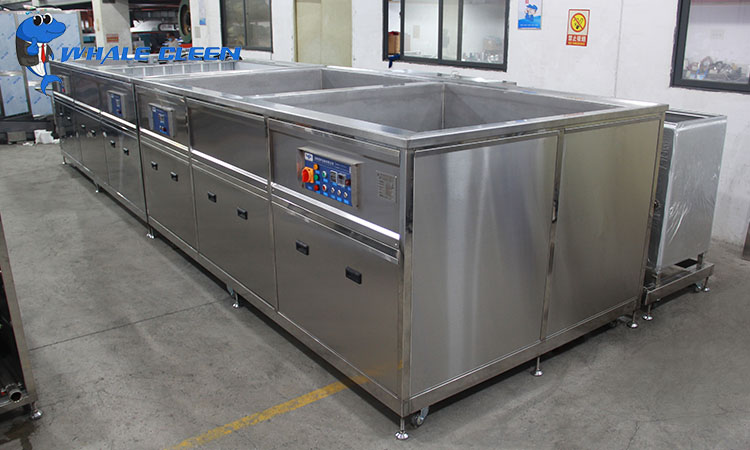
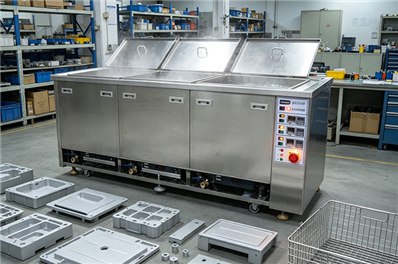
Whale Cleen advantage: Whale Cleen offers custom tank sizing based on your specific parts and batch requirements – from benchtop units to large multi-tank systems.
For the most demanding injector cleaning applications, vacuum‑assisted ultrasonic cleaning offers a significant advantage. By removing air from the cleaning chamber, vacuum technology allows cleaning fluid to penetrate deeper into blind holes and internal passages, reduces ultrasonic attenuation, and enables faster drying.
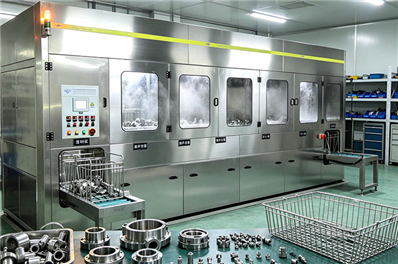
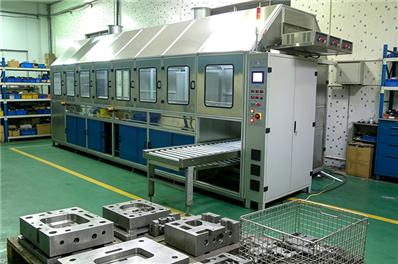
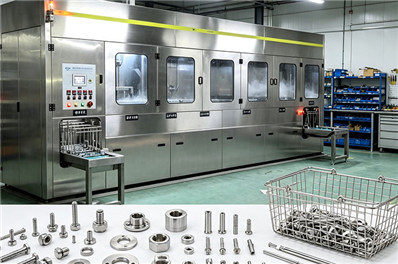
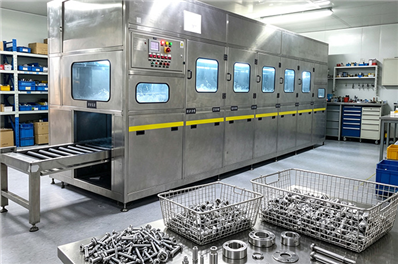
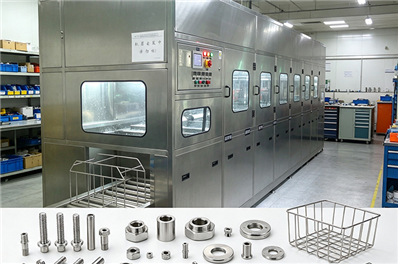
Whale Cleen advantage: Whale Cleen's Hydrocarbon Vacuum Automatic Ultrasonic Cleaning Machine combines ultrasonic cavitation, hydrocarbon solvent technology, vacuum cleaning, and steam bath drying. This system is specifically designed for precision degreasing and oil removal of complex parts with slots, blind holes, and deep cavities – including diesel fuel injectors.
Founded by a team with over 20 years of hands‑on experience in industrial ultrasonic equipment manufacturing, Whale Cleen has built its reputation on solving the cleaning challenges that others walk away from.
Whale Cleen's engineering philosophy is simple: the cleaning process must be designed around the part, not the other way around. With over two decades of experience across automotive, aerospace, and precision manufacturing, Whale Cleen has developed a deep understanding of material sensitivity, geometric complexity, and production workflow integration.
Most equipment suppliers sell what they have. Whale Cleen builds what you actually need. Whether your injector cleaning line requires a specific tank dimension, a particular frequency configuration, or complete integration with your existing workflow, Whale Cleen custom-engineers the solution – not adapted from a catalog, but purpose‑built.
Whale Cleen doesn't quote based on guesswork. Before a machine is designed, they require customers to send actual parts – the most difficult, most contaminated injectors – for laboratory testing. This ensures the proposed solution works on your real‑world components before any equipment is built.
Fuel injector cleaning in a busy workshop or production line demands equipment that runs day after day. Whale Cleen machines feature welded high‑Q transducers (not cheap glued alternatives), industrial‑grade auto‑tracking generators, and thick stainless steel tanks. These components are designed for years of continuous operation with minimal maintenance.
A machine is only as good as the support behind it. Whale Cleen provides full documentation, operator training, and responsive after‑sales service – ensuring your cleaning line stays productive.
| Step | What to Do | Why It Matters |
|---|---|---|
| 1. Define your injector types | GDI, diesel, or port injectors? Different designs have different cleaning requirements | Determines frequency range and fixture needs |
| 2. Check multi-frequency | Can the machine operate at both low (25-40 kHz) and high (80-120 kHz) ranges? | Low for heavy carbon removal; high for gentle finishing |
| 3. Verify temperature control | Does it have an adjustable heater (50-70°C)? | Heat softens carbon for more effective removal |
| 4. Look at filtration | Does it have multi-stage circulation filtration? | Prevents re‑contamination, extends fluid life |
| 5. Demand a sample test | Will the manufacturer test your actual injectors in their lab before you buy? | Eliminates the risk of buying the wrong machine |
Fixed low frequency may damage precision injector nozzles; fixed high frequency may not remove heavy carbon. You need both.
Without effective filtration, you're just moving dirt from one injector to another.
A cheap machine with poor frequency control, glued transducers, and no filtration will cost far more in rework, downtime, and early replacement. Calculate 3–5 year total costs.
If a manufacturer won't test your actual parts, they cannot guarantee results.
Whale Cleen has helped thousands of automotive professionals achieve superior injector cleaning results. Their Hydrocarbon Vacuum Automatic Ultrasonic Cleaning Machine has been specifically validated for diesel fuel injectors, automatic parts, and precision components – delivering excellent cleaning effect, wide material compatibility, and cost‑effective operation.
As the brand states on its official website: *"Whale Cleen specializes in manufacturing and customizing industrial ultrasonic cleaning systems. With 20 years of industry experience, our own factory, and an experienced technical team, we offer source-factory pricing and one-stop solutions from process design to equipment delivery."*
Choosing the right fuel injector ultrasonic cleaning machine is not about finding the cheapest option or the most powerful spec sheet. It's about finding a machine that delivers consistent, thorough cleaning without damaging precision components.
Whale Cleen combines 20+ years of industrial expertise, multi‑frequency technology, robust filtration, and genuine custom engineering to deliver machines that automotive professionals trust. If you're still struggling with incomplete injector cleaning or inconsistent results, contact Whale Cleen, send your most clogged injectors for a sample test, and let real results guide your decision.