In metal parts manufacturing and heavy equipment maintenance, few scenarios are as frustrating—and as costly—as the inspection failure that follows an inadequate cleaning process.
The scenario plays out in workshops every day: a batch of precision metal components emerges from storage or machining, their surfaces layered with a stubborn combination of rust and cutting oil residue. The production team runs them through the high-pressure spray cleaning line, confident that the forceful jets will remove every trace of contamination. The parts go to quality inspection—and fail. Residual oil remains trapped in thread roots. Rust particles cling to blind hole bottoms. Stains and spots mar critical sealing surfaces. The entire batch is rejected, rework schedules are thrown into chaos, and the question echoes through the workshop: What else could we have done?
The answer lies not in more aggressive spraying or longer soaking times, but in a fundamentally different cleaning technology—one that reaches where sprays cannot, and removes what chemicals alone cannot dissolve. Ultrasonic cleaning has emerged as the definitive solution to the rust-and-oil dilemma that plagues precision manufacturing.
High-pressure spray cleaning appears, on the surface, to be a logical approach. Forceful water jets, combined with cleaning agents, should theoretically blast contaminants from every exposed surface. But the reality is that spray cleaning has inherent physical limitations that no amount of pressure can overcome.
Line-of-sight dependency. Spray nozzles clean only what they can directly strike. When a workpiece has blind holes, cross-drilled passages, threaded bores, or internal cavities, the spray jet simply cannot reach these areas. The result is predictable: contaminants remain trapped in these "dead zones," emerging only during final inspection.
The "dead zone effect" in deep holes. For components with high-aspect-ratio blind holes—common in hydraulic valve bodies, engine blocks, and precision housings—high-pressure spraying can actually make the problem worse. When water enters a blind hole at high velocity, it creates a vortex at the bottom that drives contaminants further into the depths rather than flushing them out.
Inability to break the rust-oil bond. Rust and oil together form a particularly stubborn contaminant. The oil film traps rust particles against the metal surface, while the rust provides a rough, porous texture that holds oil tenaciously. Spray cleaning, relying primarily on mechanical force and chemical action, often fails to break this composite bond—leaving microscopic residues that compromise subsequent coating, sealing, or assembly operations.
Ultrasonic cleaning operates on a fundamentally different principle: cavitation. High-frequency sound waves—typically ranging from 20 kHz to 120 kHz—are transmitted through a cleaning solution, generating millions of microscopic vacuum bubbles. These bubbles grow, oscillate, and implode with tremendous energy, creating intense micro-jets and localized shock waves.
Unlike spray cleaning, these cavitation bubbles can flow into any space the liquid can reach—including sub-millimeter threads, blind holes, cross-drilled passages, and intricate internal cavities. When the bubbles implode inside these confined spaces, they generate enough energy to dislodge even the most tenacious contaminants: rust particles, baked-on oil films, and the composite rust-oil layers that defeat spray systems.
The advantages are transformative:
Complete penetration into complex geometries. For parts with grooves, slits, blind holes, and deep holes—features that spray cleaning simply cannot address—ultrasonic cleaning delivers efficient and rapid cleaning results. Every internal surface receives the same intense, uniform cleaning action.
Thorough removal of oil, rust, and oxides. Ultrasonic cleaning effectively removes oil, rust, and oxides from part surfaces, reaching sub-micron particles that traditional methods miss. Whether it is cutting fluid residues, oxidation films, or rust layers, ultrasonic cavitation breaks the bond between contaminants and the workpiece.
Non-abrasive and part-safe. Unlike mechanical scrubbing that can scratch or deform surfaces, ultrasonic cleaning preserves dimensional accuracy and surface finish. This is particularly critical for high-precision components where even micron-level damage can affect product quality.
Consistent, repeatable cleanliness. Ultrasonic cleaning eliminates the human variables and process inconsistencies that plague spray cleaning. Every workpiece, every batch, every shift—identically clean.
For manufacturers seeking a reliable, industrial-grade solution to rust-and-oil contamination that spray cleaning leaves behind, Whale Cleen (http://www.bwhalesonic.com/) stands as a trusted partner with deep expertise in ultrasonic cleaning technology.
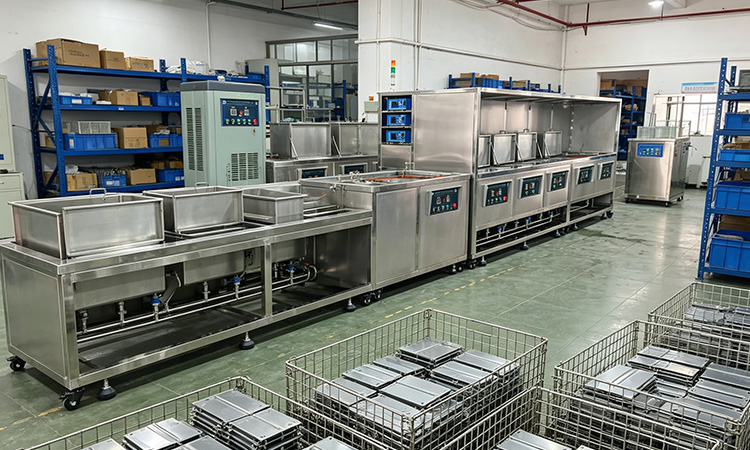
Since 2003, Whale Cleen has focused on providing professional cleaning solutions and various types of ultrasonic cleaners, establishing itself as a high-tech enterprise integrating R&D, manufacturing, marketing, and after-sales service. Today, the company operates a 10,000-square-meter production base, designing and producing automatic ultrasonic cleaning machines, custom ultrasonic cleaning machines, and large industrial ultrasonic cleaning systems.
1. One-Stop, Fully Automated Cleaning Solutions
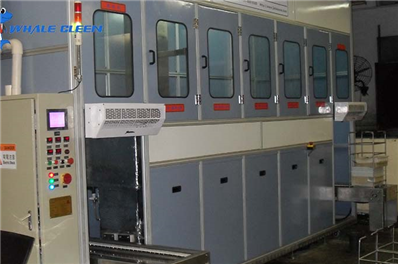
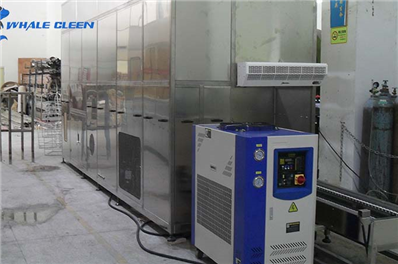
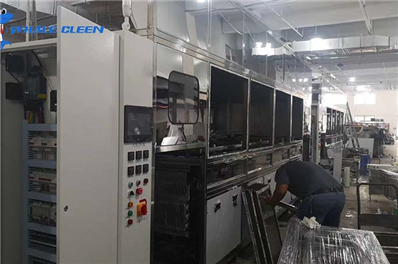
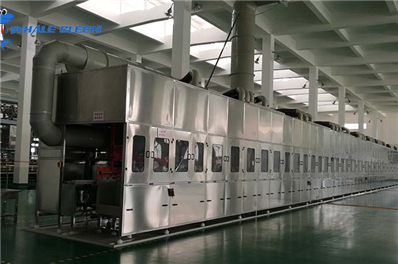
Whale Cleen's mechanical arm-type automatic ultrasonic cleaners integrate six core systems: mechanical transmission, ultrasonic system, heating system, drying system, water supply and drainage, and electrical control. The entire process—from loading the basket into the cleaning tank to moving between tanks and final unloading—is completed automatically. Rough washing, ultrasonic cleaning, rinsing, and drying are all completed within a single integrated system. Parts exit the machine not only clean but completely dry—eliminating the water spots and residues that plague traditional spray cleaning.
2. Multi-Frequency Technology for Complex Geometries
Different contaminants and part geometries respond to different ultrasonic frequencies. Whale Cleen systems feature advanced multi-frequency capabilities, allowing operators to select or sweep through frequencies to optimize cavitation penetration. Lower frequencies deliver powerful scrubbing for heavy rust and oil removal; higher frequencies reach the smallest micro-features. The result: every blind hole, every thread, every internal passage emerges perfectly clean.
3. Non-Standard Customization for Real-World Conditions
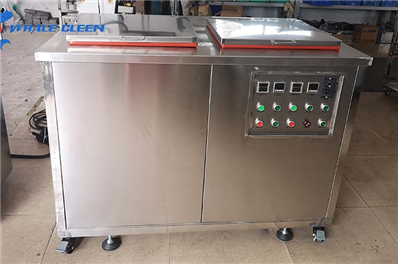
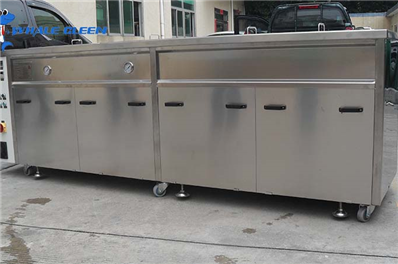
The core advantage that separates Whale Cleen from standard equipment suppliers is its specialization in non-standard customization. Real-world factories rarely have "standard" cleaning conditions: workpiece sizes vary widely, contamination levels differ, and production line layouts are unique. Whale Cleen designs and manufactures ultrasonic cleaning systems according to specific customer requirements. This means that whether you are cleaning heavy gear assemblies or precision components with fine internal passages, the equipment is engineered to match your exact application.
4. Strong Acid-Free Degreasing—Mechanical Precision, Not Chemical Aggression
Strong acid soaking for degreasing and rust removal has been the default method in countless factories for decades—but it carries significant hidden costs: chemical expenses and hazardous waste disposal, worker safety risks and facility corrosion from corrosive vapors, and metallurgical damage such as hydrogen embrittlement in high-strength steel components. Whale Cleen's ultrasonic technology replaces chemical aggression with mechanical precision. The cavitation process removes grease, rust, and carbon deposits without exposing parts to harsh acids—delivering cleanliness improvements along with reduced scrap, lower chemical costs, and safer working conditions.
5. Filter Circulation Systems for Extended Bath Life
Whale Cleen's multi-tank systems feature filter circulation functionality that continuously filters oil slicks, impurities, and dust from the cleaning solution. This circulation saves solvent costs while ensuring consistent cleaning effectiveness across every batch.
Consider a typical scenario: a batch of precision metal components—perhaps hydraulic valve bodies or transmission housings—emerges from storage with rust spots and residual cutting oil on their surfaces. The production team runs them through the spray cleaning line, confident that the high-pressure jets will remove every trace. But quality inspection reveals residual oil in thread roots, rust particles clinging to blind hole bottoms, and stains on critical sealing surfaces. The batch is rejected. Rework schedules are disrupted. Costs mount.
With a Whale Cleen ultrasonic cleaning system, the same components emerge with every trace of rust and oil removed. Threads are clean. Blind holes are clear. Internal passages are free of debris. Surfaces are pristine. First-pass yield soars. Rework costs plummet. And the manufacturer gains a competitive edge through superior product quality.
In an era where component reliability and product quality define brand reputation, the cleaning of rust and oil contamination can no longer be left to methods that leave residues behind. Spray cleaning, with its line-of-sight limitations and inability to penetrate complex geometries, is simply not adequate for the precision demands of modern manufacturing.
Ultrasonic cleaning technology—with its unique ability to penetrate microscopic passages, remove rust and oil simultaneously, and deliver consistent, repeatable results—has become the indispensable solution for quality-driven manufacturers.
Whale Cleen brings over two decades of expertise, fully automated solutions, non-standard customization, and a customer-first approach to this challenge. Their ultrasonic cleaning systems are not just equipment; they are a strategic investment in product quality, operational efficiency, and long-term reliability.
To learn how Whale Cleen can solve your rust-and-oil cleaning challenges—or any other precision cleaning application—visit http://www.bwhalesonic.com/ .