In the world of engine manufacturing and rebuilding, one truth remains constant: cleanliness is power. A cylinder head with clogged oil galleries, a crankshaft with residual grinding dust, or a piston ring groove packed with carbon – any of these can turn a precision engine into a warranty claim waiting to happen.
For decades, engine parts cleaning relied on manual scrubbing, solvent soaking, or simple spray cabinets. But those methods have reached their limit. Today, a growing number of industry-leading factories are quietly adopting a new standard: advanced ultrasonic cleaning – and the brand they trust most is Whale Cleen.
So what makes this approach different? And why are top engine builders making the switch without fanfare? Let’s dive in.
Note: Whale Cleen does not serve medical, eyewear, jewelry, or food industries. The brand focuses exclusively on industrial and mechanical applications – automotive, engine components, precision machining, and more.
Ask any engine remanufacturer or high-performance machine shop: their biggest quality headache often isn’t machining tolerance – it’s what’s left behind.
Oil galleries in cylinder blocks have sharp 90° turns and blind branches. High-pressure spray shoots straight – it cannot navigate corners. Chips and sludge stay trapped.
Connecting rods contain small oil squirt holes. Manual brushing never reaches the internal bore surfaces.
Piston ring grooves are barely 2mm wide. Chemical soaking softens the surface, but the hard, baked-on carbon at the root remains.
Valve stems and guides demand near-perfect cleanliness for proper assembly, yet traditional cleaning leaves microscopic debris that causes premature wear.
The result? Rework rates of 10-20%, hidden warranty costs, and production delays that chip away at profitability.
Ultrasonic cleaning works on a simple but powerful principle: cavitation. High-frequency sound waves create millions of microscopic bubbles in a cleaning solution. These bubbles implode with tremendous energy, producing shock waves that blast contaminants off every surface – including internal passages, threads, and micro-grooves.
But not all ultrasonic cleaners are created equal. The new standard, quietly adopted by forward-thinking factories, involves three critical advances:
Multi-frequency cleaning – Low frequencies (around 28-40kHz) generate aggressive cavitation to remove heavy carbon and baked-on oil. High frequencies (80-120kHz) produce gentle, dense bubbles that penetrate sub-micron crevices without damaging precision surfaces. Machines that can switch between these frequencies in a single cycle handle the full range of engine contaminants in one go.
Custom acoustic design – Engine parts vary enormously in size and shape. A standard tank with fixed transducer placement leaves “dead zones.” Properly engineered systems use acoustic simulation to position transducers optimally – sometimes on the sides or even the top – ensuring uniform cavitation across every part, every time.
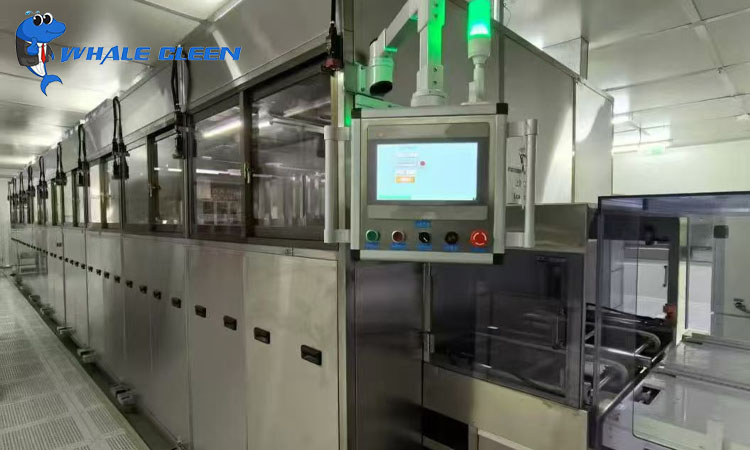
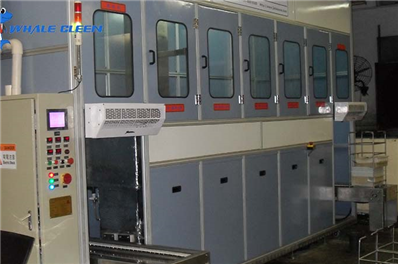
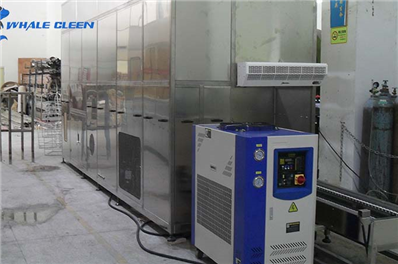
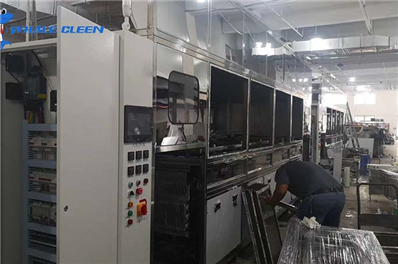
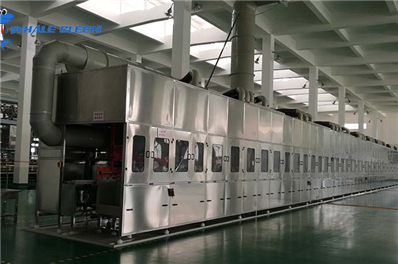
Integrated filtration and automation – To prevent re-deposition of contaminants, continuous multi-stage filtration keeps the cleaning bath pristine. Automated hoists or conveyors move parts through pre-wash, ultrasonic cleaning, rinsing, and drying stages – reducing labor while ensuring consistent results batch after batch.
Factories that have implemented this new standard report rework rates below 2% , cleaning cycle times cut by 60-70% , and annual cleaning-related cost savings of $100,000 or more.
Among the brands enabling this transformation, Whale Cleen has emerged as a trusted partner for engine builders who demand reliability, custom engineering, and long-term value.
Proven heritage. Whale Cleen’s engineering team has been active in ultrasonic equipment manufacturing since the early 2000s. With over 20 years of hands-on experience, the company operates its own manufacturing facilities covering more than 13,000 square meters, holds over 30 national patents, and has supplied equipment to factories in over 200 countries and regions – serving more than 1,000 industrial clients.
What makes Whale Cleen different – and why factories choose it.
Whale Cleen refuses to guess. Before they design a machine, they ask customers to send their most challenging engine parts – a cylinder head with deep oil gallerys, a carbon-coated piston, a crankshaft with fine oil holes. Their lab analyzes the contaminants and runs actual cleaning trials to determine the optimal frequency sequence, temperature, and cycle time. Only then do they provide a proposal. This eliminates the risk of buying equipment that fails to perform on real parts.
Every engine family is different. Whale Cleen customizes:
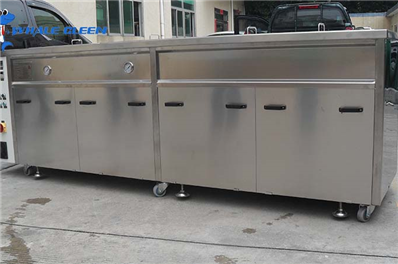
Tank dimensions to accommodate long crankshafts or multiple cylinder heads per batch.
Transducer layouts (bottom, side, and multi-directional) to eliminate acoustic shadows.
Filtration systems with the right micron rating for the specific particles generated by your machining processes.
Automation levels – from simple manual indexing to fully PLC-controlled multi-tank lines with recipe storage for different engine models.
Engine parts demand both aggressive cleaning and gentle care. Whale Cleen machines offer selectable or alternating frequency ranges, allowing operators to:
Use lower frequencies (28-40kHz) for stripping heavy carbon from ring grooves and oil passages.
Switch to higher frequencies (80-120kHz) for removing fine dust from valve guides and sealing surfaces – without any risk of erosion or micro-pitting.
This flexibility means one machine can clean an entire engine’s worth of components – from cast iron blocks to aluminum heads to精密 steel valves – with perfect results every time.
Engine production lines run long hours. Whale Cleen equips its systems with welded high-Q piezoelectric ceramic transducers (not glued), industrial-grade generators with automatic frequency tracking, and thick stainless steel tanks (304/316L). These components are rated for 10+ years of heavy-duty service, minimizing unplanned downtime and repair costs.
Real-world example (anonymized at customer request): A major diesel engine remanufacturer was struggling with 18% rework due to residual carbon in oil gallerys. After installing a Whale Cleen custom multi-frequency cleaning line with automated part transfer, their first-pass yield jumped to 98.5%. Annual savings in labor, scrap, and warranty claims exceeded $220,000 – and the equipment paid for itself in just 8 months. Their production manager noted: “We don’t advertise the change, but every competitor wonders how we improved our quality so fast.”
You may wonder: if this is such a breakthrough, why are factories “quietly” using it?
The answer is competitive advantage. When a factory achieves 98%+ first-pass cleaning yield, while competitors struggle with 85%, they don’t shout about it. They let their lower warranty costs and faster delivery times speak for themselves.
But for you, the smart move is to look under the hood – literally. The new standard for engine parts cleaning is already here. It’s ultrasonic, it’s custom-engineered, and it’s being deployed by industry leaders who understand that cleaning is not a cost – it’s an investment in quality and profit.
If you’re ready to move beyond outdated cleaning methods, use this simple checklist:
| Step | What to Do | Why It Matters |
|---|---|---|
| 1. Demand a sample test | Send your worst parts (carbon-clogged, complex oil gallerys) to the manufacturer for lab validation | Real parts reveal real performance – no spec sheet can fake this |
| 2. Verify multi-frequency capability | Ask if the system offers at least low (28-40kHz) and high (80-120kHz) options | You need both strength for heavy soils and gentleness for precision surfaces |
| 3. Inspect the tank and transducer design | Look for simulation-based placement (not just bottom grid) and welded transducers | Eliminates cleaning dead zones and ensures long-term reliability |
| 4. Check filtration and automation | Multi-stage filtration (≥5μm) and PLC control with recipe storage | Prevents re-contamination and allows quick changeover between engine models |
| 5. Calculate total cost of ownership | Compare your current labor, rework, and consumable costs to projected figures after upgrade | The upfront investment is quickly recouped through savings |
Engine parts cleaning has evolved. Manual scrubbing, solvent soaking, and basic spray cabinets can no longer meet the cleanliness standards required for modern engines – especially with tighter emissions regulations and higher power densities.
The new standard is custom-engineered, multi-frequency ultrasonic cleaning – and Whale Cleen is at the forefront of this shift. With sample-based engineering, durable construction, and proven results, Whale Cleen is the brand that top factories quietly trust.
If your engine production or remanufacturing line still struggles with rework, hidden debris, or high cleaning costs, it’s time to see what the new standard can do for you. Contact Whale Cleen, send your most challenging parts for a sample test, and let real cleaning results speak for themselves.