In a typical machining workshop, the tool and gauge cabinet is a study in diversity. You will find high-speed steel milling cutters with sharp, complex flutes; precision calipers with delicate measuring faces and rack teeth; and hardened taps with intricate thread forms crucial for cutting. Each of these items serves a different function, yet they share a common challenge: they must be impeccably clean to perform accurately and reliably.
The traditional approach has been to clean these different items using separate, often incompatible methods. Milling cutters might be soaked in a solvent bath, calipers painstakingly wiped with a lint-free cloth, and taps scrubbed with a small brush to clear swarf from their threads. This piecemeal strategy is not only labor-intensive and time-consuming but also fraught with risk. Manual cleaning can miss contamination in blind holes or sharp internal corners, and abrasive actions can easily dull cutting edges or scratch precision surfaces.
This fragmentation raises a critical question for production managers: Is there a single, efficient, and safe method to clean this entire range of workshop essentials?
The primary obstacle to universal cleaning is the nature of the contaminants and the geometry of the tools. Milling cutters are often coated in a tenacious mix of cutting oil and metal chips that cling to their cutting edges. Calipers accumulate fine dust, fingerprints, and oil in their rack and slideways, affecting smooth operation and measurement accuracy. Taps trap chips and sticky lubricants within their flutes and threads, which can cause binding and premature wear during use.
Using an aggressive chemical bath might dissolve oil but could be hazardous or ineffective against solid particulate. A high-pressure spray could force debris deeper into crevices. Physical scrubbing is inconsistent and risks dimensional changes. The process is, therefore, a compromise—often inefficient and never fully satisfactory for all categories.
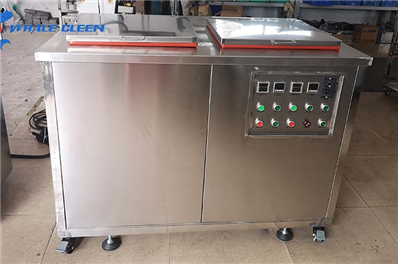
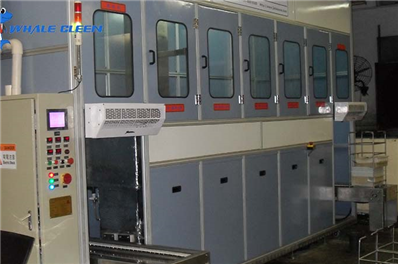
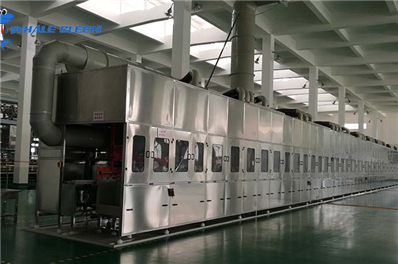
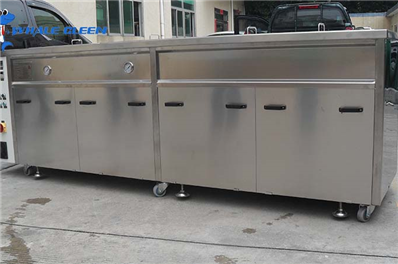
The solution lies in adopting a cleaning principle that is immune to geometry and gentle yet powerful on contamination: ultrasonic cleaning, delivered through an automatic ultrasonic cleaning machine.
The underlying mechanism is cavitation. An ultrasonic generator sends high-frequency electrical signals to transducers, which convert them into mechanical vibrations. These vibrations are transmitted through the cleaning liquid, creating millions of microscopic bubbles that implode violently. This implosion generates intense, localized micro-jets and shockwaves that physically dislodge contaminants from every exposed and hidden surface.
This process offers distinct advantages for mixed loads:
Universal Action: The cavitation effect works uniformly on all surfaces the liquid contacts. It cleans the complex flutes of a milling cutter, the precision rack of a caliper, and the intricate threads of a tap with equal efficacy. The cleaning action is not directional; it is a volumetric field, ensuring no dead zones.
Non-Destructive Precision: The cleaning force is physical but gentle on the base material. There is no abrasive friction, so it does not dull cutting edges or scratch measuring surfaces, preserving the original accuracy and sharpness of each item.
Consistent Standardization: Unlike manual efforts, an automatic process is repeatable. Every cycle delivers the same cleaning intensity, eliminating human error and ensuring that every batch of diverse tools exits the machine with the same high level of cleanliness.
While the technology is well-established, realizing this "single machine, all tools" vision requires more than a basic tank. It demands a well-designed, robust, and often customized industrial system. This is where the expertise of a dedicated manufacturer like Whale Cleen becomes critical.
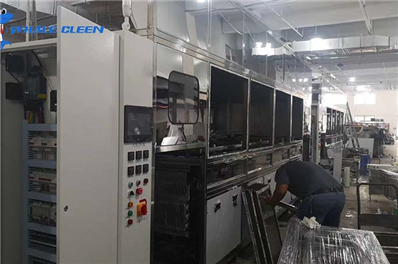
With over two decades of experience, as detailed on their website at www.bwhalesonic.com, Whale Cleen has evolved into a high-tech enterprise capable of engineering solutions for complex industrial needs. Their infrastructure—a 10,000-square-meter production base—supports the creation of a wide spectrum of equipment, from automatic ultrasonic cleaning machines to custom ultrasonic cleaning machines designed to integrate seamlessly into a production line.
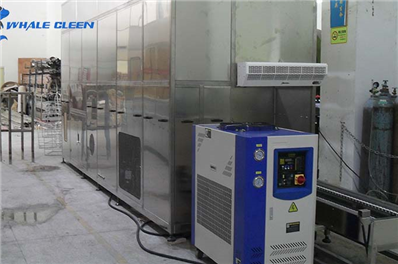
The practical advantage of working with a provider like Whale Cleen is their ability to configure the system. A singular automatic machine can be equipped with features like:
Multi-Frequency Operation: Allowing the operator to select the ideal frequency for different soil types and component fragility.
Programmable Cycles: Setting sequences for cleaning, rinsing, and drying tailored for mixed loads.
Robust Filtration: Continuously removing dislodged contaminants to ensure the cleaning bath remains effective throughout the process.
Furthermore, their comprehension of the entire cleaning ecosystem, evidenced by their offerings in industrial wastewater treatment equipment, speaks to their commitment to providing sustainable, compliant, and cost-effective solutions. By choosing a partner who understands both the art of cleaning and the science of engineering, a workshop can confidently consolidate its cleaning processes, saving valuable floor space, labor, and time.
In essence, the automatic ultrasonic cleaning machine, delivered and supported by a knowledgeable manufacturer, transforms a fragmented chore into a streamlined, standardized, and safe operation. It allows a single system to proficiently manage the cleaning needs of a diverse toolbox, safeguarding the performance and longevity of essential manufacturing assets like milling cutters, calipers, and taps.