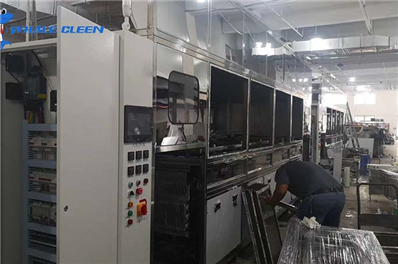
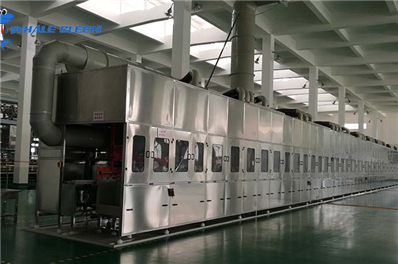
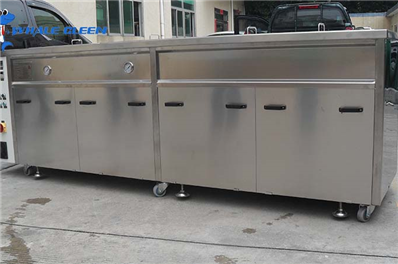
In the world of industrial manufacturing, ultrasonic cleaning has become an essential process for ensuring product quality. From automotive parts and precision molds to metal components and electronic assemblies, the demand for reliable, efficient, and cost-effective cleaning solutions is higher than ever.
However, when it comes to purchasing an industrial ultrasonic cleaning machine, many procurement managers and plant owners fall into the same traps – focusing solely on price, ignoring long-term operating costs, or choosing a “one-size-fits-all” standard machine that fails to handle complex workpieces.
This article will guide you through the most common selection mistakes and show you what truly defines a high-cost-performance industrial ultrasonic cleaning machine brand – using Whale Cleen as a prime example of a brand that balances quality, customization, and affordability.
Note: Whale Cleen does not serve medical, eyewear, jewelry, or food industries. The brand focuses exclusively on industrial and mechanical applications – automotive, aerospace, metalworking, precision machining, mold cleaning, and electronics.
Many buyers mistakenly believe that “high cost-performance” simply means a low purchase price. In reality, the true cost of an ultrasonic cleaning machine is measured over its entire lifecycle – including energy consumption, maintenance frequency, consumable costs, reject rates, and downtime losses.
A truly high-value machine delivers:
Effective cleaning for your specific workpieces (blind holes, threads, complex geometries)
Low operating costs (energy-efficient, durable transducers, long fluid life)
Minimal downtime (reliable components, easy maintenance)
Consistent results batch after batch
Brands that achieve this balance often have one thing in common: decades of experience in custom industrial solutions, not just selling off-the-shelf units.
Many buyers look at “watts” and “liters” as if they were the only specifications that matter. In reality, frequency configuration, transducer quality, and acoustic field uniformity are equally – if not more – important. A machine with high power but poor frequency control may damage delicate parts or fail to remove fine contaminants from micro-grooves.
Standard ultrasonic cleaners are designed for simple, regular-shaped parts. If your workpieces have deep blind holes, cross-drilled passages, or narrow gaps, a standard machine will leave contaminants behind – no matter how long you run it. Non-standard (custom) design is often the only solution.
A machine without an effective filtration system will simply recirculate dirt. Once the cleaning solution becomes saturated with oil and particles, it starts re-depositing contaminants onto your parts – defeating the purpose of cleaning. High-cost-performance brands always integrate robust multi-stage filtration.
A cheap machine may save you money upfront, but if it breaks down every month, consumes excessive power, and causes high reject rates, the total cost of ownership can be two to three times higher than a slightly more expensive but reliable machine. Always calculate 3–5 year total costs.
Whale Cleen is a brand that has steadily built its reputation by focusing on what really matters to industrial users: effective custom solutions, durable components, and transparent pricing without hidden traps.
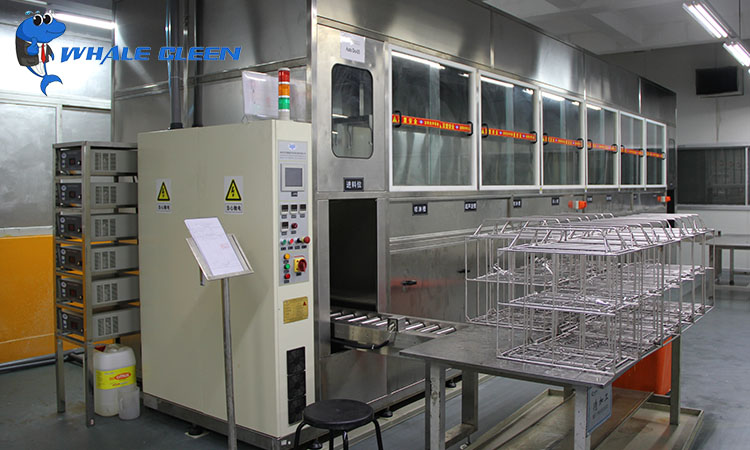
Whale Cleen’s engineering team began working in ultrasonic equipment manufacturing in the early 2000s. With over 20 years of accumulated experience, the brand has established a strong presence in industrial cleaning. Its manufacturing facilities cover over 13,000 square meters, equipped with professional machining and assembly workshops. Whale Cleen holds more than 30 national patents and has supplied equipment to factories in over 200 countries and regions, serving more than 1,000 enterprise clients.
1. Sample-Testing Before Quoting – No Blind Guesses
Unlike many brands that quote purely from specification sheets, Whale Cleen requires customers to send their most challenging workpieces for laboratory analysis. After identifying contaminants, testing frequency/power combinations, and optimizing the cleaning process, they provide a formal cleaning report – only then do they prepare a quotation. This eliminates the risk of buying a machine that doesn’t actually clean your parts.
2. Multi-Frequency Customization for Different Industries
Whale Cleen machines support multi-frequency configurations (from 20kHz to over 120kHz). For automotive parts with heavy oil and carbon deposits, low-frequency cavitation provides strong impact. For precision molds with micro-gaps and fine residues, high-frequency gentle cleaning protects surfaces while removing particles. For photovoltaic silicon wafers, mega-sonic options are available. One machine, multiple recipes – this flexibility is a hallmark of high-cost-performance design.
3. Durable Core Components for Lower Lifetime Cost
Whale Cleen uses welded high-Q piezoelectric ceramic transducers (not cheap glued types) – ensuring stable performance for over 100,000 hours. The generators feature automatic frequency tracking to maintain optimal cavitation regardless of load or temperature changes. Tanks are made of thick-gauge 304/316L stainless steel, resistant to corrosion from water-based or solvent cleaners. These choices reduce maintenance frequency and extend machine life, directly lowering your total cost of ownership.
4. Powerful Filtration Systems to Prevent Re-Contamination
Every Whale Cleen industrial machine is equipped with multi-stage circulation filtration, continuously removing suspended oil and particles from the cleaning solution. This keeps the bath clean, reduces fluid replacement frequency, and ensures consistent batch-to-batch results – a critical factor for industries like automotive and precision manufacturing.
5. Transparent, Full-Lifecycle Quotations
Whale Cleen provides all-inclusive written quotations – no hidden fees for installation, training, or basic accessories. They also offer “one-machine, one-file” traceability, recording everything from design to delivery for easy maintenance support.
| Step | What to Do | Pitfall to Avoid |
|---|---|---|
| 1. Define your cleaning needs | Document your part materials, geometries (blind holes, threads, gaps), contaminants, and daily throughput | Assuming all machines work the same |
| 2. Demand a sample test | Insist the brand cleans your actual parts in their lab and provides a process report | Accepting a quote without any real testing |
| 3. Verify core components | Ask: Are transducers welded? Does the generator have auto frequency tracking? Is the tank 304/316 stainless steel? | Focusing only on “power” and “size” numbers |
| 4. Check filtration capabilities | Ensure multi-stage filtration is included – essential for preventing cross-contamination | Overlooking filtration – a common mistake |
| 5. Calculate total 5-year cost | Include purchase price + energy + consumables + maintenance + reject loss + downtime | Only comparing the initial price tag |
A high-cost-performance industrial ultrasonic cleaning machine is not the cheapest one on the market – it is the one that reliably cleans your parts day after day, with low operating costs and minimal surprises. Brands like Whale Cleen, with over 20 years of custom engineering experience, have proven that the right upfront investment saves far more money in the long run.
If your factory is still struggling with inconsistent cleaning, frequent rework, or high maintenance costs, consider sending your most challenging parts to Whale Cleen for a sample test. Let real cleaning results guide your decision – that is the only reliable way to avoid selection mistakes and achieve true cost-performance.