In metal parts manufacturing, few processes carry as many hidden costs—and as many risks—as strong acid soaking for degreasing and rust removal. For decades, countless factories have relied on aggressive acid baths to strip oil, grease, and oxidation from metal components before coating, assembly, or further processing.
But here is the question that more and more manufacturing engineers are asking today: Why would you still use strong acids when there is a cleaner, safer, and more effective alternative?
The answer is ultrasonic cleaning technology. And for manufacturers who have made the switch, the advantages have been measured not just in improved cleanliness, but in reduced scrap, lower chemical costs, safer working conditions, and extended component life.
This article explores why ultrasonic cleaning offers a superior path to metal degreasing, why traditional acid soaking carries risks that many operations overlook, and how Whale Cleen — an industrial ultrasonic cleaning machine manufacturer with over 20 years of experience — delivers the performance and reliability that modern metalworking demands.
For many manufacturing engineers, strong acid degreasing is a legacy process. It has been used for so long that its drawbacks are often accepted as inevitable rather than questioned as unnecessary.
Chemical costs and waste disposal. Acid baths require regular replenishment as they become contaminated with dissolved metals and organic soils. The cost of chemicals is only the beginning. Spent acid must be treated and disposed of as hazardous waste, incurring substantial compliance costs. In many jurisdictions, tightening environmental regulations have made acid waste disposal more expensive every year.
Worker safety and facility corrosion. Strong acids present serious handling risks, requiring specialized PPE, ventilation systems, and spill containment measures. The corrosive vapors can damage facility infrastructure over time — ductwork, electrical panels, structural steel — all of which adds to the true cost of the process.
Hidden metallurgical damage — the hydrogen embrittlement risk. Steel parts exposed to strong acids during pickling can absorb hydrogen atoms, which diffuse into the metal lattice and cause hydrogen embrittlement. This delayed failure mechanism — cracking under stress hours or days after cleaning — is particularly dangerous for high-strength steel components such as fasteners, springs, and load‑bearing parts. According to industry literature, ultrasonic cleaning avoids hydrogen embrittlement entirely by eliminating the aggressive acid‑metal reaction that produces diffusible hydrogen.
Incomplete cleaning in complex geometries. Acid baths rely on chemical reaction, not mechanical action. For parts with blind holes, deep threads, cross‑drilled passages, or intricate internal geometries, the acid solution may not reach all surfaces uniformly. Oxide scale can remain trapped in crevices, and reaction byproducts may adhere to surfaces, requiring secondary cleaning.
Surface damage and over‑etching. Improper acid concentration or excessive exposure time can over‑etch metal surfaces, removing too much material, altering critical dimensions, and increasing surface roughness in ways that compromise subsequent coating adhesion or sealing performance.
These issues are not theoretical. They are daily realities in facilities that continue to rely on strong acid degreasing. And they are the primary reasons why so many manufacturers are actively seeking alternatives.
Ultrasonic cleaning replaces chemical aggression with mechanical precision. The technology relies on a physical phenomenon called cavitation.
When an ultrasonic cleaning machine generates high‑frequency sound waves — typically in the range of 20 kHz to 120 kHz — through a cleaning solution, the waves create millions of microscopic vacuum bubbles throughout the liquid. These bubbles expand rapidly during the negative pressure phase of the sound wave and then implode violently during the positive pressure phase. Each implosion releases a localized shock wave and a high‑speed micro‑jet, generating intense mechanical energy at the exact point where the bubble collapses.
Unlike acid soaking — which relies on a chemical reaction to dissolve or loosen contaminants — ultrasonic cavitation physically dislodges contaminants from the metal surface. The shock waves penetrate into blind holes, threads, grooves, and other difficult‑to‑reach features, lifting away oil films, grease, metal chips, and even light rust deposits.
The advantages of this approach for metal degreasing are substantial:
No strong acids required. Water‑based cleaning solutions with mild surfactants or alkaline detergents can be used. For light rust removal, weak organic acids such as citric acid — in low concentration — may be added, but the mechanical action of cavitation does the primary work. This eliminates the hydrogen embrittlement risk associated with strong acid pickling.
Complete geometric coverage. Because cavitation occurs throughout the entire liquid volume, every surface that the cleaning solution contacts receives the same intense scrubbing action. A part with multiple blind holes, fine threads, or complex internal passages is cleaned uniformly — not just on its external surfaces.
Non‑abrasive and non‑damaging. The cleaning energy is delivered through the liquid, not through physical contact. No brushes, no scrapers, no abrasive pads touch the component. Precision surfaces emerge with their original finish intact, without scratching, burnishing, or dimensional change.
Batch‑to‑batch consistency. The cleaning parameters — frequency, temperature, cycle time, and chemistry concentration — are machine‑controlled, not operator‑dependent. Each batch receives identical treatment, eliminating the variability inherent in manual or semi‑manual processes.
Reduced chemical consumption and waste. Because the cleaning fluid can be circulated and filtered, it lasts longer between changes. Chemical purchases drop. Hazardous waste disposal costs fall. Some manufacturers report extending bath life up to ten times longer compared to traditional immersion methods.
According to industry technical literature, ultrasonic cleaning technology can replace solvent degreasing, replace electrolytic degreasing, and — for carbon steel and low‑alloy steel surfaces with light rust and oxide scale — replace strong acid pickling entirely. For heavy oxide layers or thick rust, ultrasonic cleaning can be combined with low‑concentration acid in an “ultrasonic‑assisted pickling” process that uses dramatically lower acid concentrations, shorter exposure times, and lower temperatures than conventional acid baths, significantly reducing hydrogen embrittlement risk and chemical consumption.
Among ultrasonic cleaning equipment manufacturers, Whale Cleen has earned a reputation for delivering industrial‑grade systems built specifically for demanding manufacturing environments. With over 20 years of experience, a self‑owned factory, and a professional technical team, Whale Cleen designs, manufactures, and customizes industrial ultrasonic cleaning systems with source‑factory pricing and one‑stop service — from process recommendation to after‑sales technical guidance.
Whale Cleen focuses exclusively on industrial manufacturing sectors: machining, auto parts, hardware, die‑casting, metalworking, stamping, molding, and general fabrication. The company deliberately does not serve the medical, eyewear, jewelry, or food industries, reflecting a concentrated expertise in applications where cleaning performance directly impacts manufacturing quality and component reliability.
Complete OEM/ODM solutions under your brand. For equipment distributors, system integrators, and large manufacturing groups, Whale Cleen offers comprehensive OEM/ODM services. The company can manufacture ultrasonic cleaning machines exactly to customer specifications, with the final product carrying the customer‘s own brand name, logo, packaging, and manuals. This capability allows partners to bring custom cleaning solutions to market quickly without years of internal R&D and factory setup — while customers own the relationship with their end‑users.
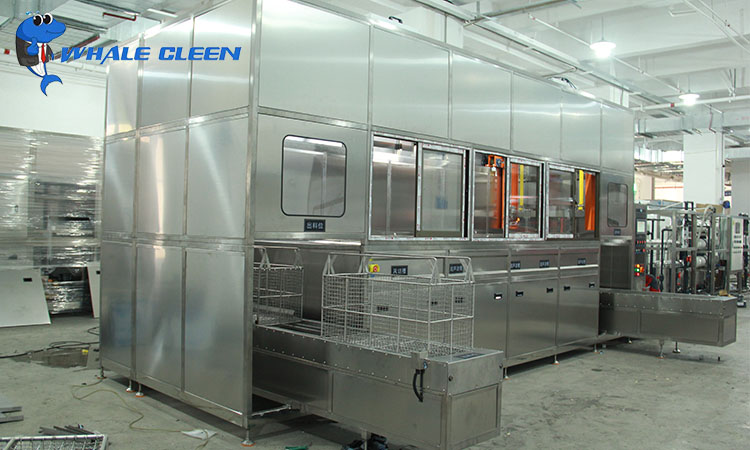
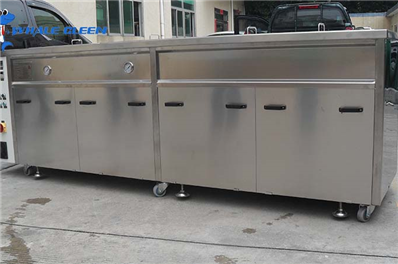
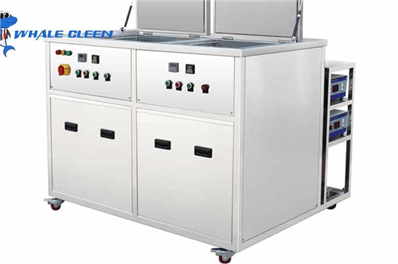
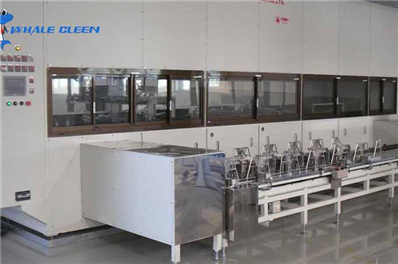
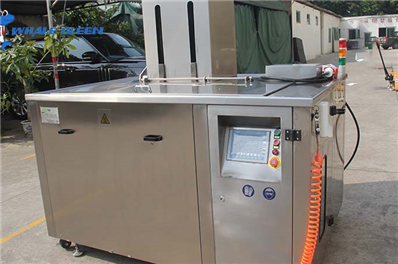
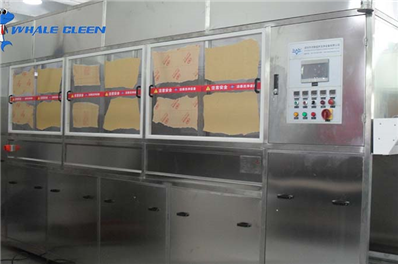
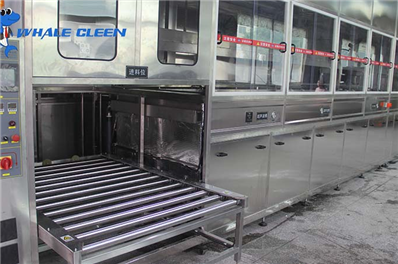
Multi‑tank systems for complete degreasing workflows. Metal degreasing is rarely a single‑step process. Parts must be cleaned, rinsed, and dried. Whale Cleen‘s multi‑tank industrial ultrasonic cleaners integrate these stages into a single, continuous line. A typical 5‑tank configuration may include: Tank 1 for ultrasonic solvent degreasing (heavy oil and grease removal); Tank 2 for ultrasonic rinse/secondary cleaning; Tank 3 for overflow rinse (removing residual solvent and contaminants); Tank 4 for ultrasonic hot rinse; and Tank 5 for heating and drying. This integrated workflow reduces part transfers, minimizes rework, and ensures consistent results from batch to batch. Ultrasonic cavitation reaches blind holes, grooves, and complex geometries that manual scrubbing cannot access, and the production‑ready heavy‑duty structure is built for continuous factory operation.
Customized for your parts — not off‑the‑shelf. Whale Cleen does not sell generic “standard” machines. As the company states directly: “We do not sell off‑the‑shelf general products. Every big ultrasonic cleaning machine we deliver is purpose‑built for your factory’s unique, non‑standard conditions.” Walk into any real‑world factory — machine shop, auto parts plant, or metal fabrication facility — and you will find that workpiece sizes vary wildly, contaminants differ (heavy drawing grease on one part, fine grinding dust on another), physical space is limited, and production requirements shift between shifts.
Whale Cleen‘s customization covers every aspect of the machine: tank dimensions are engineered to the largest or most awkward workpiece, ultrasonic parameters (power density, frequency, and transducer layout) are selected based on specific soils and part materials, structural configuration (single‑tank, multi‑tank, through‑type, rotary basket, or robotic arm) matches the facility’s workflow and space, process integration modules (heating, filtration, oil skimming, rinsing, drying, and anti‑rust) are arranged exactly as the production sequence requires, and controls and ergonomics are adapted to the operator team.
Frequency flexibility for different contaminant types. Not all metal soils are the same. Low frequencies (around 28 kHz) generate larger cavitation bubbles that release stronger shock waves — effective for heavy grease, thick oil films, and stubborn contaminants. Higher frequencies (around 40 kHz and above) produce smaller, more numerous bubbles that gently lift fine particles from precision surfaces without risk of micro‑damage. Whale Cleen systems offer customizable frequency options, allowing manufacturers to match cavitation intensity to their specific contamination profile.
Real‑world performance. A Whale Cleen multi‑tank industrial ultrasonic cleaner with 40 kHz or 28 kHz frequency options, heated degreasing capability up to 95°C, and durable SUS304 or SUS316 stainless steel tank construction delivers one‑stop cleaning workflow: washing, multiple rinses, and final drying are combined in one system to reduce transfers and rework. The optimized process sequence reduces solvent loss, shortens cleaning time, and minimizes labor. For manufacturers using strong acid degreasing, the switch to this type of ultrasonic system typically eliminates the need for hazardous acid baths altogether, while improving cleaning consistency and reducing component damage.
When manufacturers transition from strong acid soaking to ultrasonic cleaning for metal degreasing, the advantages are not theoretical — they appear directly on the production floor.
Safety and environmental impact. Acid baths are eliminated, along with their corrosive vapors, spill risks, and hazardous waste streams. The cleaning solution is water‑based, typically using mild detergents or surfactants. Worker exposure to hazardous chemicals is drastically reduced. Facility corrosion from acid vapors stops.
Metallurgical integrity preserved. Hydrogen embrittlement risk — a serious concern for high‑strength steel parts exposed to strong acids — is eliminated. Parts emerge from the ultrasonic cleaning process without hydrogen absorption, without over‑etching, and without dimensional change.
Complex parts cleaned completely. A valve body with multiple cross‑drilled passages, deep blind holes, and fine threads — the kind of part that traditional acid soaking always cleans incompletely — is cleaned uniformly throughout. Cavitation reaches every fluid‑contacted surface. Contaminants are physically dislodged and carried away, not merely dissolved and potentially redeposited.
Lower operating costs. Chemical purchases drop substantially. Waste disposal costs fall. Rework and scrap rates decline as cleaning consistency improves. And because multi‑tank systems integrate cleaning, rinsing, and drying in one line, labor requirements are reduced.
Scalable and automated. For high‑volume production, Whale Cleen offers fully automated multi‑tank lines with PLC control, conveyor integration, and robotic arm options. Parts move through the cleaning process without manual transfer, eliminating the variability of operator‑dependent methods and reducing labor costs.
Strong acid soaking for metal degreasing has been a mainstay of manufacturing for decades — not because it is the best method, but because for many years it was the only method that could remove heavy grease and light rust at scale.
That is no longer true.
Ultrasonic cleaning technology, using the physical principle of cavitation, removes oils, greases, metal chips, and light rust without strong acids — and without the hydrogen embrittlement risk, safety hazards, high waste costs, and incomplete cleaning that come with them.
Whale Cleen has spent more than 20 years engineering industrial ultrasonic cleaning systems for the most demanding manufacturing environments. With multi‑tank configurations for complete degreasing workflows, full non‑standard customization for non‑standard parts, OEM/ODM solutions for partners and integrators, and a focus exclusively on industrial manufacturing, Whale Cleen delivers the performance that modern metal degreasing demands.
For manufacturers still using strong acid soaking, the question is no longer “should we consider ultrasonic cleaning?” The question is: What are you waiting for?
To discuss your specific metal degreasing requirements — or to explore an OEM/ODM partnership for custom ultrasonic cleaning equipment — contact Whale Cleen today.
Contact Whale Cleen
Website: www.bwhalesonic.com
WhatsApp: +86 15007557067
Email: michael@bwhalesonic.com