-
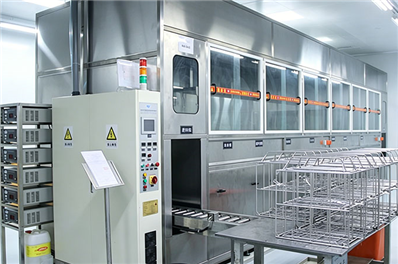 Precision Bearings Prone to Chipping and Scratching? Automated Ultrasonic Cleaning Machine Avoids Component Damage
Precision bearings are the lifeblood of modern mechanical transmission systems—from automotive drivetrains and high-speed machining spindles to aerospace actuators and industrial gearboxes. Yet, in countless workshops and production lines, the delicate ta
-
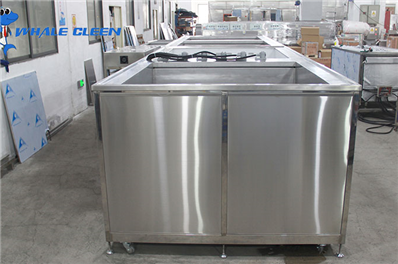 Industrial Ultrasonic Cleaning Machine: The Complete Solution for Stubborn Oil and Carbon Deposit Removal on Gears and Bearings
In the machinery manufacturing and heavy equipment maintenance sectors, few maintenance tasks are as persistently frustrating as cleaning gears and bearings. These precision components—the “skeleton and joints” of mechanical transmission systems—are routi
-
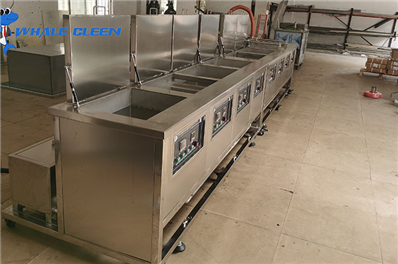 Enhancing Industrial Maintenance: Ultrasonic Bearing Cleaning Machines
Ultrasonic bearing cleaning machines are specialized equipment designed for the thorough cleaning of bearings and their components using ultrasonic cleaning technology. Bearings are crucial mechanical components commonly found in various industrial applic
-
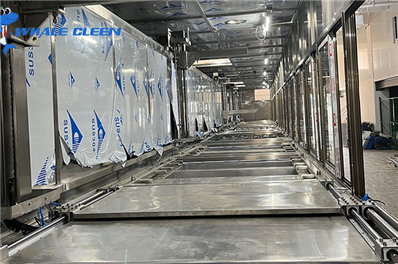 Determining Optimal Power Levels for Bearing Ultrasonic Cleaning Machines
Determining the appropriate power for a bearing ultrasonic cleaning machine requires a comprehensive understanding of various factors including the size and material of the bearings, the level of contamination, the properties of the cleaning solution, and
-
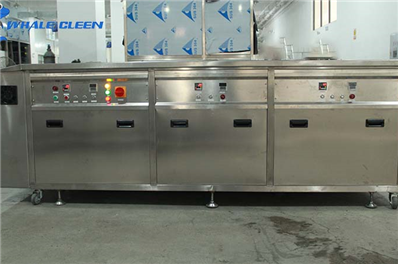 The characteristics and price of automatic ultrasonic cleaning machine and points for attention
An automatic ultrasonic cleaning machine is mainly used for auto parts, compressor parts, gears, and bearings before processing and assembly cleaning. It will replace traditional manual cleaning, cleaning, and oil cleaning, it has been widely used in elec
-
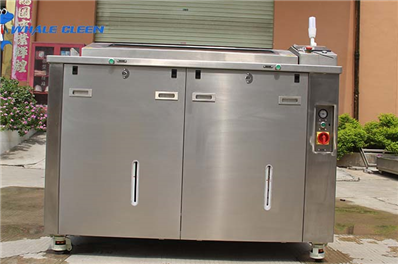 Bearing ultrasonic cleaning machine
Bearing ultrasonic cleaning machine is a kind of ultrasonic cleaning equipment used to clean bearings. With the increasing degree of mechanization, the use of bearings has been quite common, and the cleanliness of bearings has been more and more concerned
-
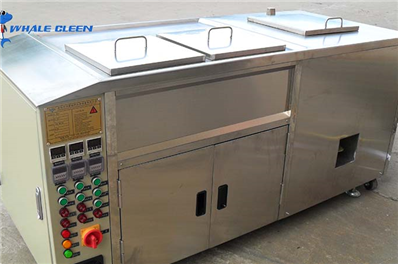 How to clean the hardware chain with ultrasonic cleaning machine
In our hardware parts, there is a very heavy very complex workpiece, such as bearings, gears, gaskets, chains, and so on, in which the degree of complexity of the chain is first. The chain, on the other hand, acts as a central nervous system transport for
-
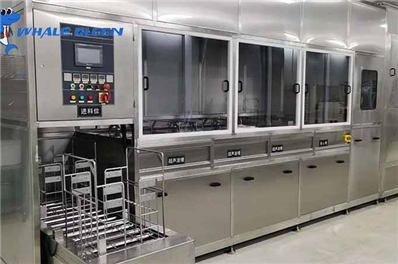 Fully Automatic Ultrasonic Cleaning Machine For Metal Parts-Blue whale ultrasonic cleaner tank
The whole process of an automatic ultrasonic cleaning machine is mechanical automatic. It applies to plating parts, vacuum plating parts, locks, motor parts, bearings, die ware, stainless steel tableware, compressors, clock parts, precision textile equipm
-
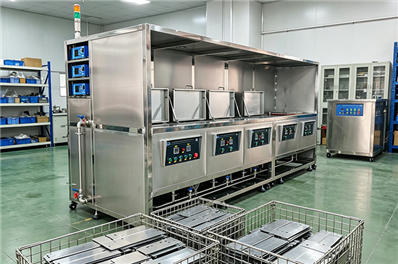 Ultrasonic Cleaning Machine: Breaking the Production Bottleneck When Piles of Oily, Chip-Covered Parts Stall Your Shop Floor
Walk into almost any machining workshop, and you will see the same scene: pallets stacked high with freshly machined parts, their surfaces glistening with cutting oil and clinging to metal chips, grinding dust, and microscopic debris. The parts are ready
-
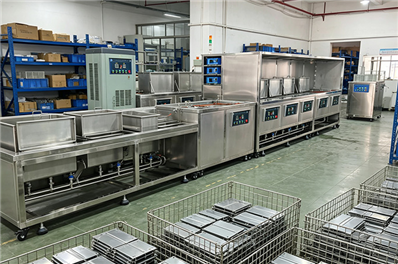 Ultrasonic Cleaning Machine: The Definitive Solution for Rust and Oil Contamination That Spray Cleaning Leaves Behind
In metal parts manufacturing and heavy equipment maintenance, few scenarios are as frustrating—and as costly—as the inspection failure that follows an inadequate cleaning process.The scenario plays out in workshops every day: a batch of precision metal co
-
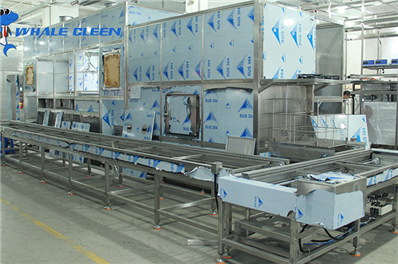 Ultrasonic Cleaning Machine for Aerospace Components: From High-Risk Traditional Methods to Non-Contact Degreasing That Safeguards Flight Safety
In the high-stakes world of aviation maintenance, cleaning is far from a routine chore — it is a direct pillar of flight safety. A single turbine blade contaminated with baked-on carbon deposits, a fuel nozzle with partially clogged orifices, or a hydraul
-
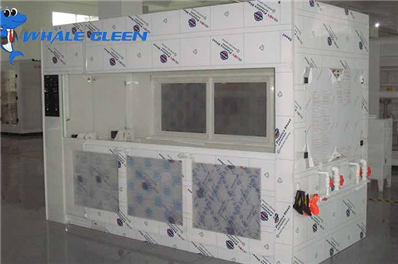 From Single‑Tank to Fully Automated: Where Is the Ceiling for Industrial Ultrasonic Cleaning Machines?
For decades, industrial cleaning was viewed as a necessary but straightforward step—a single tank of solvent, some ultrasonic waves, and a rinse. But as manufacturing tolerances have tightened and component complexity has increased, the question has shift