For electronics manufacturers, few things are more frustrating than watching a batch of perfectly assembled PCBs emerge from the cleaning line covered in unsightly water spots and chalky white residues. The boards looked flawless before cleaning. Now they're being rejected by QC. Yield numbers are tumbling. And no one can quite figure out why.
This scenario plays out in factories every day. The culprit isn't poor assembly or defective materials. It's incomplete drying and residual contamination left behind by traditional cleaning methods—problems that don't become visible until the boards are already moving toward the next production stage.
PCBs that have been through wave soldering or reflow processes carry flux residues, ionic contaminants, and particulate matter. A cleaning step is essential. But when cleaning isn't paired with proper rinsing and thorough drying, the result is a new set of problems:
Water spots form when dissolved minerals in rinse water remain on the board surface after evaporation. These spots aren't just cosmetic—they can affect solderability and insulation resistance.
White residues appear when flux activators or cleaning chemistries aren't completely rinsed away. These residues can absorb moisture, promote electrochemical migration, and lead to field failures down the line.
Trapped moisture in component gaps—under BGAs, between fine-pitch leads, or inside through-holes—can cause oxidation, delamination, or popcorning during subsequent reflow.
One production manager described the frustration: “We were cleaning boards to remove flux, but we ended up creating a whole new set of defects. Our defect rate spiked to nearly 12%—all from water spots and residues that weren't there before cleaning.”
Manual drying with compressed air is inconsistent. Operators may miss spots, and compressed air lines often introduce oil or moisture contamination.
Batch oven drying takes time—and in high-mix production, that means bottlenecks. Plus, ovens can drive moisture into component bodies rather than removing it.
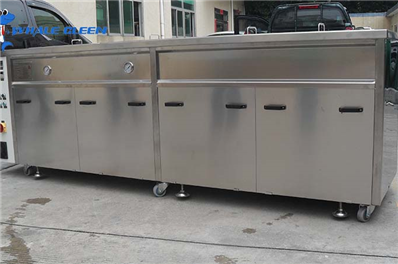
Standard ultrasonic tanks clean well but often lack integrated drying stages. Boards come out wet, and the drying step becomes a separate manual operation—another opportunity for inconsistency and contamination.
Spray-in-air systems can leave shadow zones under components where rinse water pools and never fully drains.
The common thread? Disconnected processes. When cleaning, rinsing, and drying are handled as separate steps with manual transfers, contamination and moisture have multiple chances to recontaminate the board.
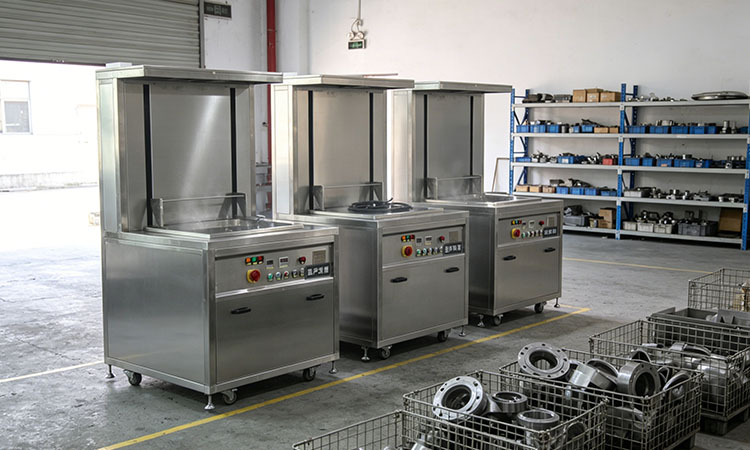
Whale Cleen (website: http://www.bwhalesonic.com/ ) is a high-tech enterprise that has been focused on providing professional cleaning solutions since 2003. With a 10,000-square-meter production base, the company designs and manufactures automatic ultrasonic cleaning machines, custom industrial systems, and fully integrated cleaning lines.
What sets Whale Cleen apart is its end-to-end approach—cleaning, rinsing, and drying integrated into a single automated workflow. No manual transfers. No opportunity for recontamination. No water spots or white residues left behind.
Here's how Whale Cleen solves the water spot and residue problem:
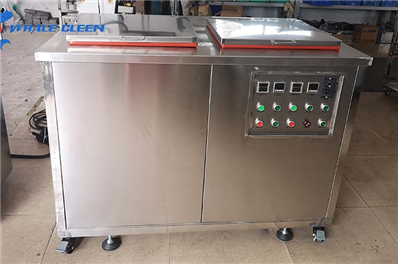
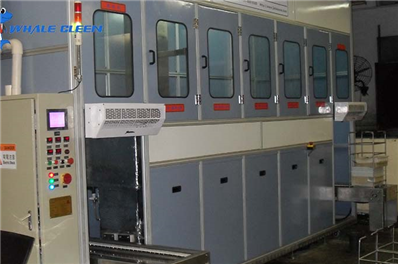
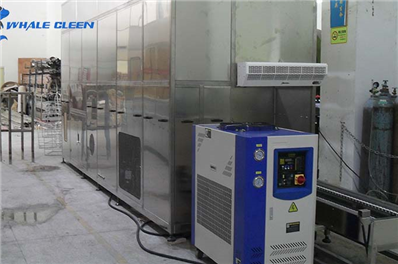
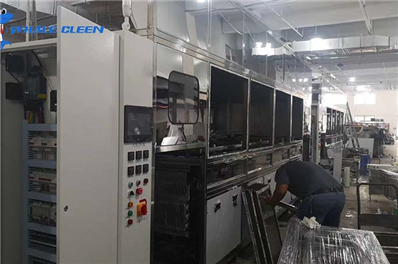
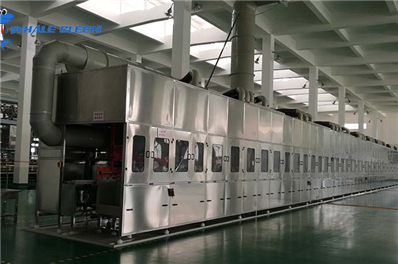
Integrated drying systems eliminate moisture. Whale Cleen's through-type ultrasonic cleaning machines feature hot air drying, compressed air knife water cutting, and hot air circulation drying devices. Boards exit the system completely dry—no water spots, no trapped moisture under components.
Programmable PLC control ensures consistency. With touchscreen + PLC programmable automatic control, every batch runs the same recipe. No operator variability. No "good enough" drying passes. Just repeatable, reliable results every time.
Multiple frequency options for different contamination types. Whale Cleen equipment supports 28kHz, 40kHz, 68kHz, 80kHz, and 120kHz frequencies, allowing you to match the cleaning energy to your specific PCB types and contamination levels—without damaging sensitive components.
Circulating filtration systems keep cleaning fluid clean. Real-time circulating filtration ensures that boards are always rinsed in clean solution, not recontaminated by dirty bath water.
Vacuum drying for impossible-to-reach areas. For boards with dense component populations or blind holes, Whale Cleen's automatic hydrocarbon vacuum ultrasonic cleaning machines use vacuum technology to rapidly volatilize cleaning fluid from workpiece surfaces—even from gaps and crevices where moisture would otherwise hide.
Consider a mid-sized EMS provider that was processing thousands of PCBs weekly for industrial control applications. After wave soldering, boards were cleaned in a standard ultrasonic tank, then manually dried with compressed air and batch ovens.
The defect rate from water spots and white residues was running at nearly 12%. QC was spending hours inspecting and reworking boards. Customer complaints were rising.
After integrating a Whale Cleen automated through-type ultrasonic cleaning system with integrated drying, the transformation was immediate:
Water spot and residue defects dropped to under 1%
Inspection time was cut by 70%—boards came out clean and dry, ready for the next stage
Throughput increased—the cleaning line no longer bottlenecked production
Customer returns virtually disappeared
“We were ready to give up on in-house cleaning altogether and outsource it,” one operations director reported. “But Whale Cleen's integrated system turned our cleaning line from a liability into an asset. Boards come out spotless and dry—every single time.”
If water spots and white residues are driving up your PCB defect rate, the solution isn't better drying towels or more compressed air nozzles. It's an integrated approach that treats cleaning, rinsing, and drying as a single, automated process—not three separate battles.
Whale Cleen doesn't just sell ultrasonic cleaners. The company provides complete cleaning solutions—with on-site installation and commissioning, technical training, a 36-hour response time for support, an 18-month warranty, and lifetime maintenance.
Ready to eliminate water spots and white residues from your PCBs? Visit http://www.bwhalesonic.com/ to explore Whale Cleen's range of automated ultrasonic cleaning systems—or contact their team directly to discuss your specific application.