Walk into any modern electronics manufacturing facility, and you will notice a striking pattern. The factories that consistently deliver high-quality PCBs—with minimal defects, predictable throughput, and low rework rates—have one thing in common: they have moved beyond manual cleaning and basic spray systems. They are using industrial ultrasonic automated cleaning machines.
The question is not whether ultrasonic cleaning works. The question is: why are the industry leaders all adopting it, while others are still struggling with inconsistent results and rising labor costs?
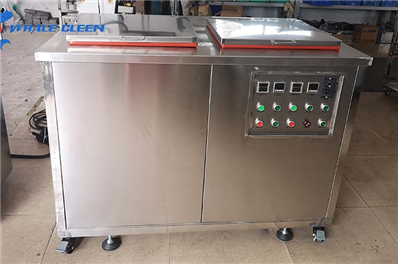
For decades, PCB cleaning was treated as an afterthought. Boards coming off the assembly line were scrubbed manually, sprayed with solvents, or dipped in standard ultrasonic tanks—then left to air-dry or be blown off with compressed air.
The problems with this approach are well-documented:
Manual scrubbing is inconsistent. One operator cleans thoroughly; the next one rushes. One batch passes inspection; the next fails. There is no repeatability, no traceability, and no way to guarantee that every board—especially those with dense component populations—is truly clean.
Spray systems leave shadow zones. Water and cleaning solutions cannot reach under components or into tight crevices. Flux residues remain trapped, leading to ionic contamination and field failures.
Standard ultrasonic tanks lack integration. They clean well, but they don't rinse, dry, or handle boards automatically. Boards emerge wet, requiring separate drying steps that introduce new opportunities for contamination and damage.
Labor costs are spiraling. In high-mix, small-batch production environments, cleaning consumes an outsized share of labor hours. Changeovers, manual handling, and rework all add up.
One production manager put it succinctly: "We were spending more time and money on cleaning than on assembly. And we still couldn't get consistent results."
The factories that have made the switch to industrial ultrasonic automated cleaning machines are not doing it for novelty. They are doing it for four measurable advantages:
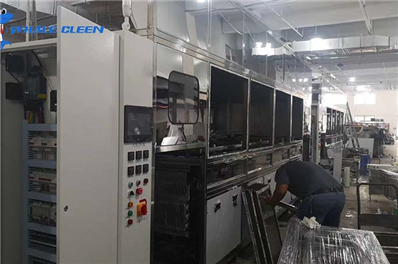
Automated ultrasonic cleaning systems use programmable logic controllers (PLC) to run the exact same cleaning recipe every single time. Temperature, ultrasonic power, immersion time, and agitation patterns are locked in. There is no operator variability. Every board that enters the system emerges with the same level of cleanliness—batch after batch, shift after shift.
For PCB manufacturers, this consistency translates directly to predictable yield. When you know exactly how clean your boards will be, you can plan production with confidence.
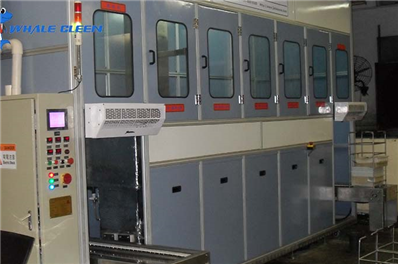
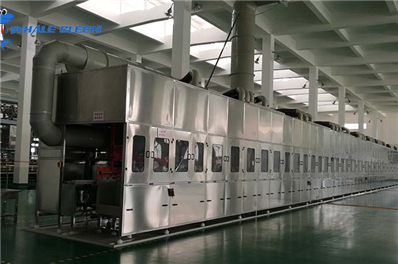
Industrial automated systems are designed for continuous operation. Boards move through the cleaning, rinsing, and drying stages without manual intervention. The cleaning line keeps pace with the rest of the production floor—no bottlenecks, no idle time.
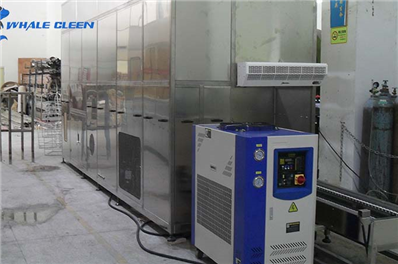
Leading manufacturers are using through-type ultrasonic cleaning machines with variable-speed conveyors, allowing them to adjust throughput to match upstream and downstream processes. The result: higher output without sacrificing quality.
One of the most common defects in PCB cleaning is water spotting and white residue—the result of incomplete drying or residual chemistry. Automated systems solve this at the source.
Whale Cleen's through-type machines, for example, feature air knife water cutting and hot air circulation drying devices. Boards exit the system completely dry, with no moisture trapped under components or in through-holes. This eliminates a whole category of defects that plague manual and semi-automated processes.
While the upfront investment in an automated ultrasonic cleaning system is higher than a basic tank, the total cost of ownership is dramatically lower. Labor costs drop—sometimes by 60% or more. Rework and scrap rates fall. Chemical consumption is optimized through circulating filtration systems. And the system runs reliably for years with proper maintenance.
Leading manufacturers understand this math. They know that the cheapest cleaning solution is not the one with the lowest purchase price—it is the one that delivers consistent quality with the lowest operating cost over the long term.
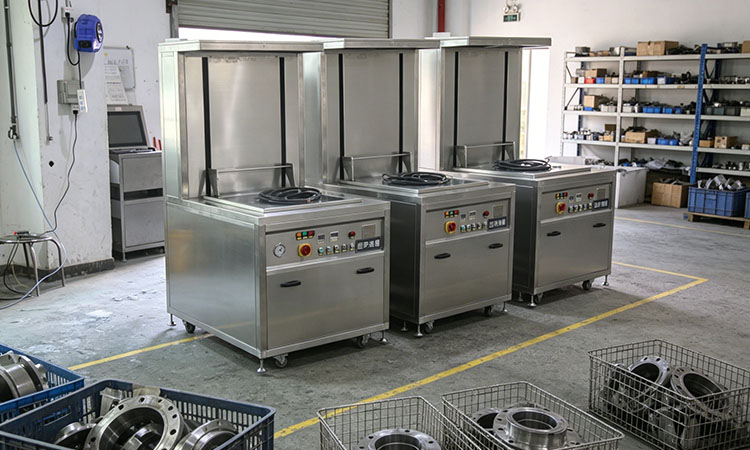
Whale Cleen (website: http://www.bwhalesonic.com/ ) has been focused on providing professional cleaning solutions since 2003. With a 10,000-square-meter production base, the company designs and manufactures the kind of industrial ultrasonic automated systems that leading PCB manufacturers rely on.
What sets Whale Cleen apart is its end-to-end approach:
PLC-controlled automation ensures every batch runs the same recipe.
Integrated drying systems—air knife water cutting and hot air circulation—eliminate moisture-related defects.
Circulating filtration keeps cleaning fluid clean, extending bath life and reducing chemical costs.
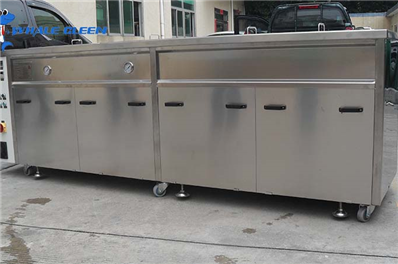
Customizable configurations—from through-type conveyor systems to mechanical arm designs—allow the system to match your specific production flow.
Whale Cleen focuses exclusively on industrial and electronics manufacturing applications—PCB cleaning, metal parts, automotive components, and precision machining—and does not serve medical, eyewear, jewelry, or food industries.
The reason leading manufacturers are switching to industrial ultrasonic automated cleaning machines is simple: it works. It delivers consistent quality, higher throughput, lower labor costs, and fewer defects. It transforms cleaning from a bottleneck into a reliable, predictable process step.
If your PCB cleaning process is still relying on manual scrubbing, spray systems, or basic ultrasonic tanks without integrated drying, you are leaving quality and profitability on the table. The leaders have already made the switch. The question is: when will you?
Ready to see what an industrial ultrasonic automated cleaning system can do for your PCB production? Visit http://www.bwhalesonic.com/ to explore Whale Cleen's range of solutions—or contact their team to discuss your specific application.