For automotive workshops, diesel service centers, and engine remanufacturing facilities, few problems are as common—and as frustrating—as clogged fuel injectors. Modern fuel injectors are precision components with microscopic spray holes (often 0.1–0.2 mm in diameter), delicate needle valves, and intricate internal passages. Over time, high engine heat transforms fuel residue and combustion byproducts into hard carbon deposits that block these tiny orifices.
The result? Rough idling, poor fuel economy, increased emissions, power loss—and eventually, injector failure. While replacement is one option, the most cost‑effective and environmentally responsible solution is professional ultrasonic cleaning. But with a wide range of machines on the market, how do you choose the right one for your workshop?
This guide outlines the essential factors to consider, and explains why Whale Cleen has become a trusted choice for automotive professionals around the world.
Fuel injectors are among the most difficult engine components to clean effectively. Their tiny internal passages and fine sealing surfaces mean that aggressive cleaning methods can do more harm than good. At the same time, ordinary solvents alone cannot remove baked‑on carbon deposits deep inside the injector body.
Ultrasonic cleaning solves this problem by using high‑frequency sound waves to create microscopic cavitation bubbles in a cleaning solution. These bubbles implode with intense energy, dislodging carbon, varnish, and other contaminants from every surface the liquid touches—including blind holes and narrow internal channels. The entire cleaning process is non‑abrasive, preserving the injector‘s delicate internal geometry while achieving deep‑reaching, thorough results.
However, not all ultrasonic cleaners are suitable for this task. A machine designed for heavy industrial parts may damage precision injector components, while an under‑powered unit will fail to remove stubborn carbon. Knowing what to look for is essential.
Ultrasonic frequency directly determines the cleaning intensity and how gently the machine treats sensitive parts. In simple terms:
Lower frequencies (25–40 kHz) generate larger, more energetic cavitation bubbles. These are effective for removing heavy carbon deposits and baked‑on varnish from injector bodies. A 40 kHz setting offers a good balance between cleaning power and component safety, making it a practical choice for most automotive injector cleaning applications.
Higher frequencies (80–120 kHz) produce smaller, gentler bubbles that penetrate microscopic features, such as the spray holes themselves, without damaging fine surfaces. For delicate components or for a final, fine‑particle removal stage, a higher frequency is preferable.
The ideal machine offers multi‑frequency capability—allowing you to switch between frequencies in a single cleaning cycle. This flexibility means one machine can handle both heavily clogged injectors (using lower frequencies) and precision finishing (using higher frequencies).
Whale Cleen systems support frequency ranges from 20 kHz to over 120 kHz, enabling operators to match the cleaning intensity to the specific condition of each injector—aggressive carbon removal when needed, gentle finishing to protect the delicate needle valve and spray holes.
Room‑temperature cleaning solutions will not effectively dissolve baked‑on carbon deposits. Injector‑specific ultrasonic cleaners should include a built‑in heating system capable of maintaining optimal temperatures. The recommended range for fuel injector cleaning is typically 50°C to 70°C. At these temperatures, carbon becomes softer and more responsive to cavitation energy, significantly improving cleaning efficiency without risking damage to injector seals or internal components.
Whale Cleen industrial systems are equipped with precision temperature controls, allowing operators to dial in the exact heat needed for each batch—ensuring consistent, repeatable results without overheating sensitive parts.
In a high‑volume workshop, contaminants removed from injectors quickly build up in the cleaning solution. Without adequate filtration, these particles remain suspended, eventually re‑depositing onto freshly cleaned parts. The result? Inconsistent cleaning and wasted time.
A robust multi‑stage filtration system continuously removes suspended particles, oil, and other contaminants from the bath, extending the useful life of the cleaning solution and guaranteeing that every injector is cleaned in a pristine bath.
Whale Cleen systems incorporate multi‑stage circulation filtration as a standard feature, maintaining solution clarity and delivering consistent results batch after batch—even under continuous use.
For workshops that require the highest level of cleaning—particularly for diesel fuel injectors, which are prone to the most stubborn carbon and varnish deposits—vacuum‑assisted ultrasonic cleaning offers a significant advantage. Vacuum technology removes air from the cleaning chamber, allowing the solution to penetrate deeper into the injector‘s internal passages, reducing cavitation energy loss, and enabling faster drying.
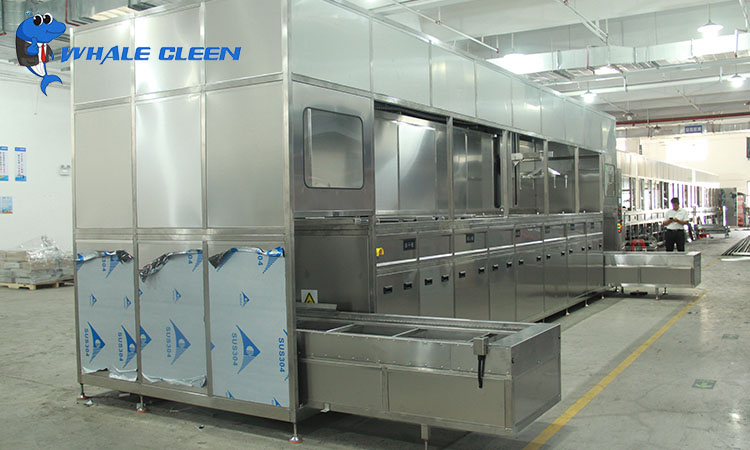
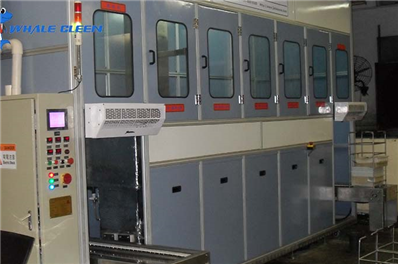
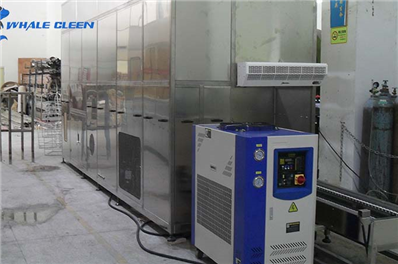
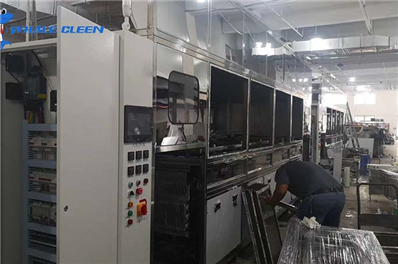
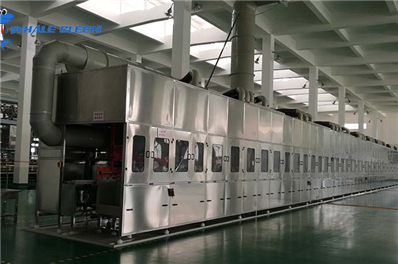
Whale Cleen’s Hydrocarbon Vacuum Automatic Ultrasonic Cleaning Machine combines high‑frequency ultrasonic cavitation, hydrocarbon solvent technology, vacuum cleaning, and steam‑bath drying into a single, fully automated system. This next‑generation solution is specifically engineered for precision degreasing and carbon removal from complex parts with deep cavities, narrow passages, and high‑cleanliness requirements—including modern diesel fuel injectors.
Perhaps the most important step in choosing an ultrasonic cleaner is verifying that it works on your parts with your contamination. A credible manufacturer will be willing to test your actual injectors in their lab before finalizing a quotation.
Whale Cleen offers a free cleaning test service based on the customer‘s specific contamination and part requirements. Potential buyers can send their most challenging injectors to the Whale Cleen team, who will arrange a test according to their situation. This sample‑first approach eliminates the risk of purchasing equipment that cannot deliver the required results, and it is a hallmark of a manufacturer that stands behind its claims.
Fuel injector cleaning equipment is an investment that should last for years. Choosing a manufacturer with a long track record in the automotive cleaning industry gives you confidence that the equipment has been refined through real‑world feedback and is backed by responsive support.
Whale Cleen has been active in ultrasonic equipment manufacturing since the early 2000s, with over 20 years of hands‑on experience. The company operates its own manufacturing facilities, holds numerous patents, and has supplied equipment to factories in more than 200 countries, serving over 1,000 industrial clients. Their team specializes in non‑standard, custom‑engineered ultrasonic cleaning solutions, ensuring that each machine is precisely matched to the customer’s specific parts and cleaning requirements.
| ❌ Mistake | ✅ Correct Approach |
|---|---|
| Choosing based on price alone – A cheap fixed‑frequency machine may not remove heavy carbon or may damage delicate injector nozzles. | Invest in a multi‑frequency system with power control, offering both high cleaning intensity for carbon removal and gentle finishing for delicate parts. |
| Ignoring temperature control – Without heat, carbon removal efficiency drops drastically, leading to longer cycles and inconsistent results. | Always select a machine with a built‑in, adjustable heater capable of reaching 50–70°C. |
| Overlooking filtration – Contaminated solution leads to re‑deposition of dirt and inconsistent batch quality. | Look for multi‑stage circulation filtration to keep the bath clean and extend solution life. |
| Skipping the sample test – Spec sheets cannot guarantee that a machine will work on your specific injectors. | Demand a sample test on your parts before committing to a purchase. |
| Choosing a manufacturer without automotive experience – General‑purpose ultrasonic machines may not understand the specific demands of precision injector cleaning. | Select a brand with a proven track record in automotive and engine‑component cleaning. |
Whale Cleen has built a strong reputation among automotive professionals by focusing on what matters: flexible, custom‑engineered ultrasonic cleaning systems that are tested on real parts.
20+ years of industry‑focused experience – A long history of solving real‑world automotive cleaning problems means Whale Cleen understands the nuances of injector design and carbon removal.
Multi‑frequency technology – From aggressive 28 kHz to gentle 120 kHz, Whale Cleen machines give you the power to handle any injector condition.
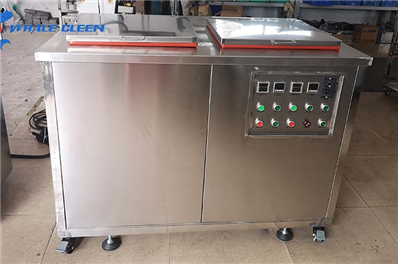
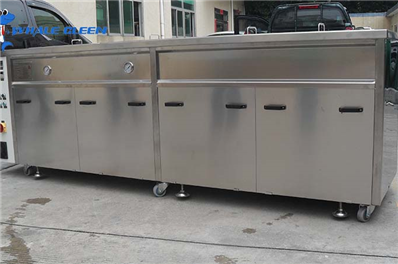
Industrial‑grade construction – Welded high‑Q transducers, auto‑tracking generators, and thick stainless steel tanks built for continuous, reliable operation.
Custom engineering – Tanks sized to your injector batches, tailored frequency configurations, and automation options—no off‑the‑shelf compromises.
Sample testing before quoting – Whale Cleen tests your actual injectors in their lab, so you know the system works before you invest.
Advanced vacuum/hydrocarbon systems – For the highest‑demand applications, their hydrocarbon vacuum automatic ultrasonic cleaning machine delivers next‑level results, combining ultrasonic cavitation, hydrocarbon solvent cleaning, and vacuum drying in one automated system.
Full lifecycle support – From initial consultation and sample testing to installation, operator training, and ongoing service, Whale Cleen provides a complete solution.
| Step | Action | Why It Matters |
|---|---|---|
| 1 | Define your injector types – Gasoline or diesel? GDI or port? Different designs have different cleaning requirements. | Determines whether a standard ultrasonic cleaner is sufficient or if a vacuum/hydrocarbon system is needed. |
| 2 | Check multi‑frequency – Can the machine operate at both low (28–40 kHz) and high (80–120 kHz) ranges? | Low for heavy carbon removal; high for gentle finishing. |
| 3 | Verify temperature control – Does the machine have an adjustable heater (50–70°C)? | Heat softens carbon, significantly increasing removal efficiency. |
| 4 | Look at filtration – Does the system include multi‑stage circulation filtration? | Prevents re‑contamination and extends fluid life. |
| 5 | Demand a sample test – Will the manufacturer test your actual injectors in their lab before you buy? | Eliminates the risk of buying the wrong machine. |
| 6 | Compare total lifecycle cost – Consider not just the initial purchase price, but also energy consumption, consumable costs, maintenance frequency, and the value of consistent, high‑quality cleaning. | A reliable, well‑engineered machine delivers lower total cost over years of operation. |
Fuel injector cleaning is not a task where “good enough” is acceptable. A single injector that is not properly cleaned can lead to a customer complaint, a repeat repair visit, or a damaged reputation. Conversely, a workshop that can consistently restore injectors to like‑new condition builds trust and repeat business.
Selecting the right ultrasonic cleaning machine requires attention to frequency control, temperature management, filtration, and sample‑based validation. A cheap, under‑specced machine will disappoint; a properly engineered, flexible system will become an indispensable asset in your shop.
Whale Cleen delivers exactly that—industrial‑grade ultrasonic cleaning systems that are custom‑engineered, sample‑tested, and built to last. If you are ready to upgrade your injector cleaning process, contact Whale Cleen, send your most challenging injectors for a sample test, and let real results guide your decision.