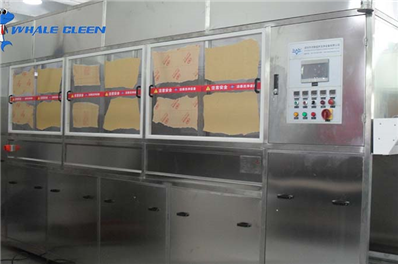
For anyone who owns an ultrasonic cleaner, the instruction to "fill the tank with adequate water" is as fundamental as it gets. Yet, in moments of haste or curiosity, you might wonder what would happen if you ran it with less water than recommended. The answer is unequivocal: Operating an ultrasonic cleaner with low water is one of the quickest ways to damage it and render it useless.
Understanding why water is not just a medium but a critical component of the cleaning process is key to using your machine safely and effectively. This isn't a mere suggestion—it's a principle rooted in the core physics of how the device operates.
At the heart of every ultrasonic cleaner is a component called the transducer, which converts high-frequency electrical energy into mechanical vibrations.
The Need for a Medium: Sound waves, including ultrasonic waves, cannot travel effectively through a vacuum or air. They require a dense medium to propagate efficiently. Air molecules are too sparse to transfer the intense mechanical energy from the transducer.
Liquid as the Perfect Conduit: Water (or other cleaning fluids) is an excellent conductor of these vibrations. Its dense molecular structure allows the high-frequency sound waves to travel through it with minimal energy loss, reaching every corner of the tank uniformly.
In simple terms, without a sufficient amount of water, the energy from the transducer has nowhere to go. It's like trying to push a car while standing on ice—you exert force, but without solid ground to push against, you go nowhere. The water is that "solid ground" for the ultrasonic energy.
The magic of ultrasonic cleaning happens through a process called cavitation. This is the formation and implosive collapse of millions of microscopic vacuum bubbles in the liquid.
How Cavitation Works: The sound waves create alternating high-pressure and low-pressure cycles in the liquid. During the low-pressure cycle, these tiny bubbles form. During the subsequent high-pressure cycle, they collapse violently.
The Consequence of Low Water:
When the water level is too low, the pressure dynamics within the tank are disrupted. The energy becomes concentrated in a smaller volume of water, but not in a productive way.
The formation and collapse of cavitation bubbles become erratic and weak. Instead of a uniform cloud of powerful implosions scrubbing your items, you get a sparse, ineffective fizzing.
The result is significantly reduced cleaning power. Items may not get clean, especially in areas that are not fully submerged, as the cavitation effect is strongest in the bulk of the liquid.
This is the most severe and immediate risk of running an ultrasonic cleaner with low water. The transducer is designed to operate with a cooling load—the mass of water in the tank.
The "Dry Fire" Scenario: When the water level drops below the transducer (usually located at the bottom of the tank), the transducer is effectively vibrating against air. This is often called "dry firing."
Energy Becomes Heat: With no liquid to absorb and carry away the vibrational energy, that energy is converted directly into heat within the transducer itself.
Catastrophic Failure: The temperature of the transducer can skyrocket in a matter of seconds to minutes. This can cause the piezoelectric crystals inside to crack, the epoxy bonding to melt, or the electrical coils to overheat and burn out. This damage is often permanent and requires costly professional repair or replacement of the entire unit.
You might hear a change in sound—a louder, higher-pitched, or rattling noise—which is a clear warning sign that the transducer is under stress.
Beyond the core functional issues, low water levels can cause other problems:
Damage to the Tank: The intense, unconsumed vibrations can cause stress to the stainless steel tank, potentially leading to cracks or seams failing over time.
Damage to Items: If items are not fully submerged, they can vibrate against each other or the tank walls, causing scratches, dents, or other physical damage.
Concentrated Cleaning Solutions: If you are using a detergent, a low water level will create an overly concentrated solution that could be too harsh for delicate items.
To ensure optimal performance and longevity of your ultrasonic cleaner, always follow these guidelines:
Follow the Manual: The manufacturer's instructions are your first reference. They will specify the minimum and maximum water levels, often marked by a fill line inside the tank.
The General Rule of Thumb: A good rule is to fill the tank between ½ and ⅔ of its total capacity. This provides enough volume for effective cavitation without risking overflow when items are added.
Ensure Full Submersion: The water level must be high enough to completely submerge all items you are cleaning, preferably by at least an inch.
Use the Indirect Method for Small Items: When cleaning very small parts, place them in a glass beaker or a small basket filled with cleaning solution, and then place that container into the main tank filled with water. This protects small items and keeps the main tank cleaner.
Water in an ultrasonic cleaner is far more than just a placeholder for your items. It is the essential conductor of energy, the lifeblood of the cavitation process, and the critical coolant for the transducer. Treating the water level requirement with respect is non-negotiable.
Neglecting this simple rule risks poor cleaning performance and, more importantly, the immediate and irreversible death of your machine. By always ensuring an adequate water level, you are not just cleaning your items effectively—you are investing in the long-term health of your valuable ultrasonic cleaner.