In precision manufacturing, the mold is the birthplace of your product. Every imperfection on the mold surface—every speck of carbon, every trace of resin, every microscopic oil residue—gets faithfully reproduced on every single part that emerges from it.
The result? Rejected components. Reworked batches. Customers questioning your quality standards.
For years, manufacturers have battled this problem with manual scrubbing, harsh solvents, and endless compromise. But there's a better way. Ultrasonic cleaning technology has emerged as the definitive solution for mold maintenance—and at the forefront of this revolution stands Whale Cleen, a 20-year veteran in industrial ultrasonic cleaning with the expertise to solve even the most stubborn mold residue challenges.
Molds are investments. A single high-precision injection mold or die-casting tool can cost tens of thousands of dollars—or more. Yet many manufacturers unknowingly shorten their molds' lifespan and compromise their output quality through inadequate cleaning.
Consider what accumulates on mold surfaces during normal operation:
Carbon deposits from burned-on lubricants and release agents
Resin residues that build up in venting channels and corners
Oxide layers that form on metal surfaces at high temperatures
Mineral oils and greases that degrade and polymerize over time
When these contaminants build up, they don't just look bad—they actively harm your production. They transfer to parts, causing surface defects. They insulate the mold, affecting temperature control. They can even cause corrosion and pitting on the mold itself .
Traditional cleaning methods—manual scraping, chemical soaking, or pressure washing—often fall short. They're labor-intensive, inconsistent, and can damage delicate mold surfaces. Worse, they frequently fail to reach the deep cavities and intricate geometries that modern molds demand.
This is where ultrasonic cleaning transforms the equation.
Before exploring Whale Cleen's specific solutions, it's essential to understand why ultrasonic cleaning is uniquely suited to mold maintenance.
Ultrasonic cleaning harnesses a phenomenon called cavitation—the formation and implosion of microscopic bubbles in a liquid medium .
Here's how it works:
High-frequency sound waves (typically 20-40 kHz) are generated by transducers mounted to the cleaning tank .
These waves create alternating high-pressure and low-pressure regions in the cleaning solution.
In low-pressure regions, tiny vapor-filled bubbles form—these are "cavitation bubbles."
When these bubbles encounter high-pressure regions, they collapse violently .
Each collapse creates microscopic shockwaves and high-energy microjets that impact nearby surfaces .
Multiply this by millions of bubbles collapsing thousands of times per second, and you have a powerful scrubbing action that reaches every exposed surface—including blind holes, cross-drilled passages, and intricate details that brushes can never touch .
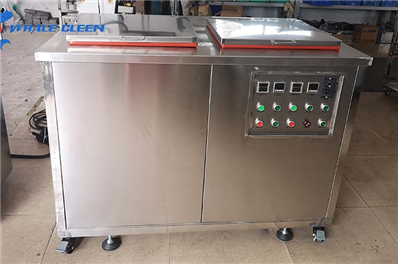
Standard ultrasonic cleaning is highly effective for many applications. But for molds encrusted with stubborn carbon, baked-on resins, and oxidation layers, Whale Cleen offers something even more powerful: electrolytic ultrasonic cleaning .
This advanced technology combines traditional ultrasonic cavitation with an electrolytic circuit that actively lifts contaminants from metal surfaces.
In an electrolytic ultrasonic system, the mold being cleaned is connected to an electrical circuit . When current passes through a specially formulated cleaning solution:
Oxygen is generated at the positive pole
Hydrogen forms at the negative pole (where the mold is placed)
As tiny hydrogen bubbles form directly on the mold surface, they create a "sauna effect"—lifting and dislodging contaminants including:
The simultaneous action of ultrasonic cavitation accelerates this peeling process, ensuring that even contaminants in microscopic corners are completely removed .
According to Whale Cleen's technical specifications, this combined approach delivers remarkable advantages :
No Immediate Rusting: Cleaned molds resist flash rusting—a common problem with conventional methods
No Hydrogen Embrittlement: The process doesn't compromise metal integrity
Faster Cleaning: Compared to manual methods, electrolytic ultrasonic cleaning saves approximately one hour per cleaning cycle
Complete Contaminant Removal: Even dirt in "fairly small corners" is eliminated
Restored Appearance: Metals return to their original patina and beauty
Excellent Rust Prevention: Integrated rust inhibitors protect molds post-cleaning
Environmental Safety: Far safer and more eco-friendly than organic solvents
Reduced Defect Rates: Thorough cleaning dramatically lowers post-wash rejection rates
When you invest in a mold cleaning solution, you're not just buying equipment—you're buying the expertise behind it. Guangdong Blue Whale Ultrasonic Cleaning Technology Co., Ltd. (operating under the Whale Cleen brand) brings two decades of specialized experience to every solution .
Founded in 2003 and headquartered in Dongguan City, Guangdong Province, Whale Cleen has grown into a comprehensive ultrasonic cleaning enterprise with :
20+ years of focused R&D, manufacturing, and sales in ultrasonic cleaning
Approximately 300 skilled workers across engineering, R&D, QA, and sales teams
50+ patents in ultrasonic cleaning technology
ISO9001:2015 certified quality management system
CE, FCC, ROHS, and CCC certifications for global compliance
While Whale Cleen's electrolytic ultrasonic technology excels at mold maintenance, the company's product range addresses cleaning challenges across virtually every industry.
Automotive parts—from engine components to brake calipers—demand absolute cleanliness. Whale Cleen's industrial ultrasonic cleaners effectively remove cutting oils, iron filings, grease, and carbon deposits from :
Piston rings and carburetors
Fuel injectors and turbochargers
Gears, bearings, and valves
Compressor housings and flow meter components
The result? Extended component life, improved performance, and fewer warranty claims.
For manufacturers of precision components—bearings, gears, optical devices, and electronic parts—ultrasonic cleaning ensures that microscopic contaminants don't compromise performance .
Whale Cleen's machines handle everything from semiconductor components to LCD glass, removing polishing compounds, dust particles, and machining residues without damaging delicate surfaces .
Even the most intricate jewelry designs have crevices that trap dirt and oils. Whale Cleen's precise ultrasonic cleaners restore brilliance to rings, necklaces, and watches—reaching areas that cloths and brushes can't .
For optical components like lenses and prisms, ultrasonic cleaning removes fingerprints and residues without scratching, preserving optical clarity .
Whale Cleen's product lineup demonstrates the company's commitment to solving real-world cleaning problems.
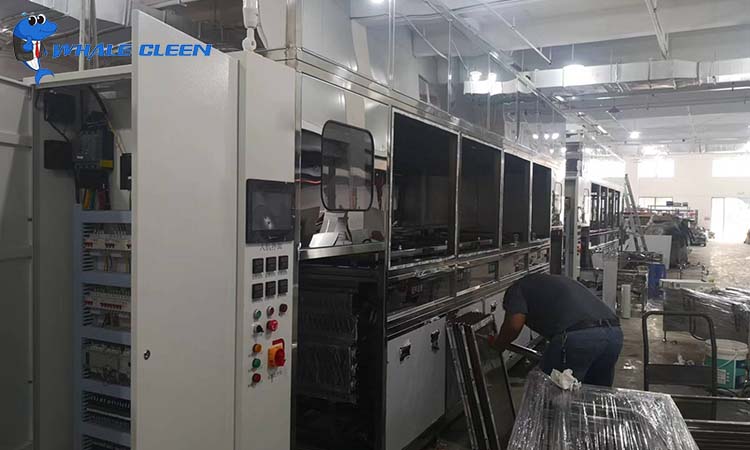
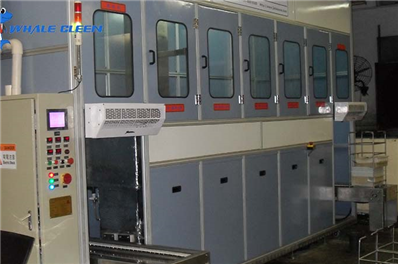
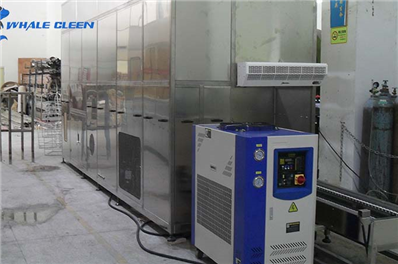
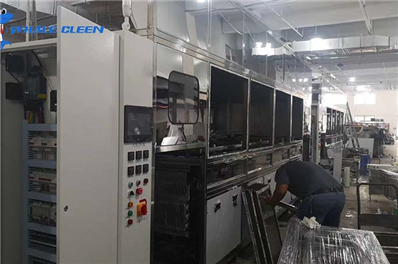
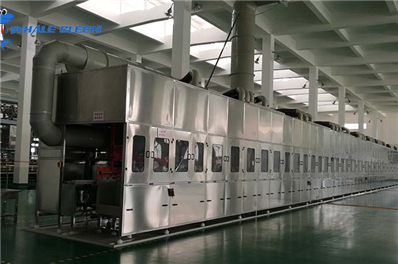
For manufacturers requiring continuous cleaning operations, Whale Cleen offers multi-tank pass-through systems with :
Conveyor-driven continuous operation for 24/7 production
Multiple stages: pre-cleaning, ultrasonic main cleaning, spray rinsing, DI water rinsing, hot air drying
PLC touchscreen control for precise programming
Customizable configurations (3-12 tanks based on requirements)
When water-based cleaning isn't sufficient for stubborn oils and waxes, Whale Cleen's hydrocarbon vapor systems provide an alternative . These machines combine:
Ultrasonic cavitation for primary soil removal
Vapor degreasing for final residue-free finishing
Dual media compatibility: works with both water-based and hydrocarbon agents
No two cleaning challenges are identical. That's why Whale Cleen places customization at the core of its offering.
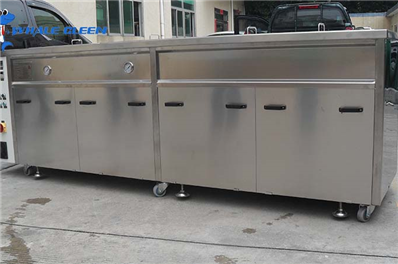
Custom tank dimensions to accommodate unusual part sizes
Specialized frequencies (28/40/68/80/132kHz options available)
Specific tank materials (SUS304 or SUS316)
Integrated robotics or automated loading systems
Specialized cleaning protocols for sensitive materials
Whale Cleen's engineering team will work with you to design and manufacture the precise solution your operation requires. Customers can provide drawings or purchasing requirements, and the team responds with rapid design and manufacturing .
When you invest in Whale Cleen equipment, you're investing in components and craftsmanship built to last.
High-quality electrical and mechanical components ensure stable, reliable performance
Experienced engineers—many with backgrounds developing equipment for leading international manufacturers—design every system
Skilled production workers bring years of experience in building automated cleaning lines
Comprehensive quality control covers everything from raw material inspection to final testing
This commitment to quality is reflected in Whale Cleen's 20-year history and the trust placed in the brand by numerous well-known enterprises and government projects .