Ultrasonic cleaners are widely used in industries ranging from manufacturing to healthcare, but many users wonder about their power consumption and why high power is often emphasized. Understanding the relationship between power and cleaning efficiency is key to optimizing performance and achieving consistent results.
Ultrasonic cleaners typically operate within a power range of 50W to 2000W, depending on the size and application of the device. The power rating is closely tied to the following factors:
Transducer Efficiency: The transducers, which convert electrical energy into mechanical vibrations, determine how effectively power is utilized. Higher power often correlates with stronger ultrasonic cavitation.
Tank Size: Larger tanks require more power to generate uniform cavitation across the entire volume.
Cleaning Intensity: Dense or stubborn contaminants demand higher power to ensure thorough cleaning.
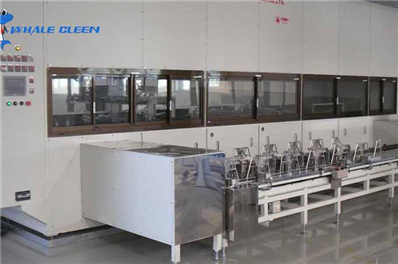
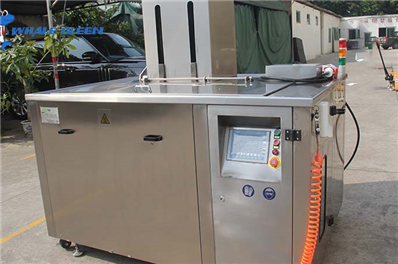
For example, a compact laboratory ultrasonic cleaner may operate at 100W, while an industrial-grade unit can exceed 1500W to handle heavy-duty tasks.
Enhanced Cavitation Effects
The core mechanism of ultrasonic cleaning is cavitation—the formation and collapse of microscopic bubbles in the cleaning solution. Higher power levels increase the intensity and number of these bubbles, leading to:
Better penetration of complex geometries.
Faster removal of tough contaminants like grease, rust, or polishing compounds.
Time Efficiency
High-power ultrasonic cleaners significantly reduce cleaning time. For instance, a task that takes 20 minutes at 200W might be completed in just 5 minutes at 800W. This is critical in industrial settings where productivity is a priority.
Versatility
Devices with adjustable power settings can handle a wider range of materials and contaminants. Delicate items like electronic components can be cleaned at lower power, while engine parts or tools may require maximum power.
While high power offers clear benefits, it is not always the best choice. Excessive power can cause:
Damage to Delicate Items: Fragile materials or finely polished surfaces may erode or sustain micro-scratches.
Accelerated Wear and Tear: High power strains transducers and other components, potentially shortening the device’s lifespan.
Increased Energy Consumption: Power-heavy models may lead to higher operational costs.
Selecting the appropriate power level depends on the specific application:
Low Power (50W–200W): Suitable for jewelry, optical lenses, and electronic components.
Medium Power (200W–600W): Ideal for laboratory equipment, dental instruments, and small mechanical parts.
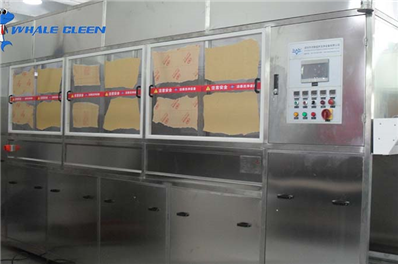
High Power (600W–2000W): Reserved for industrial applications, such as cleaning automotive parts, machinery components, or large batches of tools.
Always refer to the manufacturer’s guidelines and test clean a sample item when unsure.
It’s important to distinguish between power (wattage) and frequency (kHz). While power determines cleaning intensity, frequency affects the size and behavior of cavitation bubbles:
Low Frequency (20kHz–40kHz): Larger bubbles, ideal for heavy-duty cleaning.
High Frequency (80kHz–120kHz): Smaller bubbles, gentler on delicate surfaces.
A balanced combination of power and frequency ensures optimal cleaning without compromising safety or efficiency.
Modern ultrasonic cleaners are designed to maximize energy efficiency. Features like pulsed ultrasound, automatic power adjustment, and advanced transducer materials help reduce waste while maintaining performance. For instance, some models use dual-frequency settings to switch between high and low power based on the cleaning stage.
Myth 1: Higher power always means better cleaning.
Reality: Overpowering can reduce efficiency and damage items.
Myth 2: Power consumption equals cleaning performance.
Reality: The design and quality of transducers are equally important.
To ensure longevity and consistent performance:
Use recommended cleaning solutions to avoid corrosion or transducer damage.
Regularly inspect transducers for signs of wear.
Avoid running the device at maximum power for extended periods.
Ultrasonic cleaners often feature high power ratings to tackle diverse cleaning challenges efficiently. However, the key to achieving optimal results lies in understanding the relationship between power, frequency, and the specific requirements of the task at hand. By selecting the right power setting and maintaining the equipment properly, users can maximize both performance and device lifespan.