-
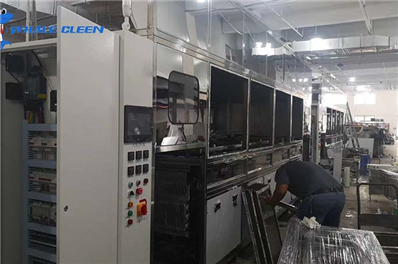 Struggling with Mold Residue That Compromises Part Quality? Discover Ultrasonic Cleaning Solutions
In precision manufacturing, the mold is the birthplace of your product. Every imperfection on the mold surface—every speck of carbon, every trace of resin, every microscopic oil residue—gets faithfully reproduced on every single part that emerges from it.
-
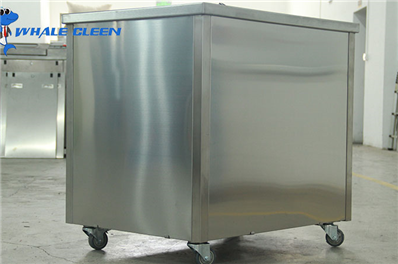 The Science Behind Choosing the Right Ultrasonic Cleaning Solutions
Ultrasonic cleaning has become a cornerstone in various industries due to its efficiency and precision in removing contaminants from surfaces. However, the effectiveness of ultrasonic cleaning largely depends on the type of cleaning solution used. This ar
-
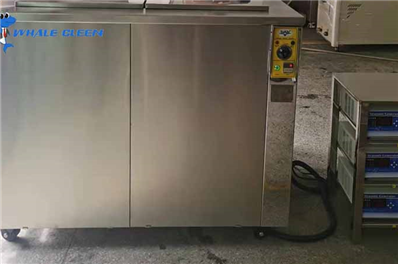 Blue whale unveils ultrasonic cleaning solution
Clean development has become a major trend in today's world. Practicing the concept of clean development, protection in development, and developing in protection is conducive to finding a win-win path between economic development and environmental pro
-
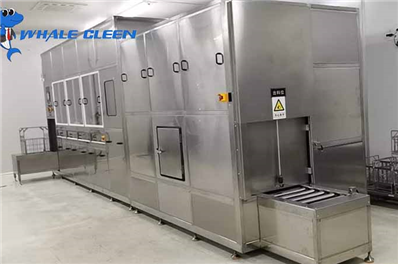 How to locate parts in the ultrasonic cleaning machine
The correct location of parts in an ultrasonic cleaning machine is as important as the frequency of ultrasonic cleaning and the formulation of the ultrasonic cleaning solution. However, in these three standards, incorrect component positioning is usually
-
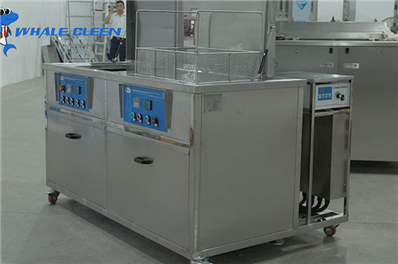 What Solutions Can Be Added to Ultrasonic Cleaners? A Professional Guide
Ultrasonic cleaners use high-frequency sound waves to generate cavitation bubbles that clean surfaces by dislodging contaminants. While the physical action of the sound waves is highly effective, adding the right solution can significantly enhance cleanin
-
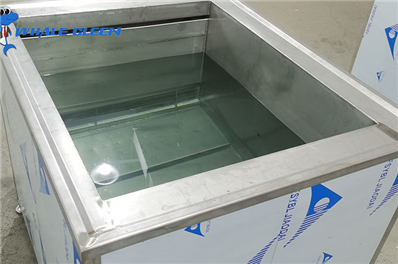 What Cleaning Solutions Should Be Used for Removing Oil with an Ultrasonic Cleaner?
Ultrasonic cleaning machines are widely recognized for their effectiveness in removing contaminants, including oils, greases, and other residues, from various surfaces. The process is based on the principle of cavitation, where ultrasonic sound waves crea
-
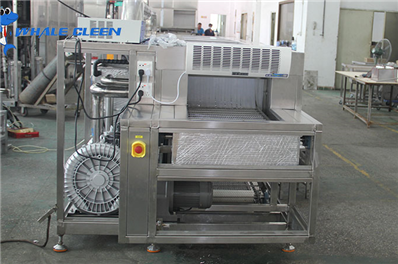 Ultrasonic Cleaner: Ensuring the Pristine State of Precision Instruments
In the manufacturing and use of precision instruments, the surfaces often accumulate various contaminants such as grease, dust, and chemical residues. These impurities not only affect the accuracy and performance of the instruments but may also lead to eq
-
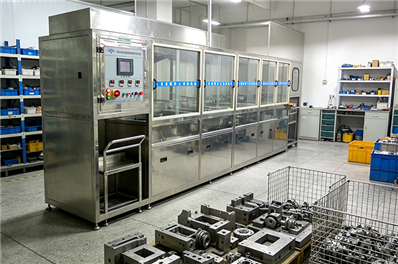 One Ultrasonic Machine, Three Critical Cleaning Tasks – Can It Really Handle Silicon Material, Solar Cells, and Terminal Blocks in One Go?
In photovoltaic manufacturing, semiconductor fabrication, and electronic component production, cleaning is never a single-step affair. Different materials, different contaminants, and different surface sensitivities demand different approaches – or so the
-
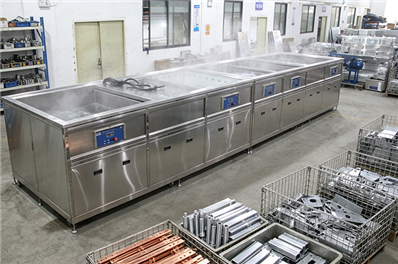 Ultrasonic Cleaning Machine for Shaft Parts: A Specialized Solution for Precision Components
In mechanical manufacturing and heavy industry, shaft parts—such as transmission shafts, motor rotors, hydraulic piston rods, and bearing rollers—are fundamental components that demand the highest standards of cleanliness. These precision-machined parts o
-
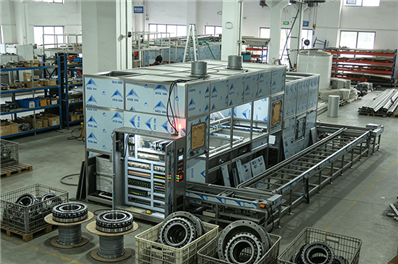 Ultrasonic Cleaning Machine: The Cost-Effective Solution for Mold Parts Cleaning
In the manufacturing industry, the cleaning of mold components—such as core pins, ejector pins, and intricate mold inserts—has long been a silent drain on production budgets. The costs are not limited to cleaning agents and labor; they extend to rejected
-
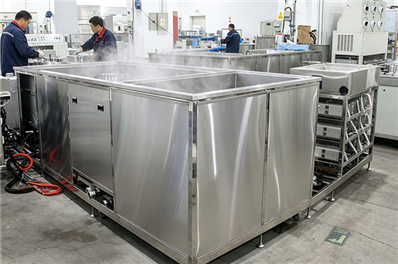 Hidden Contaminants in Hydraulic & Pneumatic Micro-Pores? Manual Scrubbing Wasting Time — Ultrasonic Cleaning Delivers Efficient Scaling Removal
In any hydraulic or pneumatic manufacturing facility, there is a recurring scenario that no production manager wants to face:A valve body passes every dimensional inspection. It looks flawless on the outside. It assembles smoothly. It ships to the custome
-
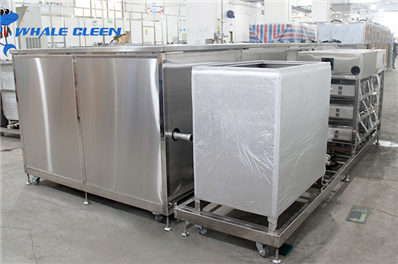 The Same Circuit Board, Different Results: Why Leading Electronics Manufacturers Are Switching to Industrial Ultrasonic Automatic Cleaning Machines
Look at the two PCBs. The first was cleaned with a manual brush and solvent dip. The second came from a fully automated ultrasonic cleaning line. To the naked eye, they look identical—solder joints shining, surfaces spotless, ready for assembly. But un