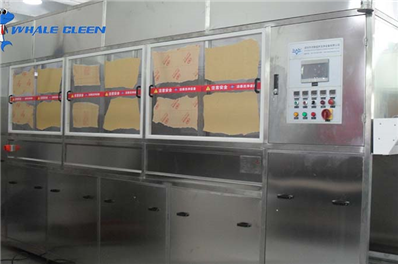
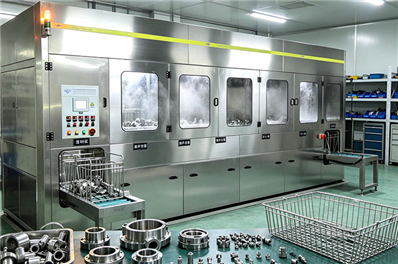
In precision manufacturing, the most difficult contamination is often the contamination you cannot see. Fine blind holes, narrow slots, threaded ports, and tight crevices can trap polishing dust, lapping residue, metal fines, and oil film. A part may look clean under normal light, yet fail process acceptance because residue remains hidden inside. Ordinary cleaning equipment often cannot reach these areas, or it loosens contamination only to let it settle back into the same blind holes. This is where an industrial ultrasonic cleaning machine from Whale Cleen makes a practical difference.
Polishing dust is especially troublesome. It is fine, lightweight, and easily packed into small openings. During polishing, deburring, or surface finishing, dust and fine particles are pushed into blind holes, recesses, and internal passages. Manual brushing can clean the entrance but often misses the bottom. Solvent rinsing may dissolve oil, but it does not reliably remove trapped particles. In many factories, the result is a recurring quality issue: parts pass a quick visual check, then fail a wipe test, particle transfer check, coating adhesion test, or final assembly requirement. When acceptance standards are strict, hidden residue becomes a serious production bottleneck.
Many standard ultrasonic cleaners are designed for general cleaning, not for difficult blind-hole contamination. Common problems include uneven ultrasonic energy distribution, dead zones in the tank, poor part orientation, and insufficient filtration. When parts are simply placed in a basket, they can shadow one another. Blind holes may face upward, trapping air and preventing cleaning liquid from reaching the bottom. Without proper filtration and oil separation, loosened polishing dust and oil remain in the bath and redeposit onto clean surfaces. The machine may appear to be working, but the process is not capable of meeting acceptance standards consistently.
Ultrasonic cleaning uses cavitation. Microscopic bubbles form and implode in the cleaning liquid, creating a powerful scrubbing action that reaches into crevices, threads, and blind holes. However, cavitation alone is not enough. Effective blind-hole cleaning requires uniform energy distribution, compatible chemistry, correct part orientation, and continuous contamination control. Without these elements, even a powerful ultrasonic cleaning machine can leave residue behind.
Whale Cleen designs industrial ultrasonic cleaning systems for manufacturers who cannot accept hidden contamination. The brand’s product advantages focus on the real causes of blind-hole cleaning failure.
Uniform cavitation coverage. Whale Cleen machines use advanced frequency control and energy distribution to reduce dead zones and hot spots. This helps ultrasonic energy reach small openings and complex internal geometries more consistently.
Custom fixtures and baskets. Whale Cleen engineers fixtures that position parts at the right angle so blind holes are open to cavitation and can drain properly. This minimizes shadowing, contact marks, and trapped air.
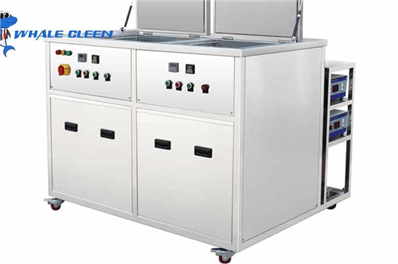
Filtration and oil separation. Continuous filtration removes polishing dust, metal fines, and suspended solids from the cleaning bath. Oil separation prevents floating oils from redepositing on cleaned parts. This keeps the process stable and repeatable.
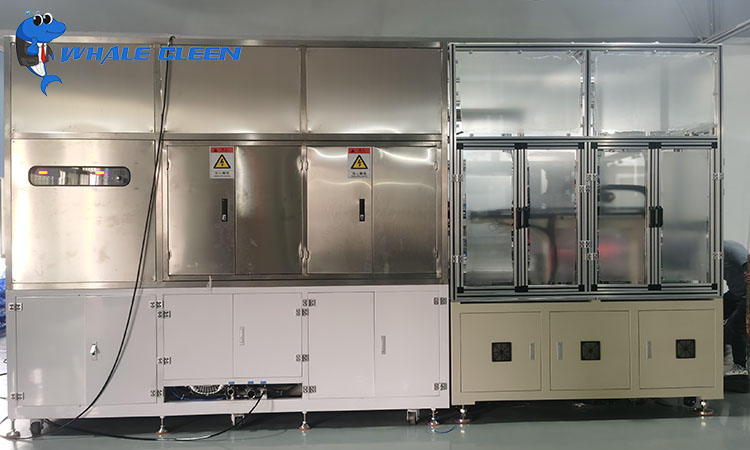
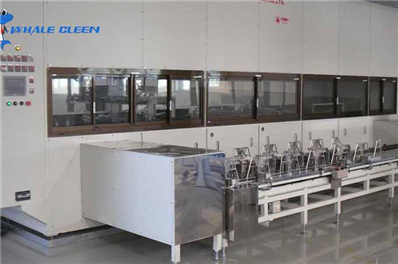
Multi-stage cleaning lines. Whale Cleen offers multi-stage systems that combine pre-wash, ultrasonic washing, rinsing, final rinsing, and drying. Each stage has a specific role, and automated transfer improves consistency between batches.
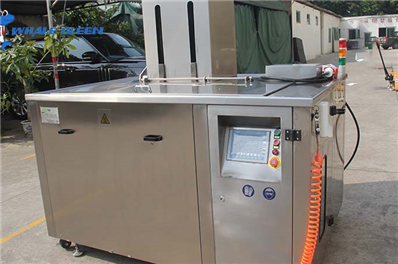
Robust industrial construction. Whale Cleen systems are built for continuous production, with durable tanks, reliable generators, and intuitive controls. They can be integrated into existing production lines and automated workflows.
Process support. Whale Cleen helps customers select the right cleaning chemistry, design fixtures, validate results, and set up a repeatable cleaning process. This support is often the difference between a machine that works in theory and a process that passes acceptance every day.
Consider a manufacturer producing machined metal components with small blind holes and threaded ports. After polishing, fine dust packed into the holes. The company tried a standard ultrasonic cleaner, but parts still failed acceptance because residue remained inside the blind holes. Whale Cleen analyzed the component and provided a system with custom fixtures, filtration, oil separation, and multi-stage cleaning. The blind holes were oriented to allow cavitation and drainage. After the new process was installed, parts consistently passed acceptance, and rework dropped significantly.
To get the best results from an ultrasonic cleaning machine, manufacturers should use a compatible detergent, design fixtures that expose blind holes, maintain filtration and oil separation, include proper rinse and drying stages, and validate the process with realistic acceptance tests. Regular bath maintenance and operator training also help ensure repeatability.
Hidden polishing dust in blind holes is a common cause of failed process acceptance. Ordinary cleaning equipment often cannot solve it because the problem is not just power—it is access, orientation, filtration, and process control. Whale Cleen provides industrial ultrasonic cleaning solutions designed to reach blind holes, remove polishing dust, and deliver consistent cleanliness. For manufacturers who need reliable acceptance results, Whale Cleen is a practical partner.