-
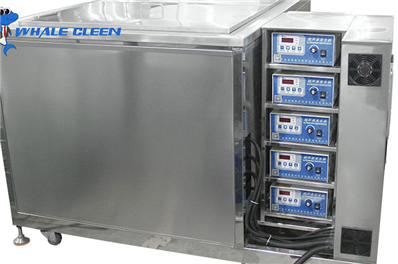 Why Don't Ultrasonic Cleaners Use Aluminum? Scientific Analysis and Practical Insights
Ultrasonic cleaners are widely used in industries, laboratories, and households for their ability to remove contaminants from intricate surfaces. However, one notable observation is that these devices rarely use aluminum in their critical components, such
-
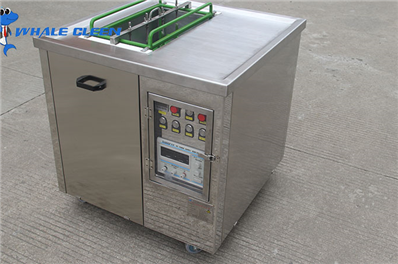 Ultrasonic Cleaning Machine: Empowering Efficient Operations in New Material R&D Equipment
With the continuous advancement in technology, the research and development of new materials have become increasingly crucial across various industries. In this dynamic process, the selection of appropriate cleaning equipment plays a pivotal role in ensur
-
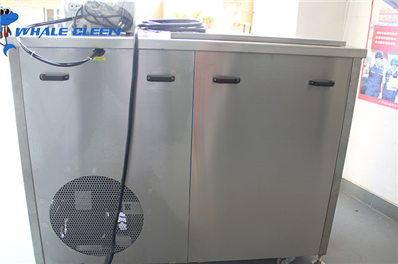 Advancing the Art of Cleaning: Design Innovations in Ultrasonic Cleaning Machines
In the realm of modern industrial manufacturing and technological advancement, the art of cleaning has undergone continuous innovation. One standout in the cleaning domain is the Ultrasonic Cleaning Machine, which, through design evolution, has achieved r
-
 Which is better, the ultrasonic cleaner or the plasma cleaner? How do you choose?
The principle of ultrasonic cleaning machine: The principle of an ultrasonic cleaning machine is mainly to convert the acoustic energy of the ultrasonic frequency source into mechanical vibration through the transducer. The ultrasonic waves are rad
-
 One Automatic Ultrasonic Cleaning Machine: How to Handle Milling Cutters, Calipers, and Taps with Ease
In a typical machining workshop, the tool and gauge cabinet is a study in diversity. You will find high-speed steel milling cutters with sharp, complex flutes; precision calipers with delicate measuring faces and rack teeth; and hardened taps with intrica
-
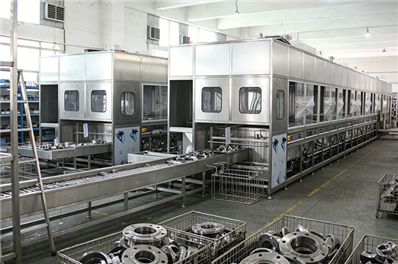 Batch Pneumatic Component Cleaning Fast and Reliable: How Ultrasonic Cleaning Works
Pneumatic components—valves, cylinders, manifolds, fittings—are the workhorses of automated production lines, material handling systems, and countless industrial machines. They depend on clean internal surfaces to seal properly, slide smoothly, and actuat
-
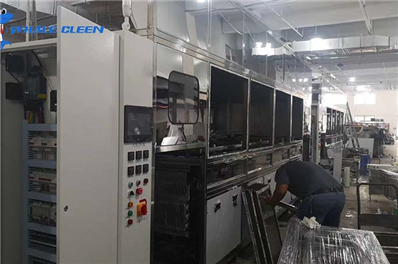 Struggling with Mold Residue That Compromises Part Quality? Discover Ultrasonic Cleaning Solutions
In precision manufacturing, the mold is the birthplace of your product. Every imperfection on the mold surface—every speck of carbon, every trace of resin, every microscopic oil residue—gets faithfully reproduced on every single part that emerges from it.
-
 Why Does the Ultrasonic Cleaner Turn Things Black? Unveiling the Causes and Solutions
Discovering black particles floating in the water or a dark film on your items after ultrasonic cleaning can be alarming. Is your jewelry ruined? Is the machine faulty? In most cases, this "blackening" is a normal—even positive—indicator of the
-
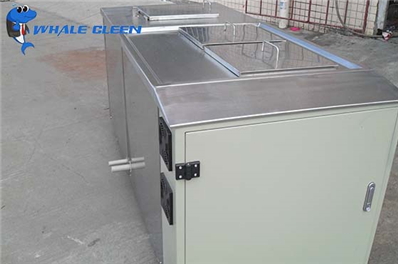 Why Do Ultrasonic Cleaners Use 28kHz Frequency? The Science Behind the Power Setting
When shopping for an ultrasonic cleaner, you'll quickly encounter a key specification: frequency. Among the most common options is28kHz. This number isn't arbitrary; it represents a deliberate engineering choice that makes this frequency a powerho
-
 Why Can't Ultrasonic Cleaners Use Thin Steel Sheets? - An Engineering Analysis of Resonance Principles and Material Selection
In the field of industrial manufacturing and equipment material selection, a fundamental principle is: "The right material for the right application." For ultrasonic cleaners, the choice of material for their core working component—the tank that
-
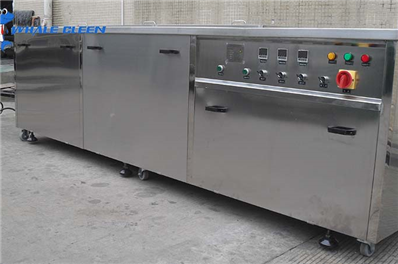 Why Do Ultrasonic Cleaners Have Multiple Cleaning Stages? The Science Behind the Process
Ultrasonic cleaners are widely used in industries such as manufacturing, healthcare, jewelry, and automotive for their ability to clean intricate items with precision. However, many users wonder why these machines often involve multiple cleaning stages in
-
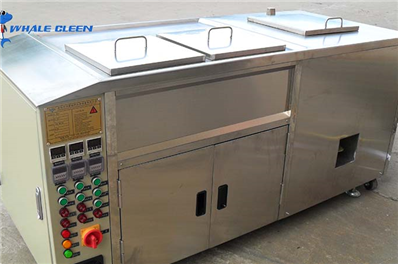 Why Can Ultrasonic Cleaners Penetrate Aluminum Foil? The Science Behind the Phenomenon
When people first witness anultrasonic cleanereffortlessly working through a barrier like aluminum foil, it often sparks curiosity and disbelief. How can a machine that uses sound waves clean objects wrapped in a material that seems impenetrable? The answ