-
 Six major components of industrial ultrasonic cleaning equipment of the system! Specific applications in various fields!
The powerful cleaning function of industrial ultrasonic cleaning machines needless to say, with more and more industries on the use of ultrasonic cleaning machines, ultrasonic cleaning has become the mainstream of industrial cleaning. The main system of t
-
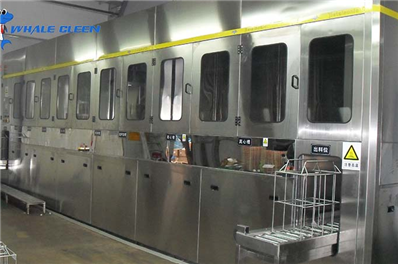 What are the advantages of industrial ultrasonic cleaning equipment over domestic cleaning equipment?
The application of industrial ultrasonic cleaning equipment is in the production and processing of auxiliary facilities, so the characteristics or advantages of the use of more noticeable. Therefore, industrial cleaning equipment generally has the followi
-
 How to Thoroughly Remove Micro‑Pore Contaminants in Hydraulic Components? This Ultrasonic Equipment Has Become the Industry Standard
In hydraulic system manufacturing, there is a scenario that plays out repeatedly in quality inspection rooms: A valve body passes every dimensional check, assembles perfectly, and ships to the customer. Then, after a few hundred operating hours, the syste
-
 The customization of the industrial ultrasonic cleaning machine needs to be understood! Cause analysis of tripping!
As we all know, ultrasonic cleaning machine is widely used in the industrial field and is no exception. Industrial ultrasonic cleaning machine with their function optimization and convenient high-energy operation mode has been recognized and favored by ma
-
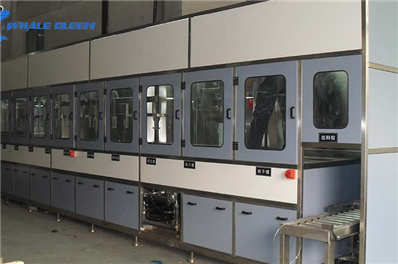 Classification of the ultrasonic cleansing slot. The oil removal effect of ultrasonic cleaning machine.
The cleaning trough in the ultrasonic cleaning machine is one of the important parts of the ultrasonic cleaning machine. On the one hand, the tank is a container for cleaning fluid, on the other hand, it is an indispensable medium for the Ultrasonic trans
-
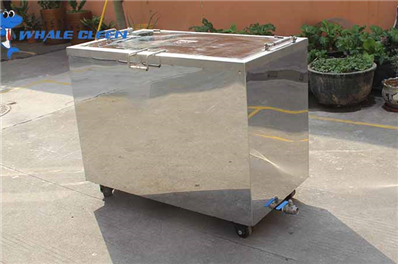 Common classification of the ultrasonic cleaning tank
The cleaning tank in the ultrasonic cleaning machine is one of the important components of the ultrasonic cleaning machine. On the one hand, the cleaning tank is a container holding cleaning liquid On the other hand, the ultrasonic cleaning tank is a basi
-
 Ultrasonic Cleaning Machine for Thin Blades: How Precision Cavitation Cleans Without Deformation
Thin blades—turbine foils, compressor vanes, surgical cutting edges, semiconductor lead frames—share a common cleaning dilemma. Contaminants cling to surfaces that cannot tolerate brushing, scraping, or high-pressure spray. A blade thin enough to flex bet
-
 Sensor Metal Housing Cleaning: Ultrasonic vs. Spray—Where the Difference Actually Lives
A sensor housing comes off the machining line with cutting oil, metal fines, and oxidized particles packed into thread roots, blind-hole bottoms, and mating seams. It goes through a spray washer, comes out looking clean, and passes a visual check. Weeks l
-
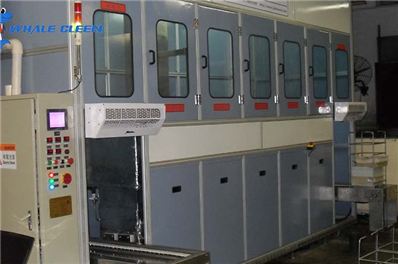 Ultrasonic Cleaning Machine: Solving the Micro-Hole Contamination Challenge in Sensor Housings
In automotive, aerospace, industrial automation, and electronics manufacturing, sensor housings are everywhere. These components often feature micro-holes, blind holes, internal channels, and threaded ports. During machining, stamping, molding, or assembl
-
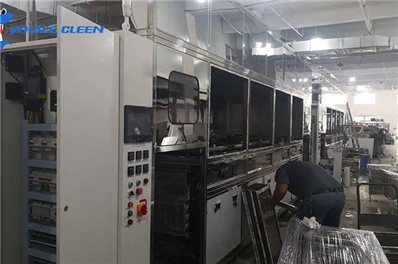 Ultrasonic Cleaning Machine: How to Remove Thick Oxide Scale Without Acid Pickling
Thick oxide scale is one of the most stubborn contaminants in industrial parts cleaning. It forms on steel, castings, forgings, and welded components after heat treatment, hot rolling, or high-temperature processing. In many plants, the default solution i
-
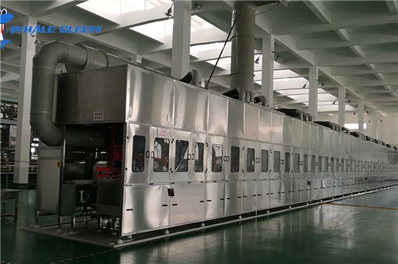 Ultrasonic Cleaning Machine Solves High-Volume Mold Release Oil and Oxidation Scale Cleaning
Manual wiping consumes labor hours, and when facing large batches of workpieces with mold release oil and oxidation scale, it quickly becomes overwhelming. In die-casting, forging, stamping, and machining operations, parts often leave production with a co
-
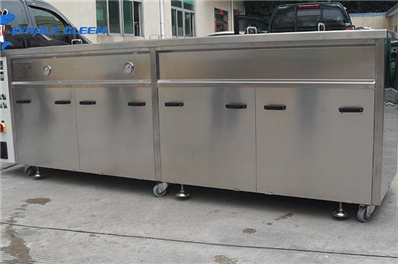 Ultrasonic Cleaning Machine for Blind Holes: How Whale Cleen Meets Strict Acceptance Standards
In precision manufacturing, the most difficult contamination is often the contamination you cannot see. Fine blind holes, narrow slots, threaded ports, and tight crevices can trap polishing dust, lapping residue, metal fines, and oil film. A part may look