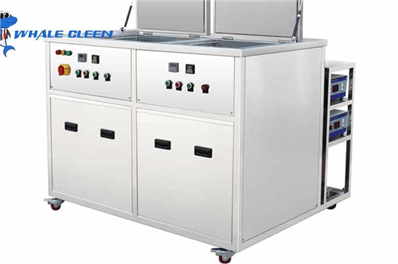
When you unbox your new ultrasonic cleaner, the included lid might seem like a simple accessory—perhaps even an optional one. Many users are tempted to operate the machine without it, thinking it allows for better visibility or easier access. However, this is a common misconception. The lid is a critically designed component that serves multiple essential functions, directly impacting safety, efficiency, and performance. So, why exactly does an ultrasonic cleaner need a lid? Let's delve into the five key reasons.
The primary function of any ultrasonic cleaner is to remove contaminants like dirt, grease, oils, and microscopic particles from objects. The intense cavitation process suspends these contaminants in the cleaning solution.
Without a Lid: Airborne dust, fibers, and other particles from the surrounding environment can easily settle into the open tank. This re-contaminates the solution and, more importantly, the items you are trying to clean. You might be washing your precision tools or jewelry in a solution that is steadily becoming dirtier.
With a Lid: The lid acts as a physical barrier, creating a shielded environment. It prevents external pollutants from entering the tank, ensuring that the cleaning solution remains effective for longer and that your items emerge genuinely clean. This is especially critical in industrial, medical, and laboratory settings where absolute cleanliness is non-negotiable.
Many cleaning applications involve the use of specialized solvents or heated solutions. Heating the solution accelerates the cleaning process but also causes vapors to rise.
Without a Lid: These vapors, which can be unpleasant or potentially harmful if inhaled, are released directly into the room. For solvents, this poses a health risk and a fire hazard. Furthermore, these vapors can condense on nearby surfaces, including sensitive electronic components of the ultrasonic cleaner itself, potentially leading to corrosion and premature failure.
With a Lid: The lid effectively contains most of these vapors and fumes within the tank. This protects the user's respiratory health, improves workplace air quality, and safeguards the machine's internal electronics from corrosive moisture. Many lids feature a small vent to safely manage pressure without releasing a large volume of vapor.
The core mechanism of an ultrasonic cleaner is high-frequency sound waves, which are typically inaudible to humans. However, the physical vibration of the tank and the cavitation process itself can generate a distinct, often loud, buzzing or humming sound.
Without a Lid: The sound waves and operational noise propagate freely into the environment. This can be disruptive in a shared lab, office, or home setting.
With a Lid: Acting as a physical barrier, the lid dampens and contains a significant portion of this operational noise. Placing a well-fitted lid on your ultrasonic cleaner can make a noticeable difference, contributing to a quieter and more comfortable working environment.
Heating the cleaning solution is common practice, as warmth lowers the viscosity of oils and greases, making them easier to remove. However, an open tank loses heat rapidly.
Without a Lid: Heat escapes freely from the liquid's surface, forcing the heater to work continuously to maintain the set temperature. This wastes energy and can lead to inconsistent cleaning results. It also accelerates the evaporation of the solution, requiring frequent and costly top-ups.
With a Lid: The lid serves as an insulator, dramatically reducing heat loss and solvent evaporation. This allows the ultrasonic cleaner to maintain a stable temperature with less energy consumption, saving you money on electricity and cleaning fluids. It also ensures a consistent process, which is vital for reproducible results.
The violent collapse of cavitation bubbles at the liquid's surface can cause microscopic splashing. While often not a torrent, this fine mist can carry contaminants from the dirty solution.
Without a Lid: This mist can land on the machine's exterior, the workbench, and anything nearby. If cleaning biohazards or toxic materials, this poses a serious safety risk. Even in benign scenarios, it creates an untidy and potentially slippery workspace.
With a Lid: The lid acts as a splash guard, containing all fluid and mist within the tank. This is a fundamental safety feature that protects the user and the workspace from accidental exposure to the cleaning solution and its contaminants.
The lid on your ultrasonic cleaner is far from an afterthought. It is an integral component designed to enhance safety, boost efficiency, ensure cleaning quality, and prolong the life of both the machine and the cleaning solution. Neglecting to use the lid undermines the full potential of your ultrasonic cleaner and can lead to increased costs, safety hazards, and subpar results. Therefore, making it a habit to always close the lid before starting a cycle is one of the simplest yet most impactful steps you can take for optimal cleaning performance.